

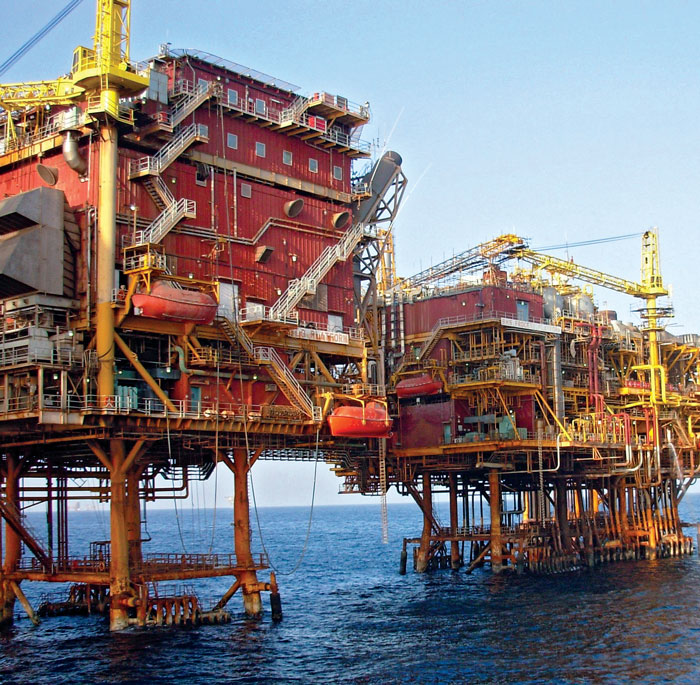
As India’s appetite for oil and natural gas grows at a pace few major economies can match, it is reshaping the country’s strategy to secure long-term hydrocarbon supplies. Whether it succeeds will hinge on several critical factors, writes Manish Pant.
If there is one word that captures India’s ever-growing appetite for oil and natural gas, it’s ‘galloping’. Demand continues to race ahead at a pace few major economies can match. The world’s third-largest energy consumer already uses over 5.6 million barrels of oil per day and around 66 billion cubic metres (BCM) of natural gas annually, and both are set to climb sharply through the decade. According to the International Energy Agency (IEA) and the Petroleum and Natural Gas Regulatory Board (PNGRB), oil consumption could reach 6.6 million barrels per day by 2030, while natural gas demand may rise to about 108 BCM.
This surge is reshaping India’s sourcing strategy. With its energy system resting on a fragile foundation of overwhelming dependence on imported hydrocarbons, the country has steadily diversified beyond the Middle East to suppliers based in the US, Brazil, Russia and Australia. Foreign oil meets more than 85 per cent of national demand, and natural gas imports continue to rise as the government seeks to increase its share to 15 per cent in the energy basket.
Economic momentum is amplifying this pressure. India recorded GDP growth of 8.2 per cent in the second quarter of FY2025-26, the highest among major economies. Every percentage point of growth pulls in more crude, more liquefied natural gas (LNG) and more geopolitical exposure. Disruptions from Red Sea attacks to sanctions on Russia ripple instantly through Indian supply lines. The result is a race against demand, geopolitics and time to secure the barrels and molecules that underpin economic expansion.
“When the Russia-Ukraine conflict began
in February 2022, India was sourcing only about 0.2 per cent of its crude from Russia. That share has risen sharply since. At the same time, India has broadened its overall supply basket, increasing the number of supplier countries from 27 to nearly 40,” says Hardeep Singh Puri, Union Minister for Petroleum & Natural Gas. In November, India announced a first structured contract to import around 2.2 million tonnes per annum (MTPA) of liquefied petroleum gas (LPG) from the US Gulf Coast for 2026, which is close to 10 per cent of annual LPG imports.
Strengthening the Upstream
Alongside diversification, efforts are underway to strengthen the upstream sector. Mature fields such as Mumbai High, Bassein and the older KG-D6 reservoirs are declining despite enhanced recovery efforts. Discoveries have been modest, even after multiple exploration bidding rounds. ONGC and Oil India Ltd (OIL), the state’s upstream anchors, face ageing assets, technology gaps and long investment cycles. Private participation has been uneven.
“Between fiscals 2020 and 2025, while
oil demand logged a CAGR of approximately 2.2 per cent, domestic production declined at a CAGR of 2.2 per cent, primarily because of ageing fields,” says Sehul Bhatt, Director, at the advisory Crisil Intelligence. “The trend is similar in natural gas as well, where import dependency stands at approximately
50 per cent of the domestic consumption of around 195 MMSCM (million metric standard cubic metres per day).” India meets about
89 per cent of its oil demand through imports, while natural gas imports account for nearly half of consumption.
Policy reforms have opened acreage and eased marketing restrictions, but global majors remain wary, citing geological complexity and fiscal uncertainty. Bhatt notes that earlier exploration efforts faced low commercial success rates, high costs and regulatory hurdles. “Lack of significant new discoveries in recent years has also reduced investor confidence. Other factors that deter foreign investment include complex regulatory frameworks, geological uncertainties, inadequate infrastructure, environmental concerns and policies.” Puri attributes this to past inertia. “The period from 2006 to 2016 was a lost decade. We faced several problems with the contracts signed during that time. Many of them ran into litigation and other complications, and activity came to a halt.”
The Oilfields (Regulation and Development) Act, 2025—updating the original 1948 Act—is the most significant legislative reform in this space. It realigns the regulation, development and management of oilfields to reflect current market and technology needs. Under nine rounds of the Open Acreage Licensing Policy (OALP), India has opened 1 million sq km of sedimentary area out of 3.5 million sq km. The ongoing tenth round offers another 257,000 sq km. “If we found oil, the tendency was to say this is our natural resource first. Why would anyone invest under those conditions? Now the approach is very different,” assures Puri.
“In conjunction, the Petroleum & Natural Gas Rules, 2025, introduce a stabilisation clause to protect investors from future changes in laws or taxes, while encouraging infrastructure sharing and third-party access to underutilised facilities,” adds Bhatt. The rules also strengthen data governance, with the government owning operational data and physical samples, and establish a dedicated adjudicating authority for compliance and dispute resolution. India’s aspirations for aatmanirbharta (self-reliance) in hydrocarbons received a boost with the detection of natural gas in the Andaman Basin in the Bay of Bengal.
Strategic Refining Edge
India’s greatest strength in the hydrocarbon chain lies not in production but in processing. With the Reliance Industries Ltd Jamnagar refinery—the world’s largest—and major expansions at Paradip (IOCL), Panipat (IOCL) and Barmer (HRRL), the country has emerged as a refining powerhouse. This capacity allows India to import a wide slate of crudes,
refine them efficiently and export high-value products to global markets. It is in this context that Minister Puri notes, “Our analysis shows that if more countries had shifted their purchases to traditional OPEC suppliers, global prices could have risen to $130-140 per barrel. If India chooses to buy from any source available to us, that decision should be recognised and not criticised.”
The ‘refine and re-export’ model has given India strategic leverage, especially during the period of discounted Russian crude. It acts as a buffer, offering flexibility even when upstream and geopolitical pressures intensify.
Besides expanding domestic infrastructure, India is also eyeing overseas acquisitions.
Arun Kumar Singh, Chairman, ONGC, the country’s largest oil and gas explorer, is unequivocal: “For overseas assets, we take an opportunistic approach. We assess each opportunity on its own merit.” His confidence stems from ONGC’s strong liquidity position.
As of the quarter ending June 30, the company held approximately Rs.3.264 trillion ($37.01 billion) in cash and short-term investments. This financial buffer gives ONGC a competitive edge in bidding for distressed global assets. It is currently active in 15 countries, including Russia, Venezuela, Sudan, and Mozambique, through its subsidiary ONGC Videsh Ltd (OVL). “Our focus is on acquiring, producing or near-producing assets,” Singh adds.
Oil India Ltd (OIL), India’s second-largest upstream operator, shares similar optimism regarding its Russian portfolio, which is expected to significantly strengthen its bottom line in FY2025-26 and beyond. “The performance of our Russian assets has been superb. We have already received dividends covering about 90 per cent of our investment in Vankorneft and about 80 per cent in Taas-Yuryakh. We are hopeful of recovering 100 per cent of our investment in both these assets,” says Ranjit Rath, Chairman & Managing Director. OIL holds a 23.9 per cent stake in JSC Vankorneft and a 29.9 per cent stake in LLC Taas-Yuryakh through a joint venture with ONGC Videsh and Bharat PetroResources Ltd.
Greater Push Needed
Yet not everyone is convinced that India’s upstream strategy is keeping pace with its ambitions. Swarnendu Bhushan, Co-Head of Research at financial service firm Prabhudas Lilladher, remains cautious. “Following the tightening of sanctions against Russia, as well as Saudi Arabia’s evolving geopolitical alignments with Pakistan, we had anticipated a stronger government push to reduce import dependence; however, nothing meaningful has emerged.” He argues that import dependence will continue rising without a shift in upstream policy. Of India’s 26 sedimentary basins, only seven are being actively explored. “This has been a persistent gap. In the most recent bidding rounds, we have seen MNCs largely absent. No major new technology is coming into the country, and no aggressive new multinational players are entering the space.”
Bhushan stresses the need to understand why global companies remain hesitant and how India can encourage them to bring advanced technologies. “The key issue for exploration and production is that many
of our sedimentary basins remain unopened. Faster acquisition of seismic data for these remaining basins and opening them up for investment is the one major step the government can take, but we have not yet seen any real impetus on that front.”
India’s success in this race for oil and gas will shape the next phase of its economic rise. It hinges on sustained efforts to boost domestic output through technology and investment, secure overseas assets through diplomatic outreach, leverage refining strength for strategic advantage, and lock in long-term LNG contracts. Or as Amit Goyal, Managing Director for South Asia, Project Management Institute, a global professional body, notes, “Disciplined execution and strong governance are becoming indispensable as India advances energy exploration, policy reform, and overseas acquisitions. A project-centric approach strengthens the ability to manage interdependencies, stakeholder expectations, risk mitigation, ensure clarity, and respond effectively to evolving regulatory and market dynamics.”
This is especially critical at a time when energy is being increasingly weaponised the world over.\Tracking the Price of Oil & Gas Dependence
Fiscal Year Crude Oil Imports (MMT) LNG Imports (MMSCM) Crude Oil Import Bill ($ Billion) LNG Import Bill
($ Billion) Total Import Bill
($ Billion)
FY2020-21 196.5 25 62.2 7.9 70.1
FY2021-22 202 32 119 11.9 130.9
FY2022-23 232.4 33.5 158.3 9.5 167.8
FY2023-24 232.5 30.9 132.4 13.3 145.7
FY2024-25 234.3 36.7 137 15.2 152.2
Source: MoPNG, PPAC, DGCI&S
Key Exploration Frontiers
Region State Type
Ballia District Uttar Pradesh Onshore
Barmer-Sanchore Basin Rajasthan Onshore
Andaman Basin Andaman & Nicobar Islands Offshore
Cambay Basin Gujarat Onshore
Krishna-Godavari (Beyond KG-D6) Andhra Pradesh Onshore
Assam Shelf/Upper Assam Basin Assam Onshore
Kutch Basin Gujarat Onshore + Offshore
Mahanadi Basin Odisha Onshore
Cauvery Basin Tamil Nadu Onshore
Saurashtra Basin Gujarat Primarily Onshore
Ganga Basin (Beyond Ballia) Uttar Pradesh / Bihar Onshore
Rajasthan Basin (Beyond Barmer-Sanchore) Rajasthan Onshore
Source: DGH