

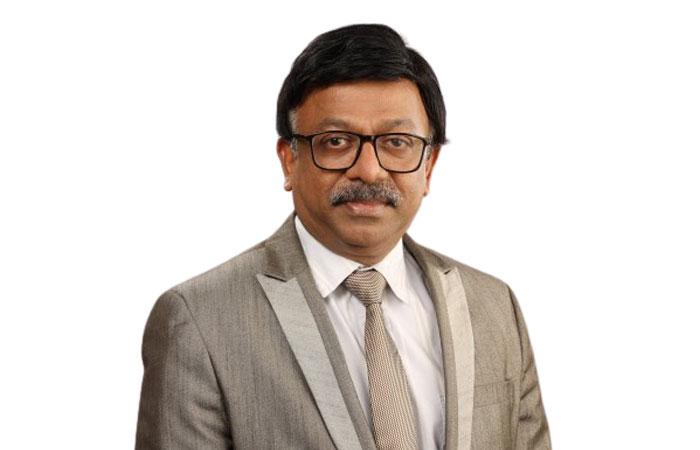
The Uralungal Labour Contract Cooperative Society Ltd. (ULCCS) was established 100 years ago in Kozhikode, Kerala, by the social reformer Vagbhatananda. Its cooperative structure makes it to the construction sector what Amul is to the dairy industry in India. The cooperative’s engineering and construction subsidiary, U-Sphere, launched in February 2025 as part of the centenary celebrations, is foraying into a diversified range of projects, including buildings, bridges and industrial infrastructure. In an interaction, Biju Mahima, CEO, U-Sphere, tells INFRASTRUCTURE TODAY’s Manish Pant that the company wants to leverage its parent arm’s expertise and human resources to ‘build for the people’ in India and, eventually, overseas. Edited excerpts.
Your parent organisation, ULCCS, has long been known as a major construction player in Kerala. Where do you see U-Sphere headed?
ULCCS started in the construction sector almost 100 years ago, and in Kerala, we remain the leading player. We have executed almost every type of project: buildings, bridges, institutional facilities and industrial structures. We have also worked with a wide range of materials, including steel structures and EPS (expanded polystyrene) panels. U-Sphere was created because the parent arm wanted to focus on innovative and futuristic construction technologies and make them accessible to the wider public. Steel is not a new technology, but it is still not used properly in the construction industry. Our aim is to adopt the right technology for each project and bring the best solutions to the people.
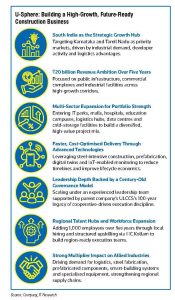
Two priorities guide us. First, we want to expand beyond Kerala and operate pan-India. Second, we want to promote environmentally friendly technologies that deliver speed, cost efficiency and sustainability. Each project requires a different balance. In some cases, speed is the priority; in others, sustainability takes precedence. We customise our approach accordingly. For most projects, speed is the key factor, and steel construction helps us deliver faster. Composite structures are also becoming important because they reduce costs and improve fire safety. These are the main construction modes we are adopting today.
Beyond your current areas of work, are there new segments you are looking to enter?
Yes. One major area we want to enter is data centres. Across India, almost all major companies, including Google, Amazon and many others, are announcing new data centre projects. We see it as a significant opportunity. Data centres typically involve civil foundations, steel superstructures, and specialised systems such as MEP (mechanical, electrical and plumbing) and ELV (extra-low voltage), along with façades and protective finishes. Our team is capable of delivering all these components, and we want to integrate them to offer complete data centre solutions.
As you expand across India, are there specific regions you are targeting?
Our current focus markets are Bengaluru, Vijayawada, Chennai, Hyderabad, Mumbai, and Delhi. If the quantum of work is large enough to sustain operations, we can establish a team anywhere in India. We are not restricting ourselves geographically; it depends entirely on the scale of opportunities.
Are you already executing projects outside Kerala, or are you in discussions for new work in other parts of India?
We are currently in discussions with several major players, and many of these conversations are in the final stages. In Mumbai, discussions are progressing well, and we expect to secure work soon. In Delhi, we are engaged in two to three projects, with similar talks underway in Hyderabad. We have already mobilised for projects in Bengaluru and Vijayawada, while negotiations in other locations are advancing, with several expected to reach the LoA (letter of award) stage shortly.
Are these discussions primarily with private-sector clients?
Yes. Except for one semi-government entity in Telangana, all the organisations we are speaking to are private-sector players.
Timely delivery has become critical in the construction sector. How do you assess U-Sphere’s performance on speed and execution?
I worked outside Kerala for nearly 15 years, and based on that experience, I can say U-Sphere’s quality and planning are strong. For example, we recently completed a 220,000 sq ft project in Thiruvananthapuram. The main construction took only eight to nine months, and the entire project, including the façade, was completed within 12 months. In many other parts of India, similar projects often take longer. At U-Sphere, if external factors are in order, our internal systems are fine-tuned to deliver on time. In terms of quality, speed and cost-optimised construction, we are on par with any leading company in India, and in some cases, we can do better because our team is highly organised. A major reason for this is our cooperative structure. All employees are also owners. They work for themselves, not just for the company. This creates a strong sense of responsibility and alignment. We do not need to ‘manage’ them; they come forward with solutions and take ownership of outcomes. In many private companies, this level of intent is not always present.
You mentioned the cooperative ethos. How is U-Sphere structured operationally?
We primarily focus on EPC (engineering, procurement, and construction) contracts, which means we handle in-house design, execution, and handover. If the client wants us to take on architectural work as well, we can do that. Our systems are fully equipped to deliver end-to-end solutions. For large projects, external consultants naturally come in. They review and vet our architectural and structural designs. This is standard practice, and our team is fully capable of meeting all technical requirements. On-site, the organisational structure is similar to any construction firm: project leads, supervisors and workers. The difference is that all workers are part of the organisation. There is no subcontracting, and no external party takes a share of their profit. If the project succeeds, everyone succeeds. This creates a very different attitude. Decisions are not imposed from the top. The project lead guides the team, but decision-making is collective. Workers contribute their technical knowledge, and the best solution—regardless of who proposes it—is adopted. Roles are clearly defined, but collaboration is open. This is what differentiates us from the corporate sector.
So, everyone, from project leaders to workers, is on the company payroll?
Absolutely. We do not subcontract at this stage. Everyone is part of the company, and we do not hire temporary workers.
What are your capex plans over the next couple of years?
Our strategy is to secure more private-sector projects and execute them using new technologies. Funding is not a constraint because ULCCS is a large organisation and can invest as required. At this stage, we are assessing the market to understand how much work we can realistically acquire. Our targets are high, but we want to align investments with actual demand. If we see strong opportunities in a particular segment, we will invest more there.
Beyond your pan-India expansion, are you also considering EPC projects overseas?
Our priority is to establish ourselves across major construction hubs in India. Once that is achieved, we will look at opportunities in other countries where our capabilities are relevant. So yes, we have a clear strategy that begins with pan-India expansion and then moves towards overseas markets.
You have repeatedly emphasised ‘building for the people’. What does that mean in practice?
As a cooperative, our people are part of the company. That itself connects us directly to the masses. ULCCS currently has around 18,000 members. If we grow to 36,000, the value created will be shared among all of them; no single individual walks away with the profits. Whatever we build benefits everyone involved. Secondly, in construction, we want to identify the most economical and optimal solutions that can be used for the wider public. This is the next stage of our work: people-friendly, sustainable construction that serves society at large.
As you expand across India, will you hire locally or continue to operate primarily from Kerala?
Wherever we secure work, we will hire people from that location, and they will become part of the company. We have no restrictions on hiring from any region.
The construction sector is facing a shortage of skilled manpower. How are you addressing this?
Our strength is our manpower. The company was built by people, and not by capital alone. Unlike corporate firms that
grow through financial resources, our growth has come from human resources. As we expand, we will continue to prioritise the well-being and development of our people.
Each employee focuses on their area of expertise, which ensures optimised output. Because of this structure, we are not facing a manpower shortage.
How prepared is your workforce for new and emerging opportunities in infrastructure?
Skill development happens continuously. When someone joins a particular area, they grow with each project and become an expert because they are involved in decision-making from the start. Their learning curve is much steeper than in other companies. We also have academic partnerships to help workers identify their strengths and improve further. Within two to three years, they become highly skilled in their chosen area. ULCCS is associated with an infrastructure training institute in Kerala to support this process.