

The remaining funding will be raised from market participants, reinforcing a robust capital structure for the project.
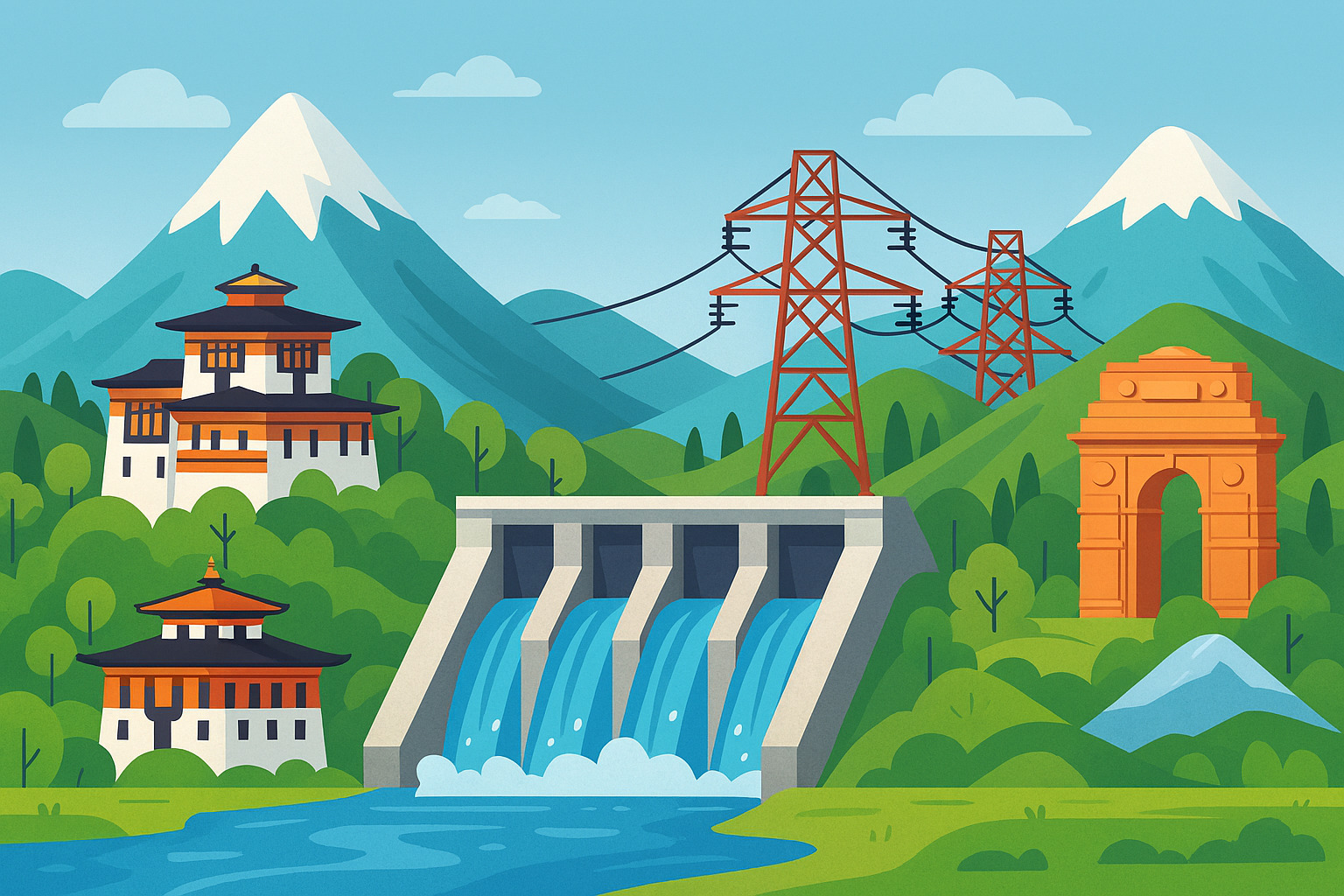
The Dorjilung Hydropower Project Ltd (DHPL), jointly owned by Bhutan’s Druk Green Power Corp. (DGPC) and India’s Tata Power, has secured USD 815 million (₹68 billion) in long‑term financing from the World Bank Group’s Board of Executive Directors.
The financing package comprises a $150 million grant and a $150 million credit from the International Development Association (IDA), together with a $15 million enclave loan from the International Bank for Reconstruction and Development (IBRD) to DGPC, representing the Government of Bhutan. In addition, DHPL will receive a $200 million IBRD enclave loan and a $300 million loan from the International Finance Corp. (IFC). The balance funding requirements will be mobilised from market participants, ensuring a robust capital structure for the project.
The total cost of the project is estimated at ₹1.31 trillion ($15.8 billion), making it one of the largest cross-border clean energy investments in South Asia.
DGPC holds a 60 per cent majority stake, while Tata Power owns the remaining 40 per cent in the special purpose vehicle (SPV) to build Bhutan’s largest hydropower project under a public‑private partnership (PPP) model. The Dorjilung project is expected to significantly boost clean energy cooperation between India and Bhutan, while strengthening South Asia’s energy security.
Once operational, DHPL will generate more than 4,500 GWh of clean electricity annually, expanding Bhutan’s installed energy capacity by nearly 40 per cent. Nearly 80 per cent of the electricity will be exported to India, reinforcing Bhutan’s role as a reliable energy partner. Tata Power Trading Co. Ltd, a wholly owned subsidiary of Tata Power, will manage the import and onward distribution of power in India.
The World Bank’s approval affirms confidence in the project’s technical and financial foundations. It provides long‑term visibility and strengthens Tata Power and DGPC’s ability to advance the project in a disciplined manner, while delivering sustainable value for stakeholders.
Beyond energy security, the project will generate significant employment during construction and operations, stimulate local entrepreneurship, and support livelihoods in Bhutan’s Mongar and Lhuentse districts. It will also help close Bhutan’s seasonal energy gap, reducing costly winter imports and enabling surplus summer exports to India.