

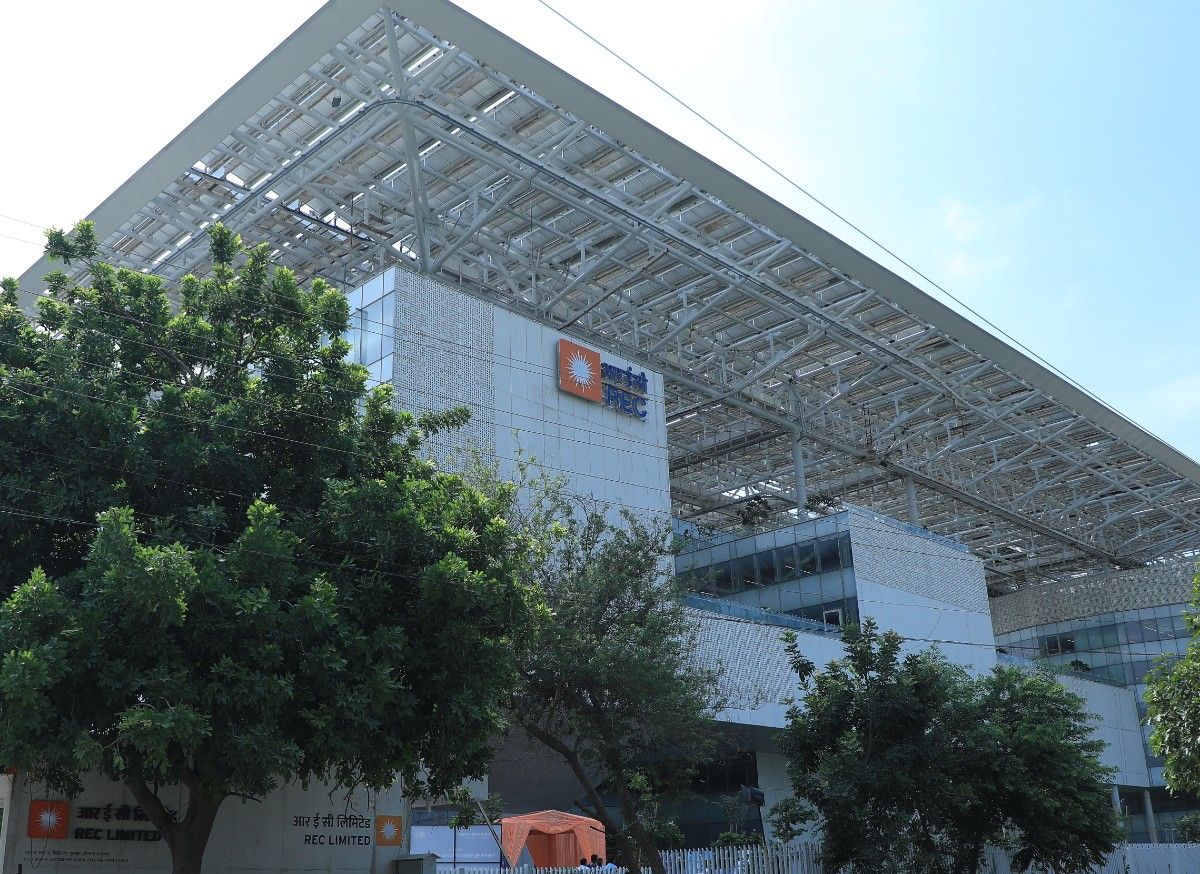
The power sector financier’s strong H1 FY2026-27 performance was driven by growth in its loan book, renewable energy portfolio and disbursements.
State-run power sector financier REC Ltd reported a profit after tax (PAT) of ₹75.4 billion for the first half of FY2026-27, supported by strong growth in its loan book, renewable energy portfolio and disbursements.
The company’s assets under management (AUM) increased by ₹265.4 billion during the second quarter, taking its total loan book to ₹6.17 trillion as of September 30, 2026, reinforcing its position as the country’s largest standalone power sector financier.
REC’s renewable energy portfolio expanded 27 per cent year-on-year to ₹866.6 billion, while net worth rose 14 per cent to ₹943.3 billion, reflecting sustained profitability and capital accretion.
The company’s board approved the standalone and consolidated financial results for the quarter and half-year ended September 30, 2026, and declared a second interim dividend of ₹3.50 per equity share.
REC recorded disbursements of ₹535.4 billion during the second quarter and ₹792.1 billion during the first half of FY2026-27, which the company said were the highest among its peers in the power sector.
The lender attributed the performance to strong electricity demand and improving financial health of power utilities. India’s peak power demand reached new highs during FY2026-27, supporting increased investment across the sector.
The company said its net interest margin remained healthy at 3.22 per cent during the first half of the fiscal year despite passing on lower sectoral risk premiums to borrowers as utility finances improved.
Asset quality remained robust. REC resolved a Stage III asset during the quarter, helping reduce net non-performing assets to 0.11 per cent as of September 30, 2026. Stage II assets declined 80 per cent year-on-year to ₹32.35 billion, aided by recovery efforts and closer monitoring.
REC also continued to diversify beyond the power sector. Its non-power infrastructure and logistics portfolio increased to ₹616.4 billion, accounting for more than 10 per cent of overall loan assets.
The lender maintained a capital adequacy ratio (CRAR) of 24.04 per cent and Common Equity Tier 1 (CET-1) capital ratio of 20.91 per cent, well above regulatory requirements, providing headroom for future growth.
During the quarter, REC became the first issuer under the SEBI-RBI pilot framework for tokenised corporate bonds, raising ₹5 billion through the issue. The offering attracted bids worth ₹7.96 billion, indicating strong investor demand.