

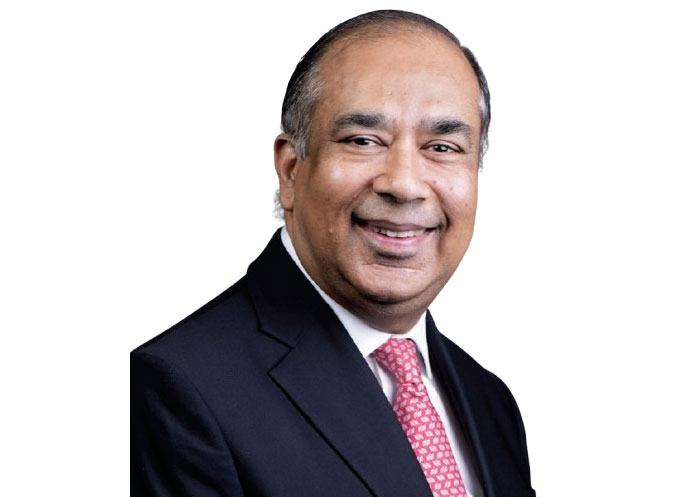
Sunil Mathur, Managing Director & CEO of Siemens India, is bullish on the country’s growth trajectory and sees it driving the company’s future expansion. A chartered accountant by training, Mathur today sits on the global leadership team of the Munich-based technology and engineering powerhouse. He tells INFRASTRUCTURE TODAY’s Manish Pant that Siemens is ready to capitalise on a resurgent India’s capacity to absorb and implement new solutions. Edited excerpts.
Following the demerger of Siemens Ltd in India, completed in September 2023 to sharpen focus on core businesses and capital allocation, how is the company now positioned in the market?
The demerger has gone smoothly and achieved its purpose: allowing both companies to focus on their core businesses, sharpen capital allocation, and drive shareholder value. With the process complete, the emphasis now is on growth. Siemens Ltd, the post-demerger entity, is firmly on track. Infrastructure capital expenditure continues, and recent government initiatives—including the PLI (Production Linked Incentive) scheme, tax reforms, and GST measures—are expected to stimulate consumption and demand.
Why do you believe Siemens is in a ‘sweet spot’?
Because we have the technologies that matter most. Take infrastructure: electrification is fundamental, and Siemens is a leader here. We are equally strong in automation and digitalisation. Customers want greener, more energy-efficient solutions, whether for malls, stadiums, campuses, or manufacturing facilities. They seek flexibility, productivity, and quality, and Siemens is at the centre of delivering these outcomes. Mobility is another area where demand is rising. As cities expand and populations grow, moving people and freight efficiently and safely has become a pressing challenge. India is embracing solutions that were not even considered a decade ago, and Siemens is deeply involved in this transformation.
With mobility now an independent operation, where do you see growth over the next five years?
Infrastructure remains the government’s priority, with significant spending on ports, airports, resilient buildings, and energy-efficient environments. Siemens’ Smart Infrastructure business brings together solutions in building management, fire safety, security, and electrification, all aligned with this agenda. Mobility continues to be a major growth driver. Siemens is engaged in railway electrification, signalling, and metro projects, contributing to India’s urban infrastructure expansion.
Manufacturing is equally critical. India aims to raise manufacturing’s share of GDP from 15 to 25 per cent, backed by $1.5 trillion in capital expenditure. Achieving this requires flexible, tailor-made environments that are faster and cheaper. Siemens is a market leader in automation and industrial software, combining these strengths to help customers realise their ambitions.
You have also expanded Siemens’ role in the railway sector. How has the mobility business evolved?
It is less about redefining and more about taking mobility to the next level. The Rs 260 billion locomotive order placed by Indian Railways [in January 2023] was a landmark step. We have delivered complex electrification projects, such as the Srinagar-Baramulla segment at challenging altitudes, and advanced signalling solutions. High-speed rail signalling further demonstrates our capabilities.
With high-speed rail and major locomotive contracts, how do you see growth ahead?
Siemens operates through three verticals: Smart Infrastructure, Digital Industries, and Mobility. Each addresses distinct markets, but together they form a comprehensive technology offering. All three are poised for growth in India. Infrastructure spending will continue, manufacturing ambitions are
rising, and railways and metros are expanding rapidly. Siemens is positioned to support all of these priorities.
Railways is developing a hydrogen train prototype. Is Siemens exploring this opportunity?
Hydrogen technology is advancing, but commercial viability remains a challenge. Siemens has developed hydrogen train solutions in Europe, yet achieving cost-effective deployment in India is still some way off.
What role does Siemens play in the electric vehicle (EV) segment?
We are active in EV charging infrastructure, complementing our broader energy and mobility portfolio. Siemens is aligned with Prime Minister Narendra Modi’s vision of “power for all”, green energy, smart infrastructure, modernised railways, and advanced manufacturing. Our verticals in energy, railways, and smart manufacturing are closely intertwined with India’s growth strategies.
Siemens’ own expansion seems closely tied to India’s growth trajectory. How do you view this alignment?
Absolutely. As India grows, Siemens grows with it! This is evident in our performance, reflected both in results and the sharp rise in our market value. The changes underway, particularly the shift towards localised supply chains, are significant, and companies increasingly want them.
How is Siemens helping customers adapt to these changes?
We are supporting customers across the spectrum—large manufacturers, SMEs, and supply chains—to become more flexible, efficient, and competitive. What they seek today is quality, speed, and adaptability, and Siemens has the technologies to deliver. Our solutions are rooted in artificial intelligence, machine learning, and Industry 4.0, but they go further. For example, if a company wants to build a factory, we can design the facility, simulate operations, configure workflows, and even model the machines. All of this is enabled through digital twin technology, which allows customers to create and test a virtual replica before laying the first brick. This immersive approach lets them walk through the factory, reposition ventilation systems, optimise workflows, and refine layouts. Once the physical facility is built, the digital and real versions are continuously linked. Improvements can be tested virtually before being implemented in reality, ensuring efficiency and minimising risk.
How far has Siemens contributed to the government’s ‘Make in India’ initiative?
We now operate 25 factories in India, many of them highly localised. The locomotive project was 99 per cent localised, the first of its kind in the country. Localisation is not achieved overnight; it requires engineering, design, supply chain development, training, and factory construction. We are moving supply chains into India from other regions, giving more work to domestic partners. It is a balanced approach involving building our own facilities where necessary, while integrating local suppliers into global networks. Siemens has been on this journey for 158 years in India, and we continue to deepen localisation.
Is India emerging as a hub for Siemens’ global operations?
Yes. A good example is our acquisition of C&S Electric, which was strategically aimed at integrating products into Siemens’ global network. Today, 15-20 per cent of what we manufacture in India is already part of that network, and this share will grow. Our railway bogie factory in Aurangabad exports to Europe, including Hungary, and we continue to expand exports. All our factories are integrated into Siemens’ global supply chain, and India is increasingly a manufacturing base for
global requirements.
How is Siemens India aligning with global supply chain strategies?
Localisation is happening consistently. India is now Siemens’ fourth-largest market worldwide and the fastest-growing. This has drawn strong attention from our global board, which is keen to expand India’s role further. Just a few years ago, Siemens India was not involved in rolling stock or mobility beyond electrification and signalling. Today, we are fully engaged in rolling stock. Similarly, we were not active in EV charging stations until recently. We have now entered this space, even making acquisitions to strengthen our capabilities.
Siemens has pursued acquisitions in certain regions. Will this strategy continue?
Yes. While organic growth remains central, inorganic expansion is also a core strategy. But acquisitions are not pursued for their own sake. They must add value, whether by providing a product we do not currently have, giving us access to a new market, or introducing technology at a cost level we cannot achieve ourselves. C&S Electric is a classic case. Siemens traditionally operated in premium markets with high-end technologies at premium prices. C&S gave us entry into the mid-segment market with technology suited to that price level, opening up a space we were not present in before. Similarly, in electric vehicles, Siemens was focused on charging stations for premium markets. But India’s EV charging market operates at a very different price point. We acquired a company with technology tailored to that level, enabling us to compete effectively.
Which segments are driving growth?
All segments are contributing. In some businesses, localisation is high, anywhere between 80-85 per cent. In others, it is lower. We continuously assess whether localisation makes business sense. Sometimes it is better to source from our parent company at lower margins rather than incur heavy capital expenditure for a limited market size. Localisation must be guided by capital allocation and return on investment.
You mentioned smart infrastructure, digital industries, and mobility. Over the past six years, there seems to be convergence across these areas. How do you see this evolving?
You are right, convergence is happening. Take electronics as an example. Companies want to build factories and data centres that are energy-efficient and green. That is where our Smart Infrastructure business comes in. Next, they want manufacturing that is smarter, more efficient, and flexible. That is where our Digital Industries business adds value. The strength Siemens offers is being a ‘one-tech company’. We can provide end-to-end solutions, from infrastructure to manufacturing. Few companies can match this breadth. Consider a dairy company. Wastage occurs at multiple points, from the cow to the Tetra pack. The causes may include poor air conditioning, delays in transportation, or inefficiencies in the manufacturing process. Siemens can analyse the entire chain and provide solutions to reduce wastage. Or take an automotive company. Spray painting processes may be inefficient. Siemens can help redesign workflows, optimise energy use, and improve quality. The conversation is no longer “supplier and buyer”. It is about solving the customer’s biggest problems with technology.
What investments are you making in building competencies?
Competency building is critical. Siemens has extensive training programmes, mandatory learning hours, and specialised expert tracks to upskill employees.
But it is not only about people, it is also about embedding more technology into our offerings. The world demands flexibility, productivity, quality, sustainability, and cybersecurity. No individual solution can address all these variables. Technology is the answer. We have a factory in Germany that operates at 99.99 per cent productivity and quality. In India, average productivity is around 75 per cent. Bridging this 25 per cent gap cannot be achieved through upskilling alone. Technology is the differentiator.
Historically, India was seen as a low-cost manufacturing base because of labour arbitrage. But technology is reducing the impact of labour arbitrage. India must stay ahead of this curve. We are already the software centre of the world. If we can combine software and hardware effectively, there is no reason why India cannot become the manufacturing hub of the future. Siemens is at the forefront of this transformation, advising customers on how to bring automation and industrial software together.
There is concern that technology could displace jobs in a labour-intensive economy. How do you respond?
It is important not to generalise. The balance between technology and employment is shaped by business needs and competition. At our 50-year-old Mumbai factory, we increased output from 80 to 180 product variants, consolidating three production lines into one. The same workforce achieved more, but only after re-skilling. Jobs were not lost; they evolved. History shows that every technological leap—from bicycles to cars, trains to airplanes—raised similar fears. Traditional roles disappeared, but new ones emerged, requiring people to up-skill. The difference today is the pace of change: what once took a century now happens in a decade, making continuous re-skilling essential.
Siemens India: Powering Infrastructure, Mobility & Digital Futures
Financial & Market Strength
• ~9,800 employees
• Strong stock performance since 2023
Landmark Locomotive Order
• Secured a `260 billion (€3 billion) contract from Indian Railways in Jan 2023 for 1,200 high-horsepower electric locomotives, the largest locomotive order in Siemens’ global history.
Three Growth Verticals
• Operates across Smart Infrastructure, Digital Industries, and Mobility, providing end-to-end technology solutions from electrification and automation to rail signalling and industrial software.
Localisation Drive
• Runs 25 factories in India, with flagship projects like the Dahod locomotive facility achieving 99% localisation. Siemens has been on this localisation journey since 1867.
Global Integration
• India is Siemens’ 4th largest market worldwide and the fastest-growing. Factories in Aurangabad export bogies to Europe, including Hungary, integrating India into Siemens’ global supply chain.
Digital Twin & Industry 4.0
• Pioneering digital twin technology to design, simulate, and optimise factories before construction. Enables immersive experiences, linking virtual and real workflows for productivity gains.
Aligned with National Priorities
• Siemens’ verticals directly support Make in India, PLI schemes, green energy, smart infrastructure, and rail modernisation.