

Following demands for a complete overhaul, the aviation regulator said it is undertaking an internal inquiry to strengthen systemic resilience and improve its organisation.
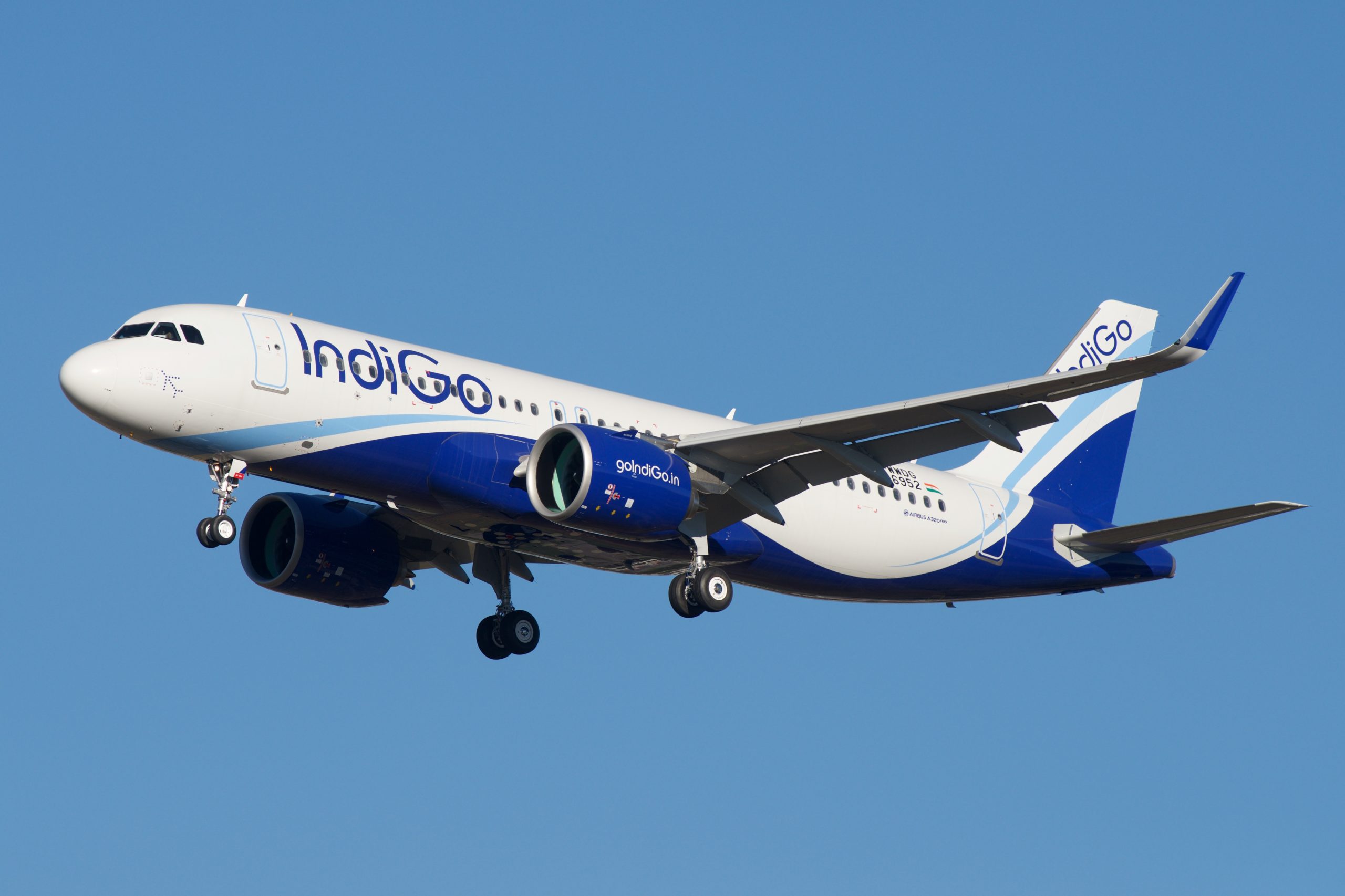
India’s aviation regulator, the Directorate General of Civil Aviation (DGCA), has imposed a consolidated fine of ₹222 million on IndiGo, as well as issued a stern warning to the company’s senior management, for the widespread flight disruptions witnessed across its network in early December.
The penalty has been levied for non-compliance for 68 days—from December 5 to January 10— under various provisions of the Civil Aviation Requirements (CAR). CAR governs the operational aspects of airlines, including safety standards, crew duty hours, passenger rights, and compliance with scheduling norms.
The action follows the submission of a report by a four-member committee constituted by the DGCA to probe the circumstances leading to the meltdown at the country’s largest airline by fleet and passenger volume from December 4-5, resulting in 1,852 flight delays and 2,507 flight cancellations.
The committee’s report identified “over-optimisation of operations, inadequate regulatory preparedness, along with deficiencies in system software support and shortcomings in management structure and operational control” on IndiGo’s part as the primary reasons behind the event.
The committee alleged the Gurugram-headquartered airline’s management failed to adequately identify planning deficiencies, maintain sufficient operational buffer, and effectively implement the revised Flight Duty Time Limitation (FDTL) provisions. These lapses resulted in widespread flight delays and large-scale cancellations, causing inconvenience to passengers.
The FDTL provisions announced in October 2025 require India-based air carriers to reduce maximum daily flight duty periods, ensure longer rest intervals between shifts, and strengthen fatigue-risk management systems to safeguard crew well-being and passenger safety.
The findings further identified an overriding focus on maximising utilisation of crew, aircraft, and network resources, which significantly reduced roster buffer margins. “Crew rosters were designed to maximise duty periods, with increased reliance on dead-heading, tail swaps, extended duty patterns, and minimal recovery margins.” This means the airline was stretching crew schedules to the limit, leaving little room for operational recovery.
Consequently, this compromised roster integrity and adversely impacted operational resilience.
The committee has also suggested long-term reform measures to address systemic issues to prevent a repeat of such incidents, which have been forwarded to the Ministry of Civil Aviation (MoCA) for its review.
Several aviation industry insiders, however, have termed the penalty as inadequate. They have said that the quantum of fine should have been much higher to set a strong precedent.
Management Warnings
As part of the enforcement actions, the DGCA has cautioned IndiGo CEO Pieter Elbers for inadequate overall oversight of flight operations and crisis management. Chief Operating Officer Sanjay Kumar has been warned over his failure to assess the impact of the Winter Schedule 2025 and the revised FDTL CAR. Warning has also been issued to Senior Vice President of Operations Control Centre (OCC) Rajesh Singh, with directions to relieve him of his current operational responsibilities and not to assign any accountable position for his failure in systemic planning and timely implementation of revised FDTL provision.
Additionally, warnings have also been issued to Deputy Head of Flight Operations, Anil Mehta, Assistant Vice President of Crew Resource Planning, Rakesh Sharma, and Director of Flight Operations, Vivek Rao, for operational, supervisory, manpower planning, and roster management lapses. The airline has been directed to take appropriate action against any other personnel identified through its internal inquiry and submit a compliance report to DGCA.
Compliance Guarantee
IndiGo has been ordered to pledge a bank guarantee of ₹500 million in favour of DGCA, to ensure compliance with the directives and long-term systemic correction. Titled the ‘IndiGo Systemic Reform Assurance Scheme’ (ISRAS), the phased release of the bank guarantee is strictly tied to DGCA-verified implementation of reforms across four pillars. These include leadership and governance (₹100 million), manpower planning, rostering and fatigue-risk management (₹150 million), digital systems and operational resilience (₹150 million), and board-level oversight with sustained compliance (₹100 million). Release of the bank guarantee will be subject to independent verification and certification by DGCA over a three to 15-month period.
“This has been undertaken to ensure that systemic reforms being undertaken are closely monitored by MoCA and DGCA in coordination with senior management of IndiGo in the interest of aviation ecosystem improvement,” a DGCA statement said.
DGCA also took cognisance of the quick restoration of operations by IndiGo to normal levels within a very short period of time. “DGCA also recognises that apart from ensuring timely refunds and CAR compensation to the affected passengers, on the directions of MoCA, IndiGo has additionally extended a ‘Gesture of Care’ (GoC) voucher of ₹10,000 having a validity of 12 months for flights that were cancelled or delayed by more than three hours from 3rd to 5th December 2025.”
The DGCA has also said that it is conducting an internal inquiry to identify and implement systemic improvements within its organisation. The disruptions put a question mark on DGCA’s integrity and effectiveness as a regulator, with several calling for its complete overhaul.
Reiterating the paramountcy of safety and regulatory compliance, the aviation regulator added that “enforcement actions are directed towards strengthening systemic resilience and ensuring sustained operational safety in civil aviation, ensuring that the legitimate interests and well-being of pilots, crew and other operational personnel are duly safeguarded.”
It admitted the findings emphasised the need for balanced operational planning, robust regulatory preparedness, and effective management oversight to ensure sustainable operations and passenger safety and convenience.
– Manish Pant