

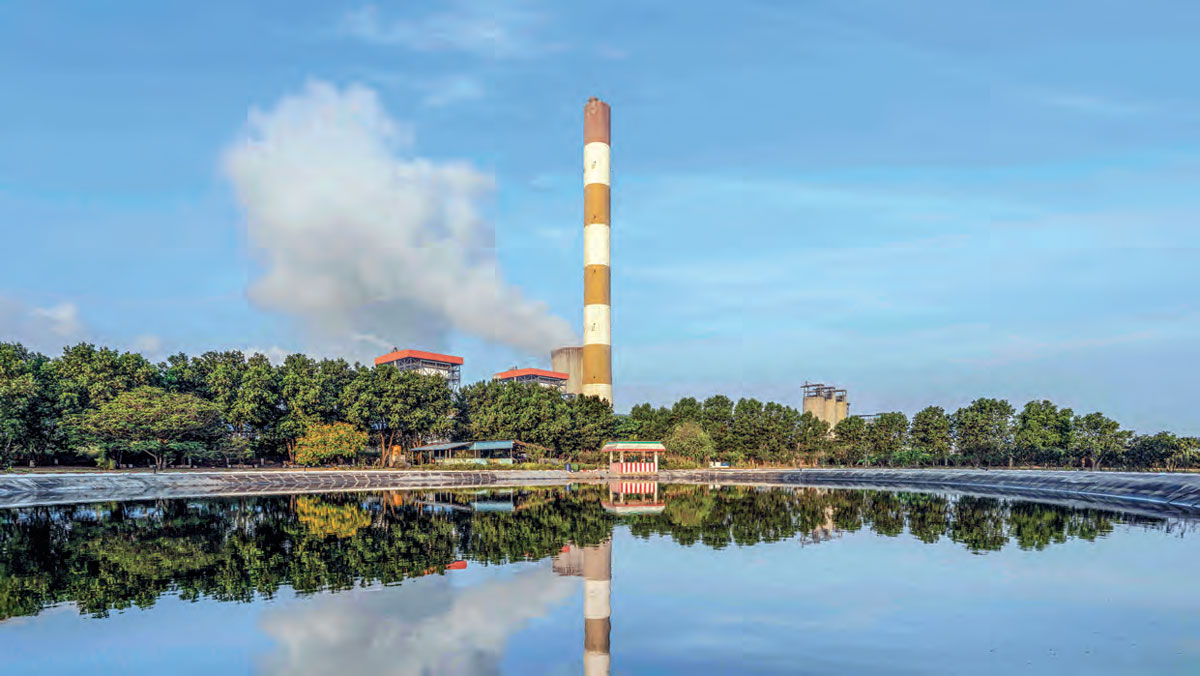
Looking toward 2026 and beyond, India’s energy future will balance coal’s stability with renewables’ flexibility, increasingly supported by cleaner technologies and evolving policy frameworks, avers Janmejaya Mahapatra.
As 2025 turned out to be another transformative year for India’s power sector, it is time to reflect on the forces that continue to shape one of the world’s most dynamic energy landscapes. Over the past decade, the country has made remarkable strides, including expanding electricity access, integrating renewable energy at scale, and modernising generation and transmission infrastructure. As India’s power system grows more diverse, the need for reliable, round-the-clock electricity anchored by a stable baseload has become more critical than ever
Globally, the past year offered stark reminders of what can happen when power systems lack adequate resilience. A widespread blackout in parts of the Iberian Peninsula left millions without heat, communications and essential services, highlighting how deeply modern societies depend on an
uninterrupted electricity supply. Such
events serve as cautionary signals: energy security is not merely about installed capacity or headline additions, but about dependable, real-time availability.
For India, an economy on the cusp of joining the $5 trillion club, this lesson carries particular significance. Rapid electrification, the growth of data centres, electric mobility, and expanding industrial activity are driving sustained increases in demand. Intermittent sources alone cannot provide the backbone required for such growth. As the world’s third-largest consumer of electricity and with coal generating roughly three-quarters of its power, India’s scale and pace of demand growth mean that dispatchable sources remain essential to the grid’s health.
Coal powers india
The numbers tell a clear story. In FY2024-25, net generation from coal and lignite reached a record level, with coal contributing approximately 74-75 per cent of total electricity generation. The share remains at similar levels in the current fiscal year as well.
These figures are not incidental; they reflect coal’s continuing role as the bedrock of India’s power system, even as renewable capacity surges. The government’s own National Electricity Plan (NEP), prepared by the Central Electricity Authority (CEA), projects that by 2026-27, India’s total installed capacity will approach 610 GW with substantial conventional and renewable components. Conventional energy, including coal, is projected to remain a significant share of capacity, with renewables growing rapidly alongside it.
Even as non-fossil capacity expands rapidly toward national targets, coal remains indispensable in ensuring grid reliability. Several structural factors explain why coal-based generation continues to be vital. Modern supercritical and ultra-supercritical coal plants deliver stable, continuous output irrespective of weather conditions, meeting base demand before peak requirements.
With rising renewable penetration, coal plants are increasingly being retrofitted for flexible operations, ramping up or down to counter fluctuations in solar and wind generation. Dispatchable generation remains essential for maintaining grid equilibrium. Coal plants typically achieve much higher availability—often nearing 95 per cent—as compared to variable renewable sources that depend on weather and storage solutions.
Smarter tech evolution
Coal’s endurance in India’s energy mix will be shaped by how decisively the sector embraces technological innovation. High-efficiency, low-emission (HELE) combustion and deep digitalisation are emerging as the twin trajectories redefining coal’s role in the energy transition.
India’s growing fleet of ultra-supercritical plants, and the development pipeline for advanced ultra-supercritical designs, target thermal efficiencies in the mid-40 per cent range, significantly higher than legacy subcritical units. These efficiency gains translate directly into lower coal consumption, reduced water use, and materially lower emissions per unit of electricity generated. Supported by public-private R&D initiatives and a maturing indigenous manufacturing ecosystem, HELE technologies are fast becoming the baseline for future coal capacity in the country.
In parallel, coal plants are undergoing a digital transformation. Predictive maintenance powered by advanced sensors, AI-driven dispatch optimisation, and digital twins that simulate plant behaviour in real time are moving from pilot projects to mainstream adoption. Together, these tools reduce forced outages, extend asset life, optimise fuel burn, and lower emissions intensity, while enabling faster and more flexible response to grid requirements. The thermal power plant of the future will be as much a data-driven intelligence platform as a mechanical asset.
Taken together, HELE technologies and digital operations significantly compress coal’s environmental footprint while enhancing the operational flexibility demanded by high-renewable power systems, ensuring that when deployed intelligently, coal continues to support India’s growth and grid stability.
Policy alignment
India’s long-term climate strategy, as articulated in its Nationally Determined Contribution (NDC) under the Paris Agreement, commits the country to achieving about
50 per cent cumulative electric power capacity from non-fossil fuel sources by 2030. This target places renewables at the heart of India’s
energy transformation and reinforces the dual goal of meeting climate commitments while powering growth.
Crucially, India’s climate framework does not mandate a premature or disorderly phase-out of coal. Instead, it envisages a calibrated integration of coal within a diversified and resilient power system. The NEP and CEA projections reflect this systems-based approach by embedding demand growth, grid stability, reliability requirements, and regional resource diversity into long-term planning. Together, they provide a balanced policy roadmap in which clean energy expansion and conventional generation co-exist in a complementary manner, ensuring that decarbonisation proceeds without compromising affordability, reliability, or national energy sovereignty.
Carbon capture pathways
Beyond efficiency and digitalisation, the decarbonisation story for coal increasingly includes carbon capture, utilisation and storage (CCUS) and coal-derived value chains, approaches that can convert an emissions challenge into an industrial opportunity.
Carbon dioxide captured from large coal stations can become a feedstock for cement, steel and chemical industries. Under the National Coal Gasification Mission, indigenous coal is being converted into synthesis gas for hydrogen, methanol and ammonia. These coal-to-chemicals hubs can substitute for imports of petrochemical feedstocks and fertilisers, conserve foreign exchange, and create domestic industrial value chains.
When coal gasification is integrated with CCUS, it enables production of lower-emission fuels and chemical intermediates that complement green hydrogen during the scale-up phase. Early demonstrations, including use of captured carbon dioxide to produce methanol, show the technical feasibility of these circular value chains. Taken together, CCUS and coal-to-chemicals create an industrially attractive narrative: coal can be part of an economy’s low-emission future if paired with capture, utilisation and efficient conversion technologies.
Logistics & supply security
Reliability in India’s power system depends as much on logistics and procurement as on generation itself. India’s domestic coal production crossing 1 billion tonnes in FY2024-25 marked a strategic milestone, reducing import dependence and reinforcing energy security.
A pithead strategy anchored in locating new thermal capacity near coalfields helps lower transport costs and system vulnerability. Complementary investments in rail freight infrastructure, including the Eastern and Western Dedicated Freight Corridors and associated feeder routes, are steadily easing coal evacuation and improving transit times.
At the same time, policy reforms are reshaping domestic coal markets. The proposed regulated coal trading exchange, with draft rules and stakeholder consultations underway, promises many-to-many trading, deeper price discovery, and greater market efficiency as commercial and captive miners emerge as larger suppliers. A transparent exchange can lower transaction costs, broaden sourcing options for generators, and improve allocation of domestic supply across the system.
Together, production scale-up, logistics upgrades, and market reforms strengthen the supply side of India’s power system and reduce systemic risk, a prerequisite for a secure, orderly energy transition that meets the country’s growth and reliability imperatives.
Strategic implications for the private sector
For private power producers, lenders, and long-horizon investors, India’s coal transition is becoming less about capacity additions and more about better capability encompassing efficiency, flexibility, and emissions intensity. Demand will persist for modernised coal units with greater efficiency, flexibility, and lower emissions intensity. Such interventions also create a pathway for future carbon-management options, including CCUS readiness, where site, policy, and infrastructure conditions make it feasible.
Emerging pathways like coal gasification and CCUS clusters offer diversification opportunities, provided they are backed by credible offtake and strong environmental safeguards. In parallel, more transparent and market-linked coal procurement mechanisms can improve predictability, reduce transaction friction, and sharpen competitiveness for generators operating in tight dispatch and merchant-exposed regimes.
As India looks toward 2026 and beyond, a technology-led and sustainability-aligned role for coal is not only plausible, but it is also strategically important for system reliability.
By advancing cleaner combustion, efficiency upgrades, and selective carbon-capture innovation, the country can preserve a resilient power system that supports growth while progressing toward climate commitments.
The path forward, therefore, lies in leveraging the complementarities of conventional and clean energy. Coal will continue to provide stability, while renewables deliver flexibility and sustainability, a balance increasingly supported by cleaner technologies and evolving policy frameworks.
About the author:
Janmejaya Mahapatra, CEO, SEIL Energy India Ltd.