

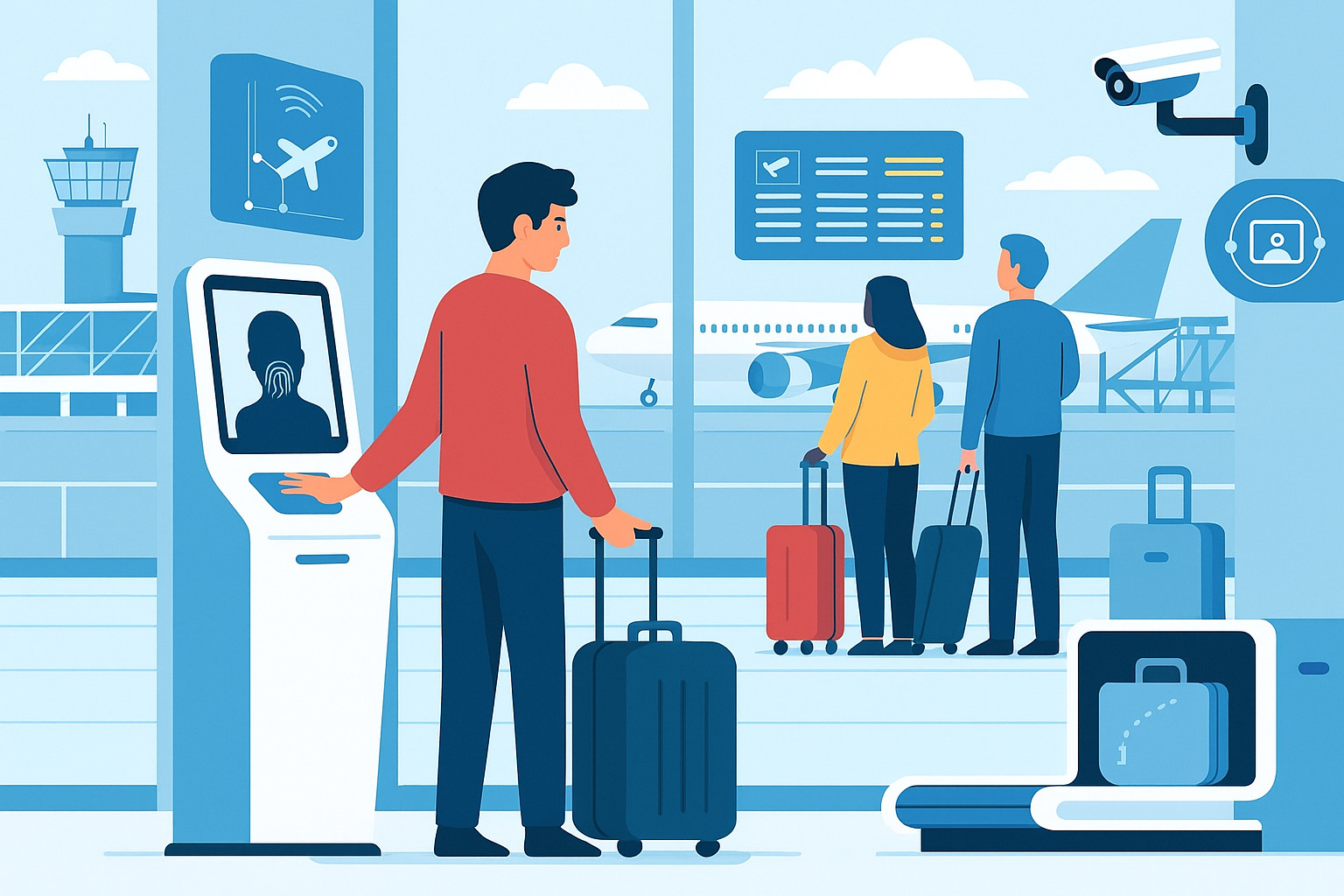
India’s shift toward trusted digital identities, automated borders, real‑time baggage tracking and connected onward travel is accelerating as passenger volumes rise and sustainability targets tighten, according to SITA.
With DigiYatra now operational at 24 airports across India and further expansion underway, the country is moving steadily toward a biometric‑led travel environment. According to SITA, the Geneva‑headquartered IT and telecommunications services provider for the aviation industry, India’s transition to trusted digital identities, automated borders, real‑time baggage tracking, and connected onward travel is accelerating as passenger volumes rise and sustainability targets tighten.
SITA’s long‑term vision of a single check‑in and walk‑through journey is helping the world’s third‑largest aviation market scale operations securely and efficiently.
The company is closely involved in India’s next wave of airport development through future‑ready digital systems. Navi Mumbai International Airport is integrating 22 SITA self‑bag‑drop units to enable automated passenger processing from day one. Mumbai International Airport continues to use SITA’s passenger processing and operational systems. An Airport Management System deployed across six Adani airports enables real‑time data sharing, collaborative decision‑making, and integrated management of gates, counters, and airfields. Noida International Airport is aligned to adopt similar scalable digital and biometric systems as passenger demand increases.
With 411 million air travellers and 174 million origin‑destination passengers, aviation contributes $53 billion to India’s GDP. Digital transformation is central to sustaining this growth. SITA is currently supporting one of the country’s largest aviation technology deployments, with cloud‑based passenger and baggage solutions being implemented across up to 50 Airports Authority of India airports, expected to scale to more than 3,500 touchpoints.
SITA also supports 61 airports across India with Common Use Passenger Processing Systems (CUPPS), Common Use Self‑Service (CUSS) kiosks, and Baggage Reconciliation Systems (BRS). It enables over 65 airlines to meet India’s Advance Passenger Information (API) requirements, employs more than 1,135 staff nationwide, operates a 24×7 Global Command Centre in Delhi, and undertakes local manufacturing in line with the Make in India initiative.
Passengers Choose Convenience
Air passengers globally are increasingly willing to pay for faster airport processing, end‑to‑end baggage tracking, and digital identity‑enabled journeys, according to SITA’s 2025 Passenger IT and Baggage Report. The company attributes this shift to evolving traveller priorities centred on convenience, trust, and sustainability.
The report also highlights a parallel rise in digital investments. Airlines are expected to invest $8.9 billion, while airports plan investments of $37 billion globally to advance biometrics, cloud‑based systems, automation, and real‑time operations. These capabilities are becoming critical as global air travel is projected to exceed 8 billion passengers by 2040, with growth expected to outpace physical infrastructure expansion.