

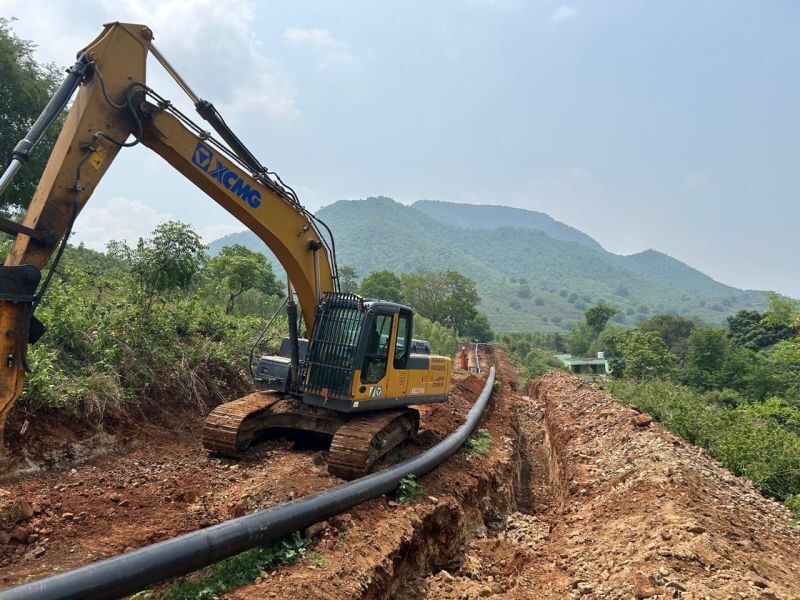
The Srikakulam-Angul Natural Gas Pipeline is a transformative artery, connecting the eastern coast with India’s energy heartland to unlock opportunities for industry, households and sustainable development.
Even as the world debates energy security in an increasingly uncertain geopolitical climate, India has quietly executed a world‑class energy asset that is already serving as a template for similar initiatives globally. As a senior official at GAIL India—the country’s largest natural gas transporter—explains, the Srikakulam-Angul Natural Gas Pipeline (SAPL) embodies national priorities of safety, sustainability and innovation in infrastructure development.
“For India, SAPL is not just a completed project; it is a pillar of national energy security, a symbol of modernisation, and a long‑term enabler of industrial and environmental transformation,” the official emphasises.
In the three months since its inauguration on October 16 by Prime Minister Narendra Modi, SAPL has begun fulfilling its mandate as an artery connecting the eastern coast with the energy heartland. In doing so, it is delivering transformative opportunities for industries, households and sustainable development in Andhra Pradesh and Odisha.
Calling the project a “strategic leap,” Hardeep Singh Puri, Union Minister for Petroleum and Natural Gas, stated at the dedication ceremony, “SAPL will unlock industrial potential across Andhra Pradesh and Odisha, providing cleaner and more cost‑effective energy to industries and households, while reinforcing India’s long‑term energy security.”
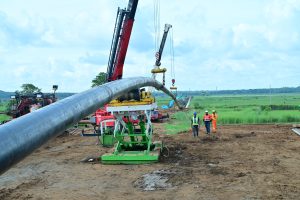
Engineering Feat
Spanning 422 km across Andhra Pradesh and Odisha, the commissioned SAPL main pipeline transports gas from coastal Srikakulam to the industrial hub of Angul. The alignment cuts through seven districts and diverse terrain, including coastal plains, rocky uplands, forest belts and major river systems.
Executing 57 horizontal directional drilling (HDD) crossings, including India’s longest‑ever 24‑inch HDD (3.82 km) across the River Mahanadi, demanded advanced geotechnical monitoring, gyro steering and high‑density mud systems. The intersection method used mid‑river showcased trenchless engineering at its finest, placing SAPL among global best‑in‑class pipeline projects.
Beyond terrain, the project navigated enormous regulatory complexity. More than 718 permissions were secured across forest, railway, highway, irrigation and district authorities. GAIL’s multi‑tier governance model enabled real‑time coordination, joint inspections and conflict resolution, ensuring uninterrupted execution even in ecologically sensitive zones.
Work on the 322 km spur pipeline is expected to be completed by mid-2026.
Economic Catalyst
SAPL is more than a pipeline; it is a deliberate re‑engineering of India’s energy flow. By enabling bi‑directional balancing, it strengthens the National Gas Grid with new operational flexibility. Industries such as Vedanta, NALCO and Utkal Aluminium now have access to cleaner, cost‑effective energy, enhancing competitiveness and reducing emissions.
The pipeline also accelerates city gas distribution networks, bringing piped natural (PNG) gas to households and expanding compressed natural gas (CNG) infrastructure in urban centres. Its commissioning supports India’s goal of raising natural gas’s share in the primary energy mix to 15 per cent, while reinforcing climate commitments. It reduces dependence on diesel and furnace oil, curbs particulate pollution and fosters sustainable urbanisation.
In December, Piyush Vedprakash Goyal, Union Minister for Commerce and Industry, highlighted the country’s achievement in the energy sector: “A total of 34,238 km of natural gas pipeline has been authorised, of which 25,923 km is operational.” SAPL is one of the prominent milestones in that journey by the world’s third‑largest energy consumer.
– Manish Pant