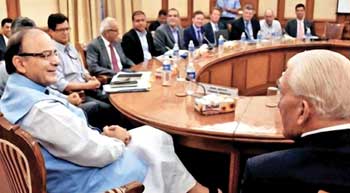
All states will implement GST by July 2017. The Constitution Amendment Bill for Goods and Services Tax has been approved by the President of India post its approval in Parliament (Rajya Sabha on 3 August 2016 and Lok Sabha on 8 August 2016) and ratification by more than 50 per cent of state legislatures.
FlashNews:
Tata Power Odisha Discoms Secure Top National Rankings for Third Consecutive Year
SDHI Secures $227 Million Chemical Tanker Deal, Revives India’s Commercial Shipbuilding
India’s Energy Transition Sets Global Pace: Pralhad Joshi at Davos
IWDC Clears ₹15 Billion Projects to Boost Green Mobility, Cargo and River Tourism
World Bank Approves $815 Million Financing for Tata Power-DGPC Dorjilung Hydropower Project in Bhutan
Indian Railways Deploys Humanoid Robot ASC ARJUN at Visakhapatnam for Smart Station Security
India’s Power Grid Crosses 500,000 Circuit Km, Marks 71.6% Growth Since 2014
India Inc Optimistic on Growth, Flags Infrastructure, Defence and Export Priorities: FICCI Survey
NHAI, Konkan Railway Ink MoU to Boost Integrated Road‑Rail Infrastructure Development
DGCA Digitises Pilot Licensing with Electronic ATPL Services to Strengthen Aviation Ecosystem
Power Minister Calls for Financially Strong Discoms to Drive India’s Energy Future
BLR Airport Launches Gate Z, India’s First Social Lounge Redefining the Airport Experience
MoPNG Highlights Financing Strength, Regulatory Reforms Ahead of New Upstream Bid Rounds
ABB India Modernises BPCL’s Vadinar‑Bina Pipeline for Uninterrupted Operations
Vaishnaw Projects 6-8% Growth, Highlights Reform Momentum at Davos
Aerem Solutions Secures $15 Million to Drive Distributed Solar Adoption Across India
India Showcases Energy Transition at Davos: Joshi Calls for Global Collaboration
Indian Railways Expands High-Speed Track Network, Boosts Safety with Modernisation
Steeling Energy Security: SAPL Redefines India’s Gas Economy
Tag: CGST
GST implementation will ensure seamless credit availability
The most crucial tax reform since Independence, GST aims to iron out a multilayered indirect tax system and usher in a uniform tax structure. This development augurs well for the infrastructure sector.
GST… What´s in it for infra?
India´s ambitious infrastructure development plans hinge largely upon a successful transition from the current multiple taxes regime to the new uniform taxation code of the Goods and Services Tax (GST). Is the industry ready to meet the April 1, 2017 deadline? We do a status check...
Most complex tax regime by far
The macroeconomic aspects of GST haven´t been taken into account. If the government says that it will collect more revenue, then that means that prices will have to rise because it´s an indirect tax. If prices rise, then industrial output would tend to stagnate or decline.