

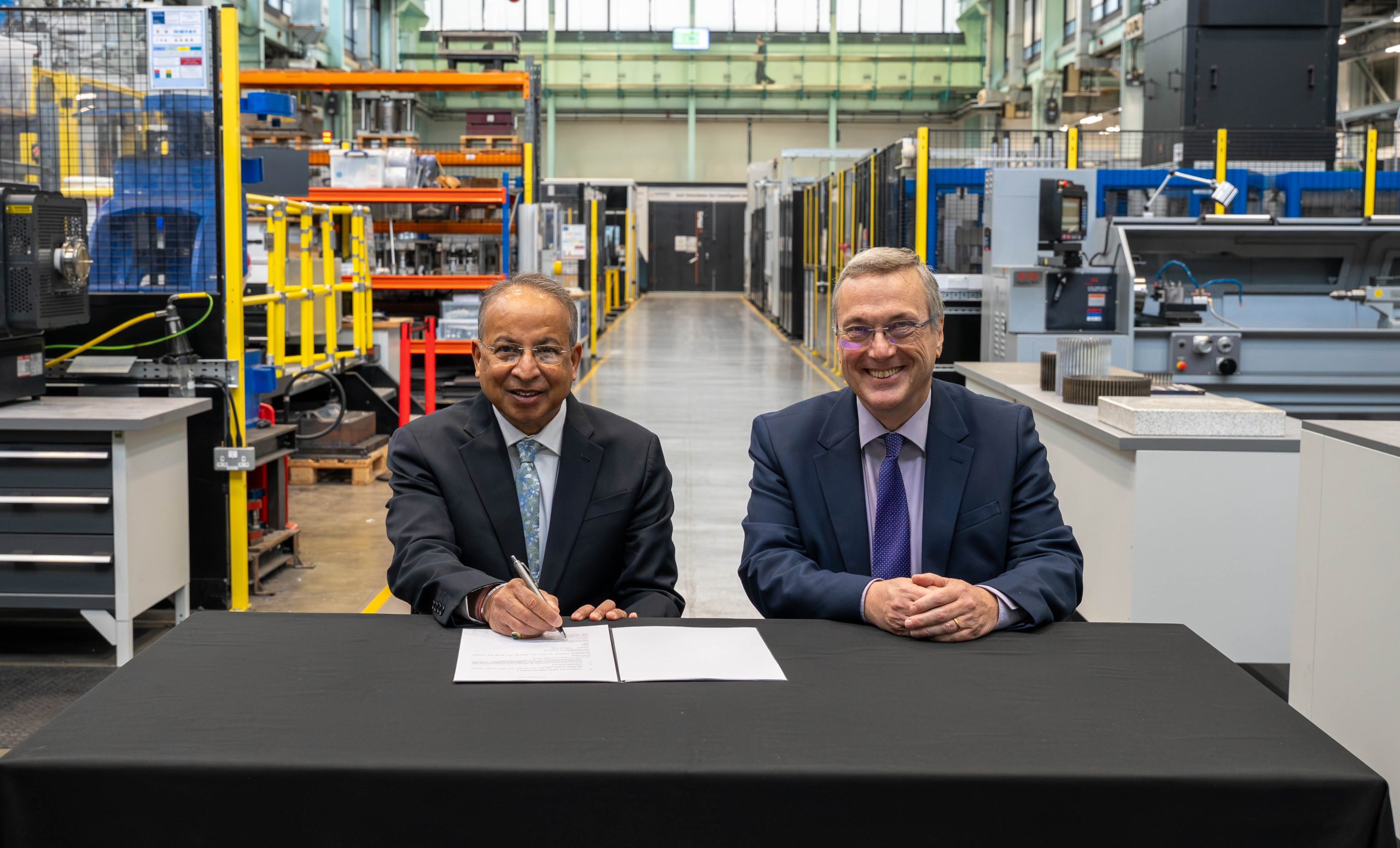
Focused on innovation, the partnership covers grid modernisation, fast charging, power storage, industrial decarbonisation, digital energy systems, optimisation, and advanced manufacturing.
Tata Power and the University of Warwick have signed a strategic memorandum of understanding to advance innovation in new energy systems. The partnership will focus on grid modernisation, fast charging, power storage, industrial decarbonisation, digital energy systems, optimisation, and advanced manufacturing.
The collaboration also includes executive education programmes, capability development initiatives, technical workshops, exchange opportunities, and joint case study development. These efforts aim to strengthen long-term research capability, talent development, and global academic engagement aligned with Tata Power’s strategic priorities.
The agreement builds on decades of expertise at Warwick Manufacturing Group (WMG) and the School of Engineering. The university has announced a renewed focus on energy systems to support the partnership, leveraging its research strengths across semiconductors, power electronics, machines and drives (PEMD), and full energy systems.
Professor Stuart Croft, Vice-Chancellor and President of the University of Warwick, said, “We strive to make a better world through our world-leading research and education. Our partnership with Tata Power marries our academic excellence with leading industry expertise to help advance a more sustainable future for people, places, and our planet.”
Praveer Sinha, CEO & Managing Director, Tata Power and Honorary Professor at WMG, stated, “We are building a consumer-centric green energy future anchored in decarbonisation, reliable and affordable power, and long-term sustainability. Our agreement with the University of Warwick, an institution with a distinguished track record in electrification and sustainability, will further accelerate our ambitions and strengthen the pathway to achieving them.”
In 2025, Tata Group and the University of Warwick were jointly awarded the Royal Academy of Engineering’s Lord Bhattacharyya Award for their pioneering partnership. Existing research programmes within WMG and the School of Engineering already support advances in circular materials, battery innovation, wind energy, AI, and industrial decarbonisation, contributing to national and global carbon reduction targets.