

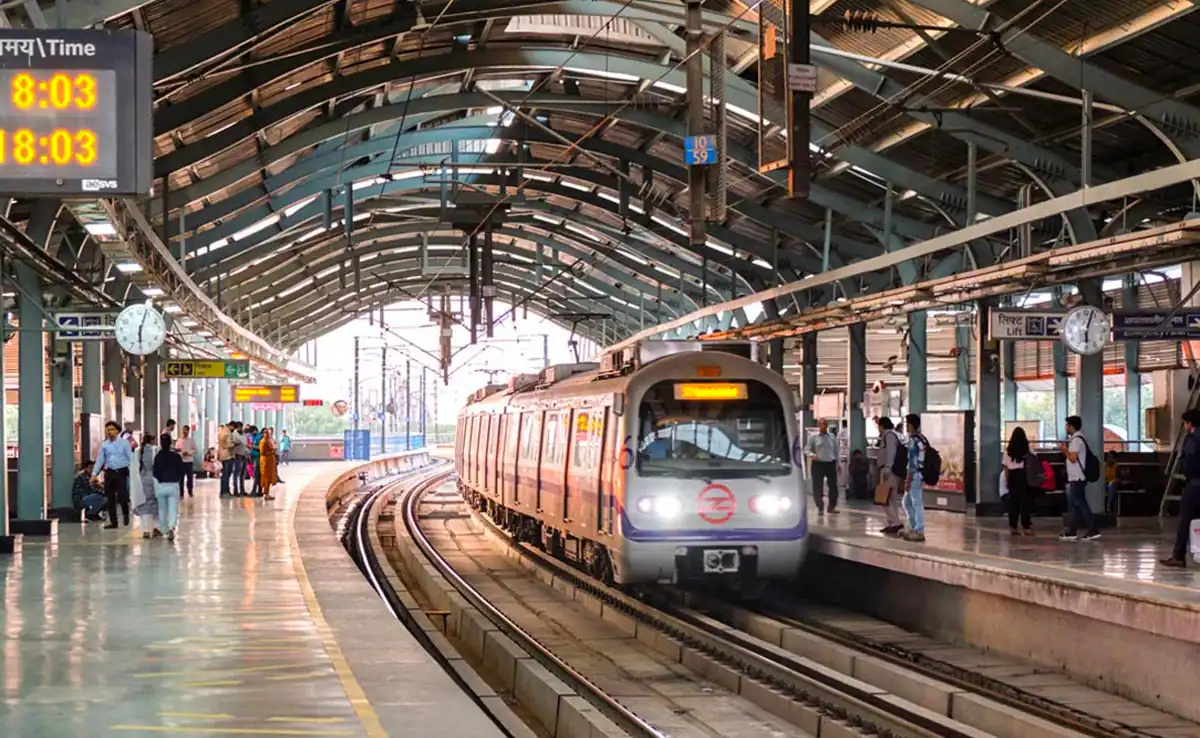
At the heart of the expansion, the Central Vista corridor promises seamless metro access for 60,000 office goers and 200,000 daily visitors.
Even as India is poised to become the second‑largest metro rail network in the world, the Union Cabinet chaired by Prime Minister Narendra Modi has approved three new corridors for the Delhi Metro, the national capital’s lifeline.
Announcing the decision, Union Minister for Information & Broadcasting Ashwini Vaishnaw said, “At an investment of ₹12.15 billion ($146 million), 16 km will be added to the Delhi Metro network, with 13 new stations. With this the Delhi Metro network will cross 400 km.”
The latest Phase‑5A Project will extend the Botanical Garden-RK Ashram Marg corridor through the RK Ashram Marg-Indraprastha section, covering 9.913 km and providing direct connectivity to the Central Vista area, which is currently under redevelopment. The Aerocity-Indira Gandhi International Airport Terminal‑1 stretch of 2.263 km and the Tughlakabad-Kalindi Kunj section of 3.9 km will extend the Aerocity-Tughlakabad corridor, strengthening airport connectivity with southern Delhi areas such as Tughlakabad, Saket and Kalindi Kunj.
Vaishnaw added, “These extensions will comprise of 13 stations. Out of these ten stations will be underground and three stations will be elevated.”
The Central Vista corridor is the highlight of the project, offering doorstep connectivity to nearly 60,000 office goers and 200,000 visitors daily.
Referring to the environmental benefit, Vaishnaw informed, “This expansion will result in cutting down on 0.033 million metric tonnes of carbon dioxide emission.”
Meanwhile, construction of Phase‑4, consisting of 111 km and 83 stations, is underway, with three priority corridors expected to be completed in stages by December 2026.
The Delhi Metro caters to an average of 6.5 million passenger journeys per day, with a record 8.187 million journeys on August 8, 2025. As one of the world’s largest metro networks, the Delhi Metro Rail Corp. operates 12 lines spanning 395 km with 289 stations across the Delhi NCR.
– Manish Pant