

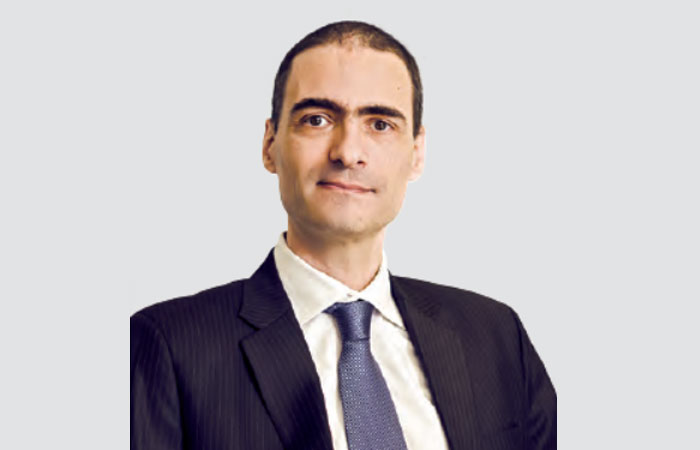
For Guillaume Dourdin, taking over as the India head of the world’s largest water management company wasn’t easy. He had to expand the legacy of his predecessor, the legendary Patrick Rousseau, whose contributions ranged from direct-to-tap services to environmental solutions and boosting India-France economic ties. Three years since taking charge in December 2022, the CEO & Managing Director, Veolia India Pvt. Ltd, tells INFRASTRUCTURE TODAY’s Manish Pant that the company is gearing up to double its presence here through municipal expansion, industrial partnerships, and innovation.
You succeeded Patrick Russo, who pioneered 24/7 municipal water in India. How did you approach carrying forward his legacy?
Patrick Russo laid the foundation for Veolia in India, proving that reliable tap water was possible through landmark concessions in Nagpur for the Orange City Water project and Nangloi. My priority was to deliver on those projects, making Nagpur a benchmark for modern services. Since then, we have diversified into hazardous waste and
carbon capture, so Veolia India now works with both municipalities and industries on environmental solutions.
Since Orange City Water, Veolia India has expanded into new areas. How do you assess this growth?
Orange City Water was our starting point. We doubled the network, increased household connections fivefold, and reduced non-revenue water from 70 to 29 per cent. We modernised operations with a digital control room, enabling real-time monitoring.
Building on that, we expanded into Delhi through the Nangloi concession and into Karnataka’s Tier-2 and Tier-3 cities. More recently, we secured two major drinking water projects in Mumbai—Bhandup for 2,000 MLD (megalitres per day) and Panjrapur for 910 MLD—which together will supply nearly
60 per cent of the city’s needs by 2029-30. Beyond municipal services, we entered hazardous waste management in Gujarat, developing landfills, incineration, and zero-liquid discharge facilities. We also launched a carbon-capture project with Tata Steel, reusing 5 tonnes of carbon dioxide daily, a modest but symbolic step toward decarbonisation.
Over the years, you have witnessed the evolution of distribution and conservation practices. What trends stand out to you?
There is now strong momentum in recognising that environmental issues could hinder India’s development. Citizens, companies, and government alike are more conscious of water, waste, emissions, and renewable energy. Government initiatives such as river clean-up programmes and the ‘tap for every citizen’ (Har Ghar Jal) mission reflect this shift, but what is striking is the concern now shared by the public and companies alike. To capture this, we conducted a barometer of ecological transformation, surveying municipalities and citizens. India scored among the highest globally, with people acknowledging the importance of preserving the environment not only for nature’s sake but as essential for growth. Encouragingly, many are willing to bear some cost to balance progress with sustainability. This rising consciousness is a powerful message of hope and signals that environmental responsibility is becoming central to India’s future.
In the last decade, many have compared India’s current stage of development to that of Western economies in the 19th century. What is your perspective on this comparison?
India is still building much of its infrastructure, but progress is far quicker than in many developed countries. Solutions cannot simply be imported; they must be adapted to local realities. Veolia brings global expertise—operating 5,000 plants worldwide—but relies on local talent. In India, we employ 1,700 people, only three of whom are expatriates. India is no longer just a recipient of global models; it is creating references exported elsewhere. Our water technology division manufactures equipment in India for 20 countries. After 25 years, we are deeply embedded with India, both learning from and contributing to global practices.
Both India and France have a strong welfarist ethos, deeply embedded even before socialism. What, then, is the real cost of a service like free water?
Water as a resource may be free, but safe, reliable service has a cost. Collecting water from a river may cost nothing, but the health risks, hospital bills, and lost working hours make it far from free. Delivering safe water has a cost, and that cost must be recovered one way or another. As an operator, my role is to make services as reliable and affordable as possible. It is for municipalities and governments to decide how the cost is shared, whether through taxation, equalised across society, or through water bills with differentiated tariffs for households, businesses, and industries. This is a political decision in the noble sense, reflecting policy choices rather than technical ones. Water is highly emotive, and debates around its pricing are always sensitive. To illustrate the human impact, I recently hosted Veolia’s Asia Executive Committee in Nagpur, where we visited a slum community served by Orange City Water. Residents told us how their lives had changed: no longer waking at odd hours to collect water, no longer fearing shortages, and enjoying the security of a continuous supply. These voices from the poorest communities underline the point: water as a resource may be free, but safe, reliable service has a cost. And when people see the tangible benefits, they recognise its value and are willing to contribute.
After 25 years in India, what are Veolia’s priorities for the next decade?
We break the horizon into milestones—2027 and 2030—aligned with Veolia’s global plans. By 2027, we aim to double our India operations. On the water side, projects such as Bhandup and Panjrapur show how we can contribute at scale. Wastewater reuse will be critical to balance urbanisation and industrialisation, while desalination offers new resources where scarcity is acute. Hazardous waste management is equally important as industries integrate into global value chains. We are expanding beyond Gujarat, with investments in Maharashtra, and supporting industries with water optimisation, energy efficiency, and decarbonisation. Waste and sludge can be converted into bio-CNG (compressed natural gas), turning untapped resources into renewable energy. Growth will come from combining municipal expansion, industrial partnerships, and innovation.
India is aspiring to become a global hub for semiconductors and data centres. How can Veolia’s expertise support these industries while
balancing sustainability?
In microelectronics, we already manage the entire water cycle for a major South Korean producer, a partnership lasting over 20 years. This gives us deep knowledge of ultra-pure water, wastewater treatment, and reuse. Much of the water is recycled back into production, and that efficiency is what we can bring to India. Data centres pose an even greater challenge, consuming vast amounts of water and energy. Recycling, heat recovery, and renewable integration will be critical. What often gets overlooked is long-term operation. Many plants run at half capacity because operations are not prioritised. Veolia’s
strength lies in being an operator: construction is only the beginning, and our value is in ensuring facilities run at maximum efficiency for decades.
Veolia operates some of the world’s largest desalination plants, but the process is often criticised as energy-intensive. How has technology evolved to reduce its carbon footprint?
Over the past two decades, desalination has advanced significantly. The cost of desalinated water has fallen nearly tenfold, driven largely by improvements in energy efficiency. Modern plants now use advanced energy-recovery systems and compact designs that reduce both power use and land requirements. Still, desalination cannot be the sole solution. The future lies in a balanced mix of freshwater, reuse, and desalination, combined with greater efficiency in consumption. Veolia’s role extends beyond technology to long-term operations. For example, in China, we helped a steel mill cut water use from four cubic metres per tonne of steel to 1.8, saving over 2 cubic metres per tonne. With an annual production of 20 million tonnes, the savings were immense. This shows how desalination, alongside reuse and efficiency measures, can meet growing industrial and urban needs while keeping resource consumption under control.
Amid rapid urbanisation and rising incomes, what waste-management strategies suit India’s unique scale?
India’s scale is unparalleled, where any solution immediately affects millions. Waste management, therefore, cannot rely on a single mega-facility; it requires a layered system of collection, aggregation, treatment, and reuse. Infrastructure must extend beyond plants to robust collection networks that densify and integrate recycling. Recent legislation mandating segregation at source is a vital step, making recycling schemes far more effective. At the same time, reducing waste generation through industrial efficiency is critical. For example, optimising water use in steel mills also reduces sludge and waste output. Once segregated, materials such as PET (polyethylene terephthalate) plastics are recovered effectively, but other resins remain underutilised. Expanding recovery rates and advancing modern waste-to-energy solutions will be essential. Landfills will not disappear entirely, but their impact can be minimised if residual waste is reduced and energy recovery maximised. Ultimately, India’s challenge demands a comprehensive system combining infrastructure, regulation, efficiency, and innovation.
You are also working towards boosting R&D and manufacturing in water treatment, equipment, waste management, and energy recovery solutions…
Veolia invests heavily in R&D worldwide, combining fundamental research with applied innovation tailored to local needs. In India, our role is to adapt global technologies to local realities, ensuring they deliver maximum efficiency. This has led us to develop our own innovation and manufacturing capabilities here. Through our water technology division, we now produce equipment in India that is exported to more than 20 countries. We also operate a design and technical centre in Bengaluru, supporting Veolia’s global growth while harnessing India’s highly skilled engineering talent.
Do you have any specific targets for Make in India over the next five years?
In our technology business, we are already manufacturing in India and plan to expand further, exploring additional equipment that can be produced locally rather than imported. More importantly, our operations are deeply embedded in India. While we may not directly manufacture for export in every case, we act as enablers for industries that do.
By efficiently managing utilities such as water, waste, and energy, we provide the backbone that allows Indian industries to
grow, both for the domestic market and for global exports. In that sense, our contribution to Make in India is not only through direct manufacturing but also by supporting the competitiveness and sustainability of industries that rely on our services.
Looking ahead, what else would you like to highlight about Veolia’s journey in India?
Two points are close to my heart. First, we are here for the long term and intend to grow, doubling the size of the company while also investing heavily in our people. Training, exposure, and leadership development are central to building future leaders in India. Second, health and safety remain fundamental. We are committed to setting exemplary standards across our sites, ensuring the environmental industry in India becomes far more safety-conscious. For me, you cannot claim global leadership without being exemplary in this area, and that is where we continue to invest significantly.
Water often sparks emotional debates: from myths about its nature to arguments over public versus private management. How do you see your role in this wider dialogue?
Water is indeed a sensitive and complex subject, often surrounded by misunderstanding. That is why we must take time to explain and re-explain our responsibilities, the government’s role, and how we support communities. At Veolia, our purpose is clear: to deliver reliable services while working for the good of the country and the people we serve. Ultimately, it is about building trust, clarifying misconceptions, and ensuring that water remains a source of progress rather than division.