

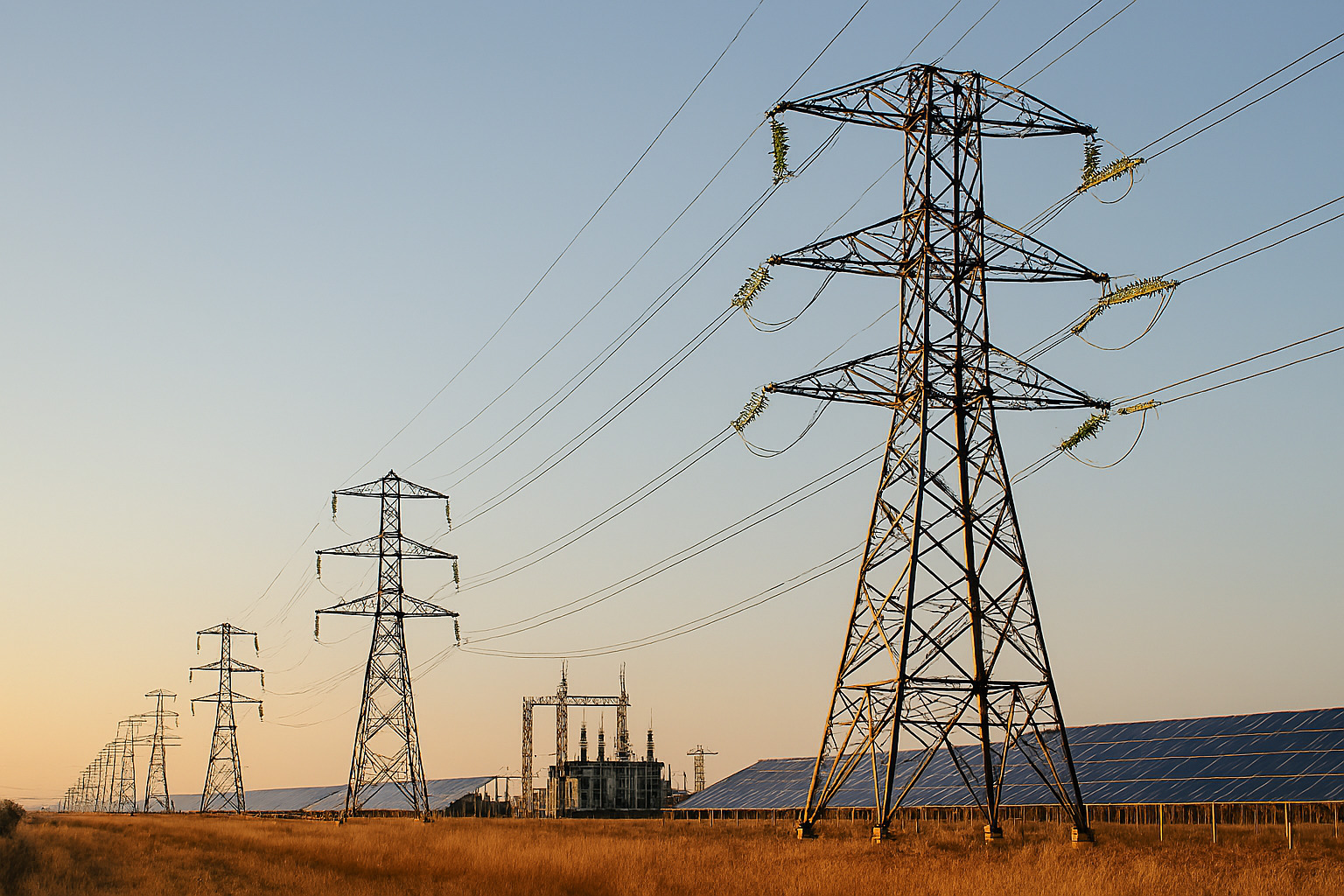
The share of non‑fossil fuel capacity has now overtaken fossil fuels, reflecting India’s steady transition toward cleaner energy sources.
India, the world’s third‑largest energy consumer, has added a record 52,537 MW (52.5 GW) of generation capacity from all sources in FY2025‑26 till January 31, the Ministry of Power has said. This marks the highest‑ever capacity addition in a single year, a 54 per cent increase over the previous record of 34,054 MW achieved during FY2024‑25.
Furthermore, during FY2025‑26, more than 11 per cent has been added to the country’s total installed capacity.
As of January 31, India’s total installed power generation capacity stands at 520,510.95 MW.
The share of non‑fossil fuel capacity has now overtaken fossil fuels, reflecting India’s steady transition toward cleaner energy sources.
The country has reported 248,541.62 MW of fossil fuel‑based capacity, including the addition of 8,810 MW of thermal power. In comparison, non‑fossil fuel capacity—comprising renewables, large hydro, and nuclear—stands at 271,969.33 MW.
As for renewable energy sources, the country added 39,657 MW, including 34,955 MW of solar power and 4,613 MW of wind power. The total renewable energy capacity now stands at 263,189.33 MW.
The contribution of nuclear energy is 8,780 MW. India has laid out a roadmap to boost nuclear capacity to 100 GW by 2047, positioning nuclear power as a critical pillar of its long‑term energy mix.