

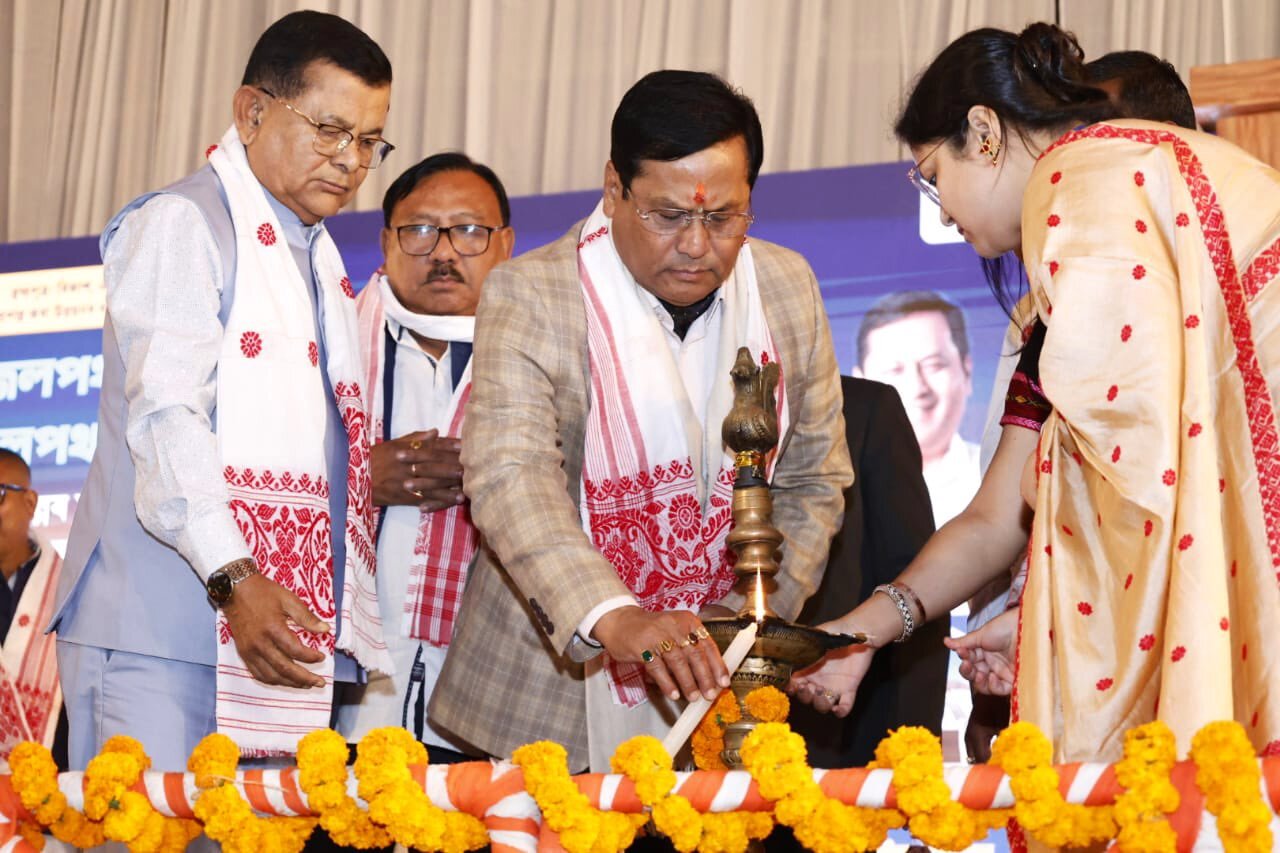
Inaugurating three inland waterways projects in Assam, Union Minister Sarbananda Sonowal presented them as part of India’s broader push to modernise trade and connectivity while safeguarding cultural legacy.
Union Minister of Ports, Shipping & Waterways, Sarbananda Sonowal, inaugurated three inland waterways projects on National Waterway‑2 (NW‑2) along the Brahmaputra in Assam on Friday, framing them as part of India’s effort to combine economic progress with heritage preservation.
The projects include the Customs and Immigration Complex at Bogibeel, the Customs and Immigration Complex at Dhubri, and the renovated heritage building of the Inland Waterways Authority of India (IWAI) at Dibrugarh.
Sonowal said, “We are striving toward progress and economic development while preserving our roots, our heritage and our culture. The Brahmaputra is not just a river; it is our lifeline, our history and our future.”
The Bogibeel complex integrates customs, immigration, and IWAI functions within a modern tourist‑cum‑cargo terminal. Equipped with arrival and departure halls, cargo storage, administrative blocks, staff amenities, and security systems, the complex is built to enhance efficiency on NW‑2 and facilitate trade under the Indo‑Bangladesh Protocol routes.
The Dhubri complex improves regulatory oversight and boosts export‑import operations in western Assam, establishing the town as a gateway for inland water transport and cross‑border trade with Bangladesh and Bhutan.
The renovated heritage building at Dibrugarh combines architectural restoration with upgraded operational infrastructure. It will serve IWAI’s administrative needs while contributing to riverine tourism and preserving the region’s legacy.
Under the National Waterways Act, 2016, 20 rivers in the Northeast have been declared National Waterways, with the Brahmaputra (NW‑2), Barak (NW‑16), Dhansiri (NW‑31), and Kopili (NW‑57) under active development. Collectively, these projects are expected to reduce logistics costs, improve passenger and cargo movement, strengthen cross‑border trade, and reinforce the Brahmaputra’s role as a sustainable economic corridor for the Northeast.