

The country’s power sector has advanced rapidly, yet a dependable, round-the-clock baseload supply is more vital than ever, writes Janmejaya Mahapatra.
As 2025 turned out to be another transformative year for India’s power sector, it is time to reflect on the forces that continue to shape one of the world’s most dynamic energy landscapes. Over the past decade, the country has made remarkable strides, including expanding electricity access, integrating renewable energy at scale, and modernising generation and transmission infrastructure. Yet, 2025 has also reinforced a fundamental truth: as the power system becomes more diverse and complex, the need for reliable, round-the-clock electricity, anchored by a stable baseload, has never been more critical.
Globally, the past year offered stark reminders of what can happen when power systems lack adequate resilience. A widespread blackout in parts of the Iberian Peninsula left millions without heat, communications and essential services, underscoring how deeply modern societies depend on an uninterrupted electricity supply. Such events serve as cautionary signals: energy security is not merely about installed capacity or headline additions, but about dependable, real-time availability.
For India, an economy on the cusp of joining the $5 trillion club, this lesson carries particular significance. Rapid electrification, the growth of data centres, electric mobility, and expanding industrial activity are driving sustained increases in demand. Intermittent sources alone cannot provide the backbone required for such growth. As the world’s third-largest consumer of electricity and with coal generating roughly three-quarters of its power, India’s scale and pace of demand growth mean that dispatchable sources remain essential to the grid’s health.
Coal’s Grid Role
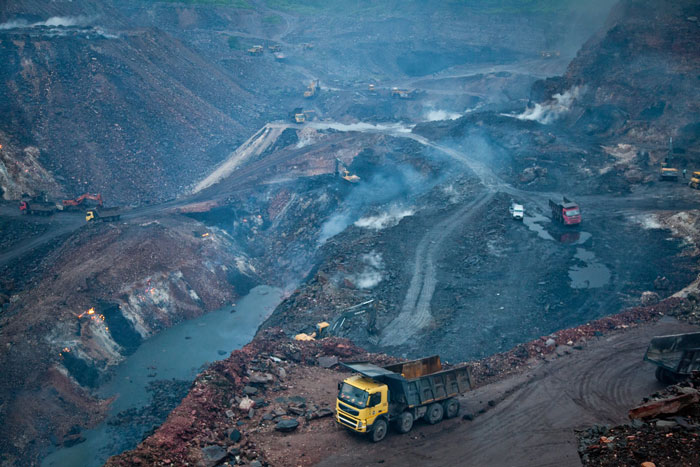
The numbers tell a clear story. In FY 2024-25, net generation from coal and lignite reached a record level, with coal contributing approximately 74-75 per cent of total electricity generation. These figures are not incidental; they reflect coal’s continuing role as the bedrock of India’s power system, even as renewable capacity surges. The government’s own National Electricity Plan (NEP), prepared by the Central Electricity Authority (CEA), projects that by 2026-27, India’s total installed capacity will reach approximately 610 GW, comprising substantial conventional and renewable components. Conventional energy, including coal, is projected to remain a significant share of capacity, with renewables growing rapidly alongside it.
Even as non-fossil capacity expands rapidly toward national targets, coal remains indispensable in ensuring grid reliability. Several structural factors explain why coal-based generation continues to be vital. Modern supercritical and ultra-supercritical coal plants deliver stable, continuous output irrespective of weather conditions, meeting base demand before peak requirements. With rising renewable penetration, coal plants are increasingly being retrofitted for flexible operations, ramping up or down to counter fluctuations in solar and wind generation.
Dispatchable generation remains essential for maintaining grid equilibrium. Coal plants typically achieve much higher availability—often nearing 95 per cent—as compared to variable renewable sources that depend on weather and storage solutions. Domestic coal production crossed over 1 billion tonnes in FY2024-25, reducing import dependence, conserving foreign exchange, and reinforcing energy security. Coal-based power continues to support mass consumption at competitive tariffs, enabling equitable access to electricity across regions.
As India looks toward 2026 and beyond, the path forward lies not in choosing between conventional and clean energy but in leveraging their complementarity. Coal will continue to provide stability, while renewables deliver flexibility and sustainability. Encouragingly, this future is being reshaped by advances in cleaner coal technologies and supportive policy frameworks.
ABOUT THE AUTHOR

Janmejaya Mahapatra is CEO, SEIL Energy India Ltd.