The company’s standalone loan book stood at ₹5.9 trillion as of June 30, the largest for any central government-owned NBFC in India. REC Ltd, the power sector financier, on Friday approved its standalone and consolidated financial results for the quarter ended June 30, 2026, declaring its first interim dividend of ₹4.25 per share for FY2026‑27....


Tag: renewables
Post

Post

KEC International Secures First Data Centre Line Order in ₹1.18 Billion Wins
With these wins, the company’s year‑to‑date order intake has crossed ₹5.2 billion, reflecting strong traction across T&D, renewables, civil and cables. RPG Group company and leading EPC player KEC International Ltd., has announced new orders worth ₹1.18 billion across its transmission & distribution (T&D), renewables, civil, and cables businesses. The T&D business has secured projects across India,...
Post

India Has Set Global Benchmark with Lowest Green Hydrogen Price: Joshi
The Union Minister for New and Renewable Energy noted that households generating their own electricity under the PM Surya Ghar Muft Bijli Yojana are set to cross the 3‑million mark this week. Union Minister for New and Renewable Energy, Pralhad Venkatesh Joshi, has said that India has set a new global benchmark in green hydrogen...
Post

Coal and the Grid: Why India Still Needs Baseload Power
The country’s power sector has advanced rapidly, yet a dependable, round-the-clock baseload supply is more vital than ever, writes Janmejaya Mahapatra. As 2025 turned out to be another transformative year for India’s power sector, it is time to reflect on the forces that continue to shape one of the world’s most dynamic energy landscapes. Over...
Post
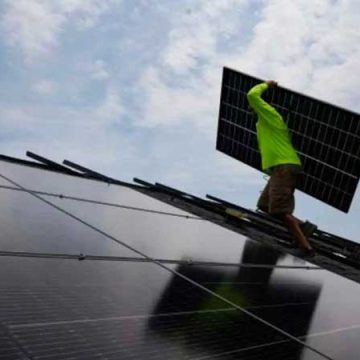
Rs.24 trillion needed for India’s tripling of renewables by 2030: Report
In dia has announced its plans to reach 450 GW of renewable installed capacity by 2030, over three times the current capacity of about 135 GW. But highlighting the challenges in effecting such a transition, a new report by Ember, a UK-based independent think-tank focussed on climate affairs, has found that India would need an...
Post

Mitigate payment-related risks to make infrastructure sustainable
I think in many sectors the policies are conducive. The most recent example is the Rewa Ultra Mega Solar Project, where IFC was the lead public-private-partnership (PPP) transaction advisor. We helped structure the bidding process to include a three-tiered payment security mechanism.
Post

ABB India Ltd posts 54percent order growth in 2016
ABB India has posted its biggest growth in orders in recent years. The investments in power transmission based on cutting edge technology, renewables, increased spend in infrastructure & transportation provided ABB India ample opportunities.
Post
Infrastructure and the Mirage of Money
Private money is not exactly gushing into our infrastructure sectors. If we see the trend, the decline of private investment in infra projects is dramatic and sharp, over the last few years.
Post
KPMG Statement Budget reaction – Renewable and Overall ENR
The increase in coal cess will improve relative attractiveness of renewables, but increase the overall cost of power for utilities by approximately 10,000 crores, thus impacting retail tariffs and utility financial health.
Post
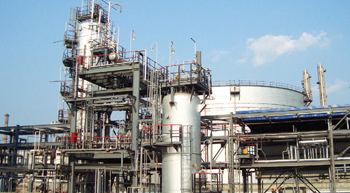
LNG more viable than coal
India is already among the world´s largest energy consumers. Urbanisation, industrialisation, and the government´s commitment to 24 x7 energy access for all imply that our need for power will continue to grow.
- 1
- 2