

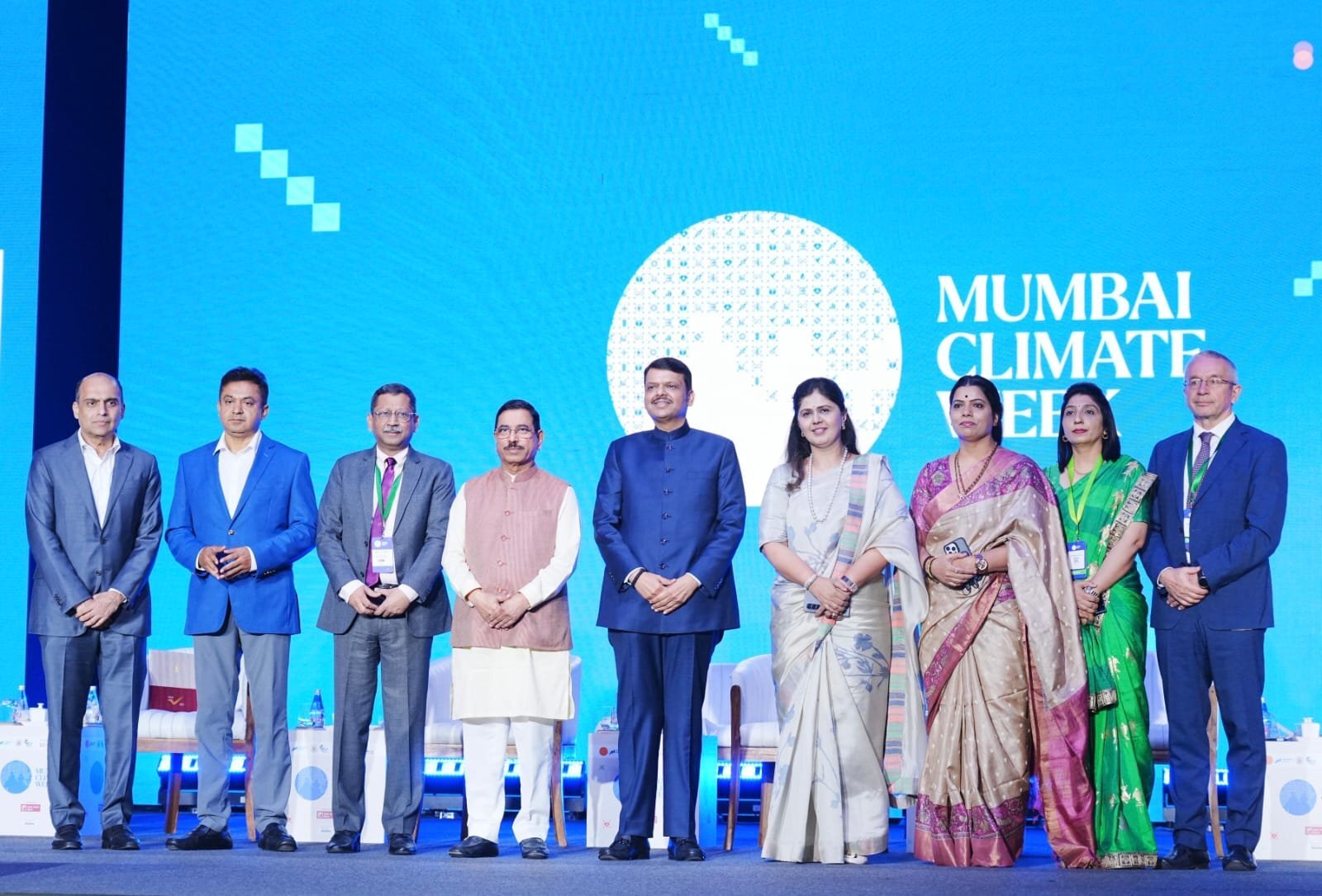
The Union Minister for New and Renewable Energy noted that households generating their own electricity under the PM Surya Ghar Muft Bijli Yojana are set to cross the 3‑million mark this week.
Union Minister for New and Renewable Energy, Pralhad Venkatesh Joshi, has said that India has set a new global benchmark in green hydrogen pricing, with discovered prices now the lowest worldwide.
Addressing the Mumbai Climate Week on Tuesday, Joshi said, “I am happy to announce a new benchmark in green hydrogen, with the price falling to the historic low of ₹279 per kg. In other countries that are also trying to offer competitive prices, it is ₹450-550 per kg. This is the lowest in the world today.”
He noted that the discovery of globally competitive green ammonia pricing further reinforced the country’s leadership in emerging clean fuel markets.
Joshi added that India is set to reach a major milestone in the national residential rooftop solar programme.
“With thousands of households generating their own electricity under the PM Surya Ghar Muft Bijli Yojana, we are going to cross 3 million households from 2.9 million this week.”
He highlighted that India’s non‑fossil fuel capacity has reached 272 GW, reflecting rapid expansion over the past decade. With 141 GW of solar and 55 GW of wind, India has already achieved over 52 per cent non‑fossil capacity in its installed power mix, ahead of schedule.
The minister stated that the country’s renewable manufacturing ecosystem has expanded rapidly, supported by policy stability, financial allocation, and institutional coordination.
Commending Maharashtra Chief Minister Devendra Fadnavis, Joshi said the state demonstrates how economic growth and environmental progress can advance together. He highlighted that through flagship schemes such as PM‑KUSUM and PM Surya Ghar: Muft Bijli Yojana, farmers and households are becoming active participants in the clean energy transition, transforming from consumers into energy producers.
Joshi noted that Maharashtra is targeting nearly 16 GW of solar capacity by the end of the year, with significant monthly additions strengthening the state’s renewable footprint. He emphasised that solarisation of agricultural feeders under PM‑KUSUM has substantially reduced the cost of power supply to farmers, lowering subsidy burdens while enhancing sustainability.