

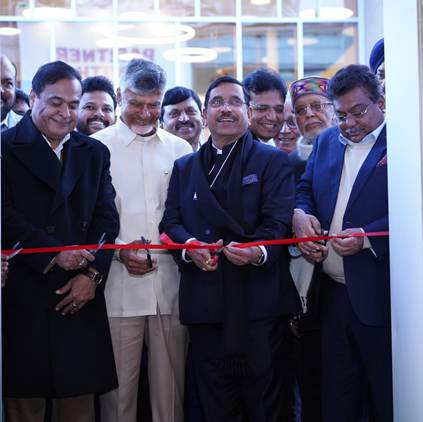
The cynosure of all eyes at Davos this year, Union Minister Pralhad Venkatesh Joshi emerged as a sought‑after voice as India crossed 267 GW of non‑fossil fuel capacity by December 2025, keeping the country firmly on track to meet its 2030 targets.
At the World Economic Forum’s annual meeting in Davos, Union Minister for New and Renewable Energy Pralhad Venkatesh Joshi has positioned India’s energy transition narrative at the centre of global discussions, stressing that the real challenge lies in building infrastructure that is resilient, scalable, and investment‑ready.
With India’s shift to renewable energy among the key themes at Davos this year, Joshi stated, “This transition is backed by robust policies, strong domestic manufacturing, grid modernisation, energy storage solutions, and emerging frameworks for geothermal and nuclear energy.”
The cynosure of all eyes at Davos this year, Joshi has emerged as one of the most sought‑after voices amid a packed schedule. His intervention came as India reached 267 GW of non‑fossil fuel capacity by December 2025, keeping the country firmly on track to meet its 2030 targets.
Speaking at the session ‘Resilient Infrastructure for Growth’, Joshi highlighted the world’s third‑largest energy consumer’s experience of combining scale with system resilience. He emphasised the need for patient capital, blended finance, and deeper collaboration among governments, the private sector, and multilateral development banks to enable a sustainable and inclusive global energy transition.
Delivering the keynote at the roundtable ‘Delivering Sustainability at Scale: Pathways for Global Transformation’, Joshi underlined how sustainability has moved to the core of economic growth. “Sustainability is no longer a peripheral concern but a central driver of competitiveness, resilience, and long‑term growth. The defining challenge of this decade is not whether the world should transition, but how sustainability can be delivered at scale, at speed, and in an economically strengthening manner,” he said.
One Earth, One Future
Reaffirming India’s commitment to achieving net‑zero emissions by 2070, Joshi stressed that the country’s approach is rooted in the principle of Vasudhaiva Kutumbakam or ‘One Earth, One Family, One Future’. “India views sustainability as a strategic transformation of the economy and society, rather than merely a technological shift, and is pursuing renewables with conviction as the most reliable, affordable, and future‑ready pathway for growth.”
Joshi also held high‑level bilateral meetings with ministers from Oman, Belgium, and Kuwait to explore clean energy cooperation and investment opportunities. He engaged with global investors to scale up long‑term energy investments in India, attended the inauguration of the India Pavilion, and launched a green investment handbook titled The India Story.
The pavilion showcases India as a reliable, competitive, and future‑ready destination for global partnerships and investments. It highlights policy stability, reform‑led growth, and a predictable regulatory environment, presenting India’s strengths across manufacturing, infrastructure, renewable energy, technology, and innovation.