

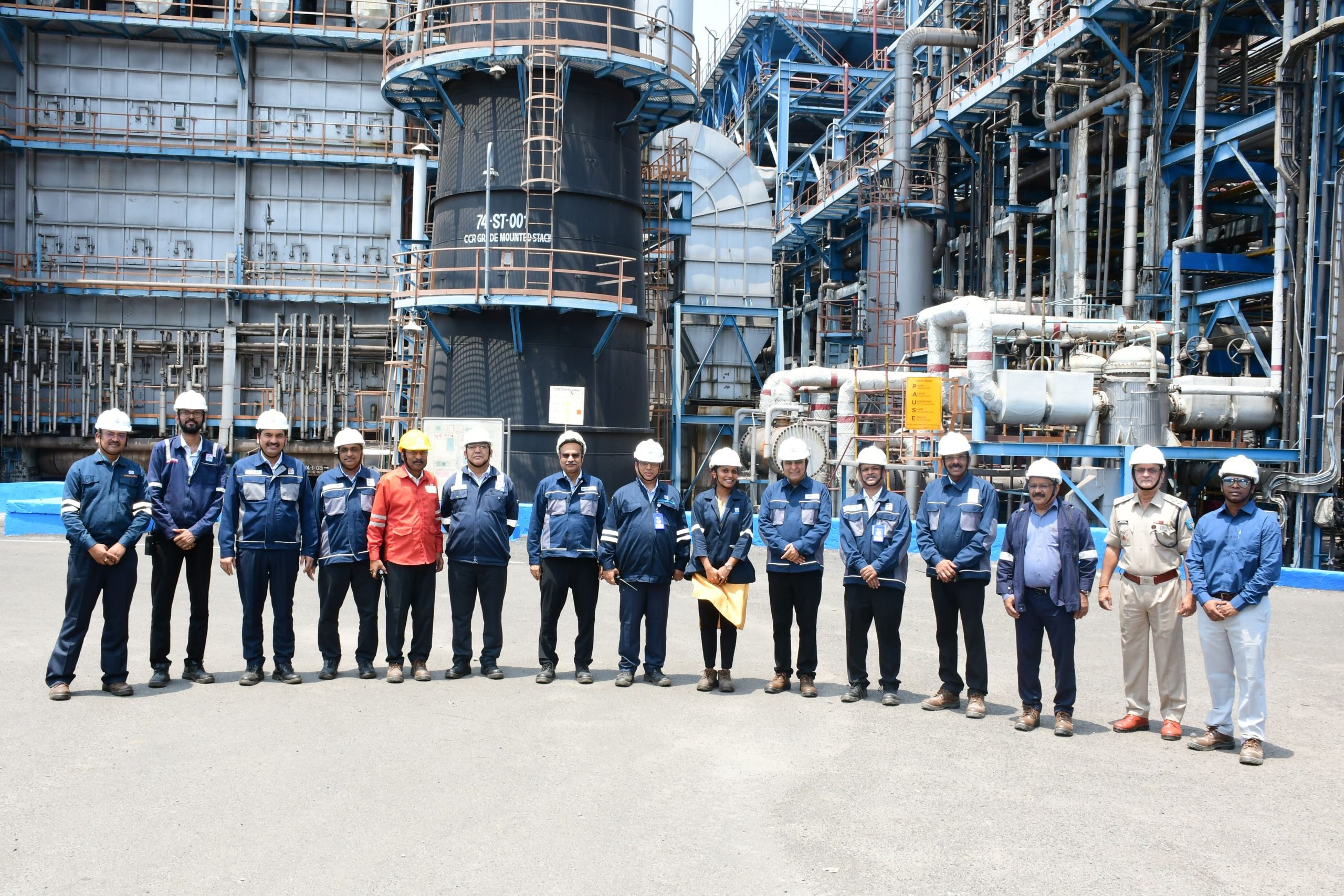
State‑owned HPCL’s upgrade represents a milestone in India’s deep‑conversion refining and energy independence.
Prime Minister Narendra Modi has lauded the successful commissioning of the residue upgradation facility (RUF) at Hindustan Petroleum Corp. Ltd (HPCL)’s Visakh Refinery in Andhra Pradesh.
In a post on the microblogging site X, Modi stated, “This state-of-the-art facility adds momentum to our efforts towards boosting energy security, thus becoming Aatmanirbhar (self-reliant) in this sector.”
He was responding to a tweet by Union Minister of Petroleum & Natural Gas Hardeep Singh Puri, who noted, “Bharat’s journey toward achieving energy security has reached a milestone with the successful commissioning of HPCL’s Residue Upgradation Facility (RUF) at the Visakh Refinery.”
The upgrade by the state-owned HPCL marks a significant advancement in India’s deep-conversion refining capability. Several critical equipment components have been manufactured indigenously, and the facility houses three LC-Max reactors—each weighing approximately 2,200 metric tonnes (MT)—among the heaviest of their kind globally.
With a processing capacity of 3.55 million metric tonnes per annum (MMTPA), the RUF uses LC-Max residue hydrocracking technology to convert about 93 per cent of bottom-of-the-barrel oils into high-value products. The Visakh Refinery is now positioned to enhance its distillate yield by up to 10 per cent compared to pre-modernisation levels under the Visakh Refinery Modernisation Project (VRMP).
Gross refining margins (GRMs) are expected to rise significantly due to a superior product slate, the ability to process heavier and opportunity crudes, and improved value realisation per barrel. The increase in middle-distillate output narrows the gap between HPCL’s high-speed diesel (HSD) marketing and refining volumes, reduces external sourcing, and strengthens supply chain efficiency.
Enhanced heat integration and process efficiency have lowered the refinery’s Energy Intensity Index (EII), cutting operating costs and advancing sustainability goals. With a Nelson Complexity Index of 11.6, the Visakh Refinery now ranks among India’s most advanced deep-conversion facilities.
In parallel with physical commissioning, HPCL has rolled out the RUF (LC-Max) Digital Suite, an industry-first for Indian refineries. This suite integrates real-time monitoring, predictive analytics based on proprietary thermodynamic models, and AI-driven optimisation to ensure stable and efficient operations.