The new civil aviation policy is aimed at creating an ecosystem of affordable flying for the masses as well as easing industry-related concerns which were long due. To do so, the policy has addressed issues from the regulatory, financial and operational perspectives in a comprehensive manner in three main areas


Tag: Egis in India
Post

Post
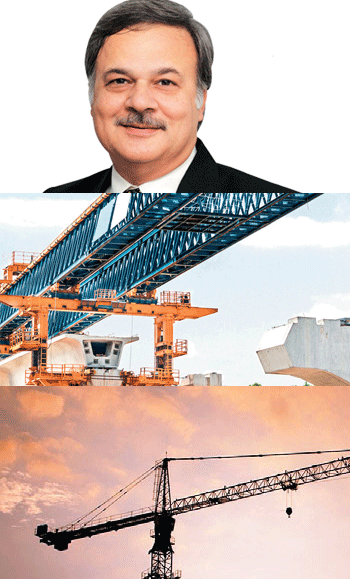
By 2050, 60percent of India´s population will reside in towns
Western economies like Europe and the USA are already quite advanced when it comes to infrastructure development compared to the developing countries. In comparison, economies like China, India and rest of Asia are still showing high growth which would require a lot of infrastructure support to back up this growth.
Post
Towards a Smarter India
India is unique in many ways. It is one of the oldest surviving civilisations and still promises to drive the world economy for many years to come. It has the potential to power global manufacturing and offer solutions to medical & educational needs of all of Asia - and the world.
Post

Stakeholders have now started shifting towards value-consciousness from price-consciousness earlier
India aspires to be the hub of global manufacturing and it is doing everything in its power to make it happen. Many major infrastructure projects are announced, set within time-lines and budgets.
Post

The new government has made the right noises
Egis in India is a cornerstone for the Egis Group because you know there are two economies in the world which are the ones that would pull the whole world out of the so-called recession; one is China, and the other is India. Now Egis has a dominant presence in India where we have 10 per cent of the total workforce in India of the total group and we are one of the very few subsidiaries which are contributing significantly to the top line (and) bottom line of the group.
Post

Infrascape 2015
Infrastructure plays a very significant role in economic development. The government has outlined various infrastructure development initiatives in the country, which include smart cities, nationwide connectivity networks of roads, power, gas and water grids.