The foundation of any smart city is the safety of its citizens and resources. Components of a smart city can only work in tandem if its social and physical infrastructure is safeguarded from any threats, be it personal or natural.


Tag: India
Post

Post

Urban Renewal
Today, 70 per cent of our GDP comes from urban areas while the investment for urban development is only 0.70 per cent. Now, according to the McKinsey Global Institute (MGI) report, Indias urban population is projected to increase from 34 crore in 2008 to 59 crore in 2030
Post
Doing more with less
Smart cities will encourage sustainable development. They will also help to optimise resources, to meet the demands of growing urban populations. These cities would also encourage usage of shared services among different utility functions.
Post

Geosynthetics lowers carbon footprint
Dr K Rajagopal, a Professor of Civil Engineering at IIT Madras, has worked in several geosynthetics industries in India, and is an active member of the International Geosynthetics Society.
Post

Concrete Plan!
The Modi Governments initiative to build all new highways using concrete in place of bitumen, has brought cheer to road sector experts as well as the cement industry. But contractors are worried about their future business prospects.
Post
Geosynthetics on the move
The use of geosynthetics decreases initial construction cost and maintenance cost, increases the life and strength of the roads, which in turn decreases traffic congestion & saves fuel and reduces the carbon footprint.
Post
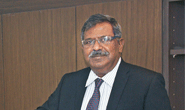
Global pension funds have both liquidity and appetite for long-term investments
In a freewheeling conversation, Moses Harding, Group CEO and Chief Economist, Srei Infrastructure Finance Limited, says that he is bullish over the prospects of the infrastructure finance sector.
Post
India International Road and Transportation Fair (IIRTF)
Transport being the most important and complex subject in the modern world where safe, quick and cost effective movement of men, machines and materials, is the objective of all governments and businesses.
Post

World-leading Compactors
The 11T Single Drum Soil Compactor VM115 is a globally acclaimed machine designed to offer high compaction and greater output at the lowest fuel consumption within the category of machines
Post

Dynamic Professional
Sanjay Singh is Director- Human Resources and Administration at Cairn India. In his current role, Singh is responsible for creation and delivery of dynamic HR strategies to meet the business needs of the organisation.