

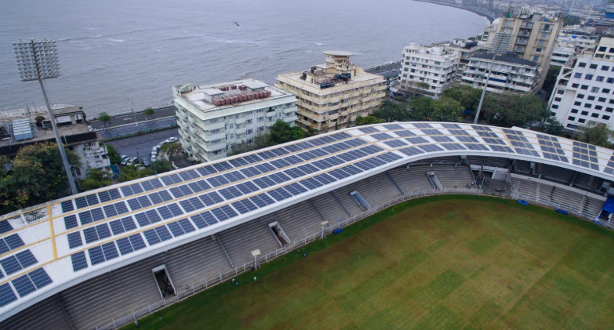
The performance was driven by broad-based growth across conventional and renewable generation, transmission and distribution operations, and emerging consumer-focused clean-energy businesses.
Tata Power reported its highest-ever quarterly profit, with consolidated profit after tax rising 33 per cent year-on-year to ₹16.52 billion in the second quarter of FY2026-27, supported by broad-based growth across generation, renewable energy, transmission, distribution and consumer-focused businesses.
Revenue for the quarter increased 26 per cent to ₹198.86 billion, while EBITDA rose 5 per cent to ₹42.45 billion, highlighting the strength of the company’s diversified energy portfolio. For the first half of FY2026-27, profit after tax grew 22 per cent to a record ₹30.53 billion, with revenue reaching ₹387.84 billion and EBITDA increasing to ₹84.94 billion.
The performance was driven by growth across conventional and renewable power businesses, transmission and distribution operations, and emerging consumer-focused clean-energy segments. Tata Power said the quality of earnings continued to improve, with regulated and long-term contracted businesses contributing a larger share of EBITDA and providing greater visibility of cash flows and profitability.
During the first half of the fiscal year, the company invested approximately ₹100 billion, its highest-ever capital deployment in six months, to support renewable energy expansion, transmission infrastructure, energy storage and digital distribution networks.
Commenting on the results, Praveer Sinha, CEO & Managing Director, said, “While our regulated and contracted businesses provide resilient cash flows, renewables, rooftop solar, storage, and customer-facing solutions are enhancing growth momentum. Our ₹10,000 crore capital deployment in the first half of the year is accelerating renewable capacity addition, transmission expansion, pumped storage development, and digital distribution infrastructure.”
Renewables Lead Expansion
Renewable energy remained a major contributor to growth, supported by 1.4 GW of capacity additions over the past 12 months, improving manufacturing profitability and continued leadership in rooftop solar installations.
Utility-scale renewable capacity increased to 7.2 GW, while the company commissioned 645 MW of renewable projects and 101.2 MWh of energy storage systems during the first half of the year. Tata Power also commissioned a 227.5 MW renewable project in Rajasthan integrated with 115 MWh of battery energy storage, alongside a 72.5 MW captive renewable project for Tata Steel.
The company maintained its leadership in rooftop solar, with cumulative installations crossing 5.12 GWp and 426 MWp added during the quarter. Its channel-partner network expanded to 736 partners, supported by growth under the Ghar Ghar Solar initiative.
Tata Power’s solar manufacturing business produced 0.9 GW of solar cells and 1 GW of modules during the quarter, while the public EV charging network expanded beyond 6,700 charging points. Home charging installations crossed 250,000, reflecting continued growth in India’s electric mobility ecosystem.
Strengthening Grid Infrastructure
The company’s conventional generation portfolio delivered strong operational performance, supported by plant availability of around 90 per cent and higher plant load factors. The Mundra power plant continued to operate at full capacity under the extended Section 11 directive and remains in discussions with multiple states for supplementary power purchase agreements.
Tata Power also advanced its pumped-storage hydro portfolio, with construction progressing at the Bhivpuri project and capital approval secured for the Shirwata pumped-storage project.
In transmission, the company’s operational network expanded to 7,894 circuit kilometres, while the Khurja-Jalpura 400 kV transmission line and associated GIS substation were fully commissioned during the quarter.
The Maharashtra Electricity Regulatory Commission approved multiple Mumbai transmission projects with an estimated investment of ₹40 billion, while smart-meter installations across Tata Power’s distribution companies crossed 6 million, supporting the digitalisation of power distribution.
The company’s Odisha distribution business continued to improve operational performance, reducing aggregate technical and commercial losses to 21 per cent, an improvement of 5.7 percentage points over the previous quarter.
Tata Power said it is expanding artificial intelligence-led digitalisation across operations to improve efficiency, enable predictive maintenance and enhance customer experience as electricity demand continues to grow, driven by industrial activity, rising household consumption, electric vehicle adoption and the expanding data-centre sector.