

This marks the highest annual capacity addition ever, surpassing the previous record of 29.5 GW achieved in FY2024‑25.
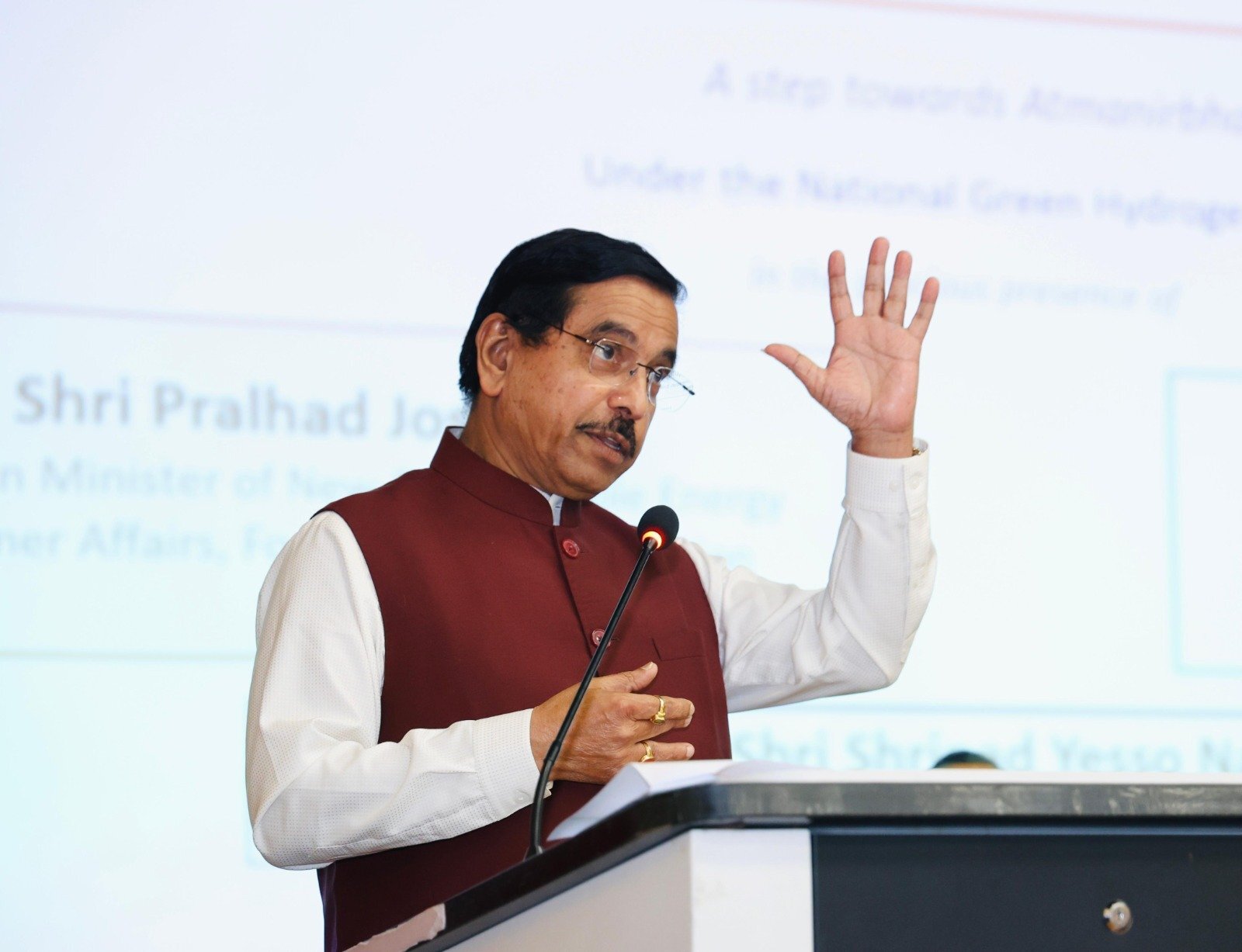
India has risen to third place globally in renewable energy installed capacity, overtaking Brazil, according to Union Minister for New and Renewable Energy, Pralhad Venkatesh Joshi. Citing Renewable Energy Statistics 2025 published by the International Renewable Energy Agency (IRENA), Joshi announced during a media briefing in New Delhi that India added a record 55.29 GW from non‑fossil fuel sources in FY2025‑26, including the highest‑ever 44.61 GW from solar and 6.05 GW from wind.
“India now ranks third globally in renewable energy installed capacity, overtaking Brazil in the ranking,” Joshi said. He added that India’s total power generation during FY2025‑26 reached 1,845.921 billion units (BU), with non‑fossil fuels contributing 29.2 per cent or 538.97 BU.
“India achieved the milestone of 50 per cent of its cumulative electric power installed capacity from non‑fossil fuel sources in June 2025, five years ahead of the 2030 target set under its Nationally Determined Contribution (NDC) to the Paris Agreement.”
This represents the highest annual increase ever recorded, surpassing the previous high of 29.5 GW achieved in FY2024‑25. Joshi said his ministry is now working toward achieving 500 GW of installed electricity capacity from non‑fossil sources by 2030.
As of March 31, India’s installed capacity from non‑fossil fuel sources stood at 283.46 GW, including 274.68 GW of renewable energy. Solar power accounts for 150.26 GW, wind for 56.09 GW, bio‑energy for 11.75 GW, small hydro for 5.17 GW, large hydro for 51.41 GW, and nuclear for 8.78 GW.
Distributed renewable energy (DRE) from solar has emerged as a major growth driver, contributing 16.3 GW, or 36 per cent, of the total solar additions in FY2025‑26. This includes 7.6 GW under the farmer‑centric PM KUSUM scheme and 8.7 GW from rooftop solar installations.
Since 2014, India’s total installed renewable capacity has grown 3.6 times, from 76.38 GW to 274.68 GW, while solar capacity has expanded 53 times, from 2.82 GW to 150.26 GW. Wind capacity has more than doubled, rising from 21.04 GW to 56.09 GW.
Joshi also highlighted the progress in domestic manufacturing. “Our efforts to expand the manufacturing of renewable energy equipment continue to yield encouraging results,” he said. Wind turbine manufacturing capacity has increased from 10 GW in 2014 to 24 GW in 2026, while solar module manufacturing capacity has surged from 2.3 GW to 172 GW over the same period.