

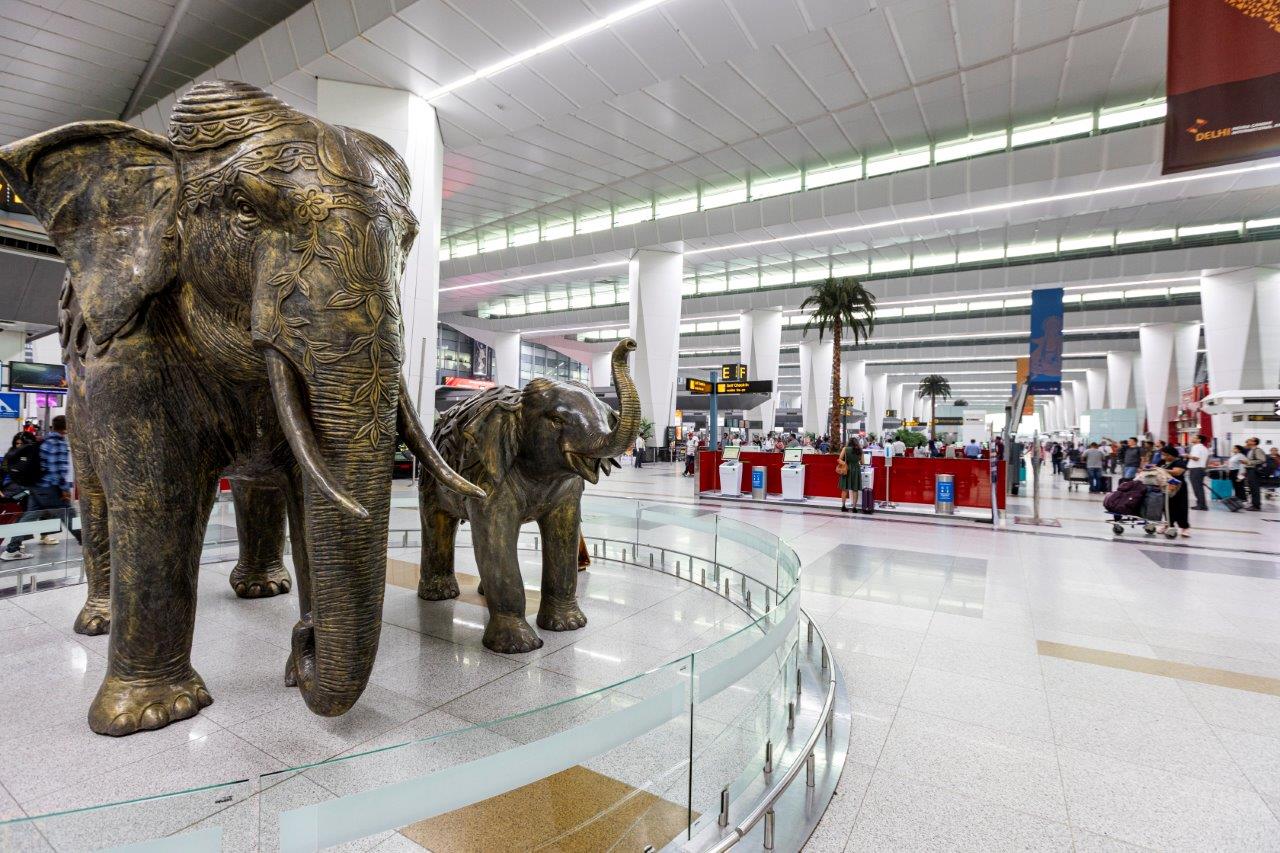
Delhi’s hub strength is reflected in the OAG Megahubs Index 2026, where the airport climbed 11 places to 28th worldwide from 39th in 2025.
Delhi’s Indira Gandhi International Airport, operated by the GMR Aero‑led consortium Delhi International Airport Ltd (DIAL), has further strengthened its position as India’s principal international aviation gateway, connecting 160 destinations—70 international and 90 domestic—through a network of 70 airlines.
The airport’s growing hub strength is reflected in the global connectivity benchmark of the Official Airline Guide (OAG) Megahubs Index 2026, where Delhi climbed 11 places to 28th worldwide, up from 39th in 2025. Delhi also emerged as the world’s leading Low-Cost Carrier (LCC) Megahub, with 11,045 potential connections.
Delhi’s hub model is distinctly Indian: a vast domestic network feeding an expanding international footprint. The airport handles about 50,000 transfer passengers daily, or nearly 1.5 million a month.
Expanding Connectivity
Delhi Airport has recently added international links to Beijing and Namangan, Uzbekistan, while strengthening its domestic network with new connections to Bareilly, Daman, Ambikapur, Halwara (Ludhiana) and Kishangarh.
With 70 airlines, including six domestic carriers, Delhi’s network increasingly integrates Tier‑2 and Tier‑3 cities into the global aviation system. Passengers from Jaipur, Lucknow, Patna, Ranchi, Indore, Bhubaneswar and Guwahati can now connect via Delhi to destinations across Europe, North America, Southeast Asia, Australia, the Middle East and Central Asia.
Delhi is simultaneously expanding its international footprint east and west. Philippine Airlines will launch Delhi‑Manila services by mid‑November 2026, making Delhi its first Indian destination. EVA Air will commence Delhi‑Taipei flights from December 1, 2026, establishing Delhi’s first direct connectivity to Taiwan. Talks are underway with carriers from Russia, Mongolia and Africa to further expand reach.
These developments will broaden Delhi’s international catchment while creating new opportunities for trade, tourism and business.
Domestic Growth Focus
Unlike hubs that rely predominantly on international‑to‑international transit, Delhi’s strength lies in connecting India’s vast domestic aviation market with the world. A deeper domestic network creates a larger international catchment, attracting more airlines and destinations to consolidate Delhi’s hub proposition.
The OAG ranking provides independent validation of this growth. Delhi is the only Indian airport in the global Top 30 most‑connected airports, ahead of Dubai, with its 11‑place improvement reinforcing the scale of its connectivity.
Pradeep Panicker, CEO of DIAL, said, “Delhi Airport’s hub strength is rooted in the scale of India’s domestic aviation market. Our model connects India’s cities with the world, while bringing global destinations closer to India’s vast and growing passenger base. The improvement in our OAG Megahubs ranking is an important independent validation of this journey.”
To improve passenger convenience, DIAL is also considering airside transfer of passengers from Terminal‑1 to Terminal‑3, eliminating landside transfers and saving valuable time. The proposal is under active consideration by the aviation safety regulator, Bureau of Civil Aviation Security (BCAS).