


With over 300 workers already trained in language, safety and technical skills in Jaipur, the Russian aluminium major is now looking to expand hiring from India into newer roles.
While some Western economies have tightened entry requirements for Indian professionals, Russia is opening the door to skilled Indian workers. The India-Russia relationship is evolving beyond trade and investment to include workforce development.
RUSAL, one of the world’s largest aluminium producers, is tapping India’s talent pool to meet staffing requirements across its mining, metallurgical and construction operations. Ekaterina Kiseleva, General Manager, RUSAL Komplektatsiya, told Infrastructure Today in New Delhi, “The initiative has been created to meet RUSAL’s workforce requirements while ensuring recruits from India are prepared for the jobs and conditions they will encounter in Russia.”
More than 300 Indian workers have so far undergone training in language, safety and technical skills at the Russian aluminium major’s centre in Jaipur before being deployed to its facilities in Russia.
The two-month programme covers Russian language, workplace safety, job-specific skills, and cultural orientation, while the company processes employment documentation in parallel. “We want people going from India to Russia to be well prepared, able to adapt quickly and work efficiently,” Kiseleva said.
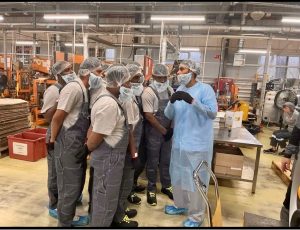
The centre’s training modules include Russian language, production fundamentals and occupational health and safety. Given the hazards associated with aluminium production, safety protocols receive particular emphasis. Trainers from RUSAL’s Russian facilities participate in the programme, and training materials are available in Hindi and English. Candidates receive Russian-language instruction to a basic proficiency level, with additional preparation where required.
Recruitment and Deployment
Selection combines an assessment of educational qualifications and work experience with practical tests in areas such as drilling, painting and construction. “We also invite representatives from production sites in Russia during the selection and training process so they can interact with candidates and understand who they will eventually be working with,” Kiseleva said.
RUSAL operates facilities in Krasnoyarsk, Bratsk, Irkutsk and Novokuznetsk, among other locations. Before departure, recruits are briefed on Russia’s climate, culture, food and living conditions. On arrival, they undergo mandatory workplace training.
According to Kiseleva, this preparation helps workers adapt more quickly. “On average, an Indian worker reaches 100 per cent efficiency within three to six months.”
Equal Opportunities
Indian recruits are employed under Russian labour contracts and work within the same framework as their Russian colleagues. “There is no difference. Salaries are determined by qualifications and skills rather than nationality,” Kiseleva said.
A mid-level worker can earn up to ₽70,000-80,000 rubles (around ₹80,000-91,000) a month, according to the company. Workers can also upgrade their qualifications through further training, allowing them to move into more skilled, better-paid roles. Specialists who have completed an internship, mastered the profession, and passed exams for a higher grade can earn ₽150,000 (around ₹172,000) and more. “Our priority is for them to work with us for the long term,” she added.
RUSAL plans to expand its recruitment of Indian specialists into additional areas, potentially broadening the range of roles available to Indian workers within its Russian operations.
The initiative comes as Russia seeks to sustain its industrial workforce across sectors ranging from mining to manufacturing, with Indian workers increasingly part of that equation. At the 23rd India-Russia Annual Summit in New Delhi in December 2025, the two countries signed an agreement on temporary labour activity to establish a framework for the movement of skilled workers, strengthening the institutional basis for Indian recruitment into Russian industries.
– Manish Pant