

The Shipping Minister has called for global maritime standards that are uniform in ambition but flexible in implementation.
India has called for globally harmonised maritime standards that are ambitious yet practical for countries at different stages of development, with Union Minister for Ports, Shipping and Waterways Sarbananda Sonowal urging greater international cooperation to help nations implement shipping regulations effectively.
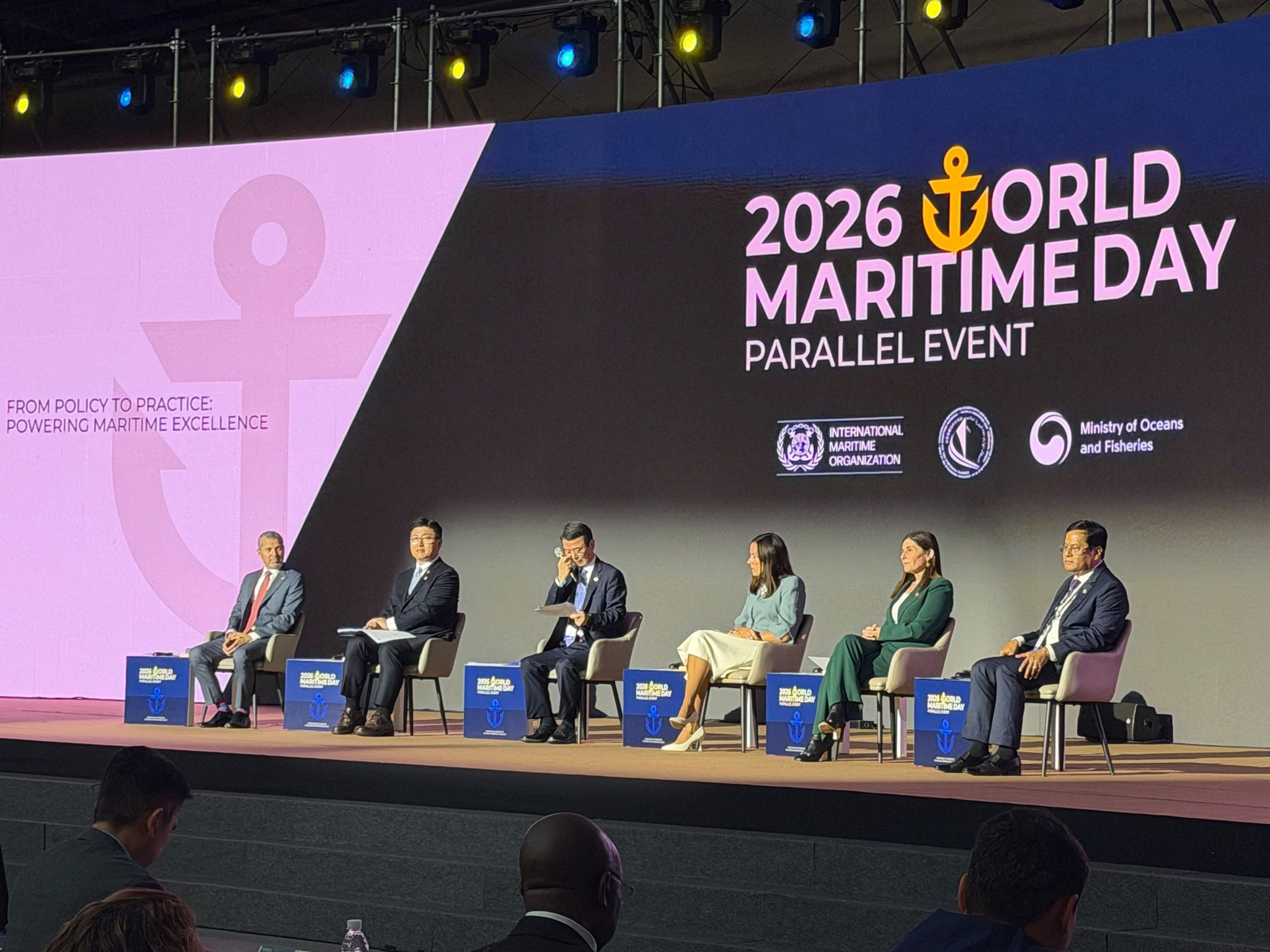
Speaking at a high-level roundtable in Busan on World Maritime Day on Monday, Sonowal said international maritime standards should remain universal in their objectives while recognising differences in national circumstances, technological capability, development levels, and access to finance. “The objective should therefore be common standards and outcomes, supported by cooperation that enables every member state to implement them effectively.”
The minister, who is on a four-day visit to South Korea, participated in the discussion alongside Arsenio Dominguez, Secretary-General, International Maritime Organization (IMO); Nam Jaeheon, South Korea’s Vice Minister of Oceans and Fisheries; Marianne Sivertsen Næss, Norway’s Minister of Fisheries and Ocean Policy; and Marina Hadjimanolis, Cyprus’ Deputy Shipping Minister.
Sonowal described IMO conventions as an “operational lighthouse” for global shipping amid geopolitical uncertainty, piracy threats, and disruptions in the Red Sea. He argued that practical partnerships remain the most effective way to bridge implementation gaps, including through joint working groups, technical assistance, regulatory support and training programmes.
According to the minister, the objective should be to build lasting national capabilities rather than create long-term dependence on external support.
Highlighting India’s own progress, Sonowal noted that five maritime laws enacted in 2025 came into force in March 2026. He also pointed to the Maritime Single Window platform, which now covers 69 ports and terminals, and the Alang-Sosiya ship-recycling cluster, where 115 facilities comply with the Hong Kong Convention framework.
Building Maritime Ties
In a separate meeting with the Korea Marine Equipment Association (KOMEA), Sonowal said India is actively seeking global partners to support the expansion of its shipbuilding ecosystem.
KOMEA represents 304 marine equipment manufacturers, design firms, shipbuilders and ship-repair companies, including industry leaders such as HD Hyundai, Hanwha Ocean and Samsung Heavy Industries. The association is scheduled to open its first India office in Mumbai on October 30, building on commitments made under the India-South Korea VOYAGES framework for cooperation in shipbuilding, shipping and maritime logistics.
“Every ship built in India needs engines, propulsion, deck machinery, and electrical and navigation systems,” Sonowal said. “The fact that much of that high-value equipment is imported today offers an opportunity for Korean suppliers.”
KOMEA Chairman Ho-il Kang said member companies had begun preparing to enter the Indian market over the next two years. Representatives from companies including SB Sunbo, Daeyang, KASEMEC and JO Engineering discussed potential investments in India’s maritime sector.
Backing India’s case with investment numbers, Sonowal said the country approved a shipbuilding package worth about $7.8 billion in September 2025. Since then, shipbuilding output has risen 40 per cent in 2025 and by more than 80 per cent in 2026. The pipeline of vessels receiving direct government assistance now covers more than 120 ships valued at over $1.27 billion, with export orders accounting for more than 80 per cent of the value.
“We are already building for the world,” Sonowal said.
He added that demand from government entities has been aggregated to provide Indian shipyards with visibility on an order pipeline of more than 400 vessels worth about $23 billion over the next decade.