The Central government approved Smart Cities Mission involves the development of one hundred smart cities in India. One of the most important elements of smart city infrastructure is economical and environment friendly mass scale rapid public transport system.
FlashNews:
Future of Himalayas White Paper Calls for Systemic Shift in Development and Resilience
Global Wind Installations Surge 40% as Sector Charts Path Beyond Energy Crisis
Siemens Ushers in Industrial AI Transformation with Eigen Engineering Agent at Hannover Messe
India and Asian Markets Adapt to Middle East LNG Disruption: S&P Global Energy
Polaris Smart Metering Secures $80 Million BII Financing to Accelerate Indiaās Smart Meter Rollout
Delhi Airport Unveils MultiāLingual Passenger Guide Under #DELCares
POWERGRID Wins Green World Award 2026 for Climate Change Excellence
Reflections for Safer Roads: The Science of Conspicuity
JAKSON Group Unveils Five Energy Solutions, Eyes Over ā¹90āÆBillion Growth for FY2026ā27
StarāÆAir Launches 70āÆWeekly Flights, Introduces FirstāEver Direct Mundra-DelhiāÆNCR Route
Indiaās Data Centre Market to Double, Crossing $22 Billion by 2030: Vestian
āRVNL Delivers 17,000 km Rail Projects, Executes ā¹2 Trillion Infrastructure:ā Railway Board CEO
Qatar Pledges Deeper Energy Ties with India During Puriās Doha Visit
IRB Group Reports ā¹8.3 Billion FY2026 Toll Revenue, Secures 10% National Share
India and Bhutan Sign Tariff Protocol for PunatsangchhuāII, Strengthening Hydropower Partnership
IndiGo, Digi Yatra and BIAL Pioneer Indiaās First International Contactless Travel Trials with IATA
India-Bhutan Hydropower Push: Minister Manohar Lalās 4-Day Visit to Drive Projects, Trade
India Slashes Airport Charges to Shield Domestic Airlines from ATF Surge Amid West Asia Conflict
India Climbs to Third Globally in Renewable Energy Capacity, Adding Record 55 GW in FY2025-26
Tag: Biswanath Bhattacharya
Rationale behind HSR
An investment in HSR is typically a government decision which is primarily dependent on a number of factors, such as current and projected traffic, expected saving in time, and a reduction in accidents due to a modal shift, reduction in environmental externalities, ease in congestion in existing modes, and the average willingness of the users to pay.
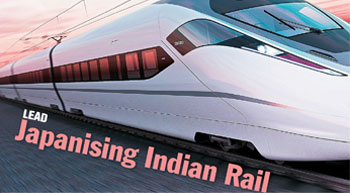
Japanising Indian Rail
Taking precedence from Japan which heralded the ĆĀ“bullet trainĆĀ“ legacy in 1964, the world began to partake of this ĆĀ“race against timeĆĀ“. High-speed rail (HSR), which uses an integrated system of specialised rolling stock and dedicated tracks, can significantly enhance the connectivity and trade between major cities in a country.
Funding Dichotomy
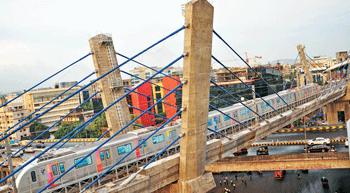
The population surge, rapid urbanisation, and the consequent congestion have time and again fuelled the ĆĀ“need for speedĆĀ“. Mass rapid transit system like the metro rail has dawned as a panacea in this regard.