

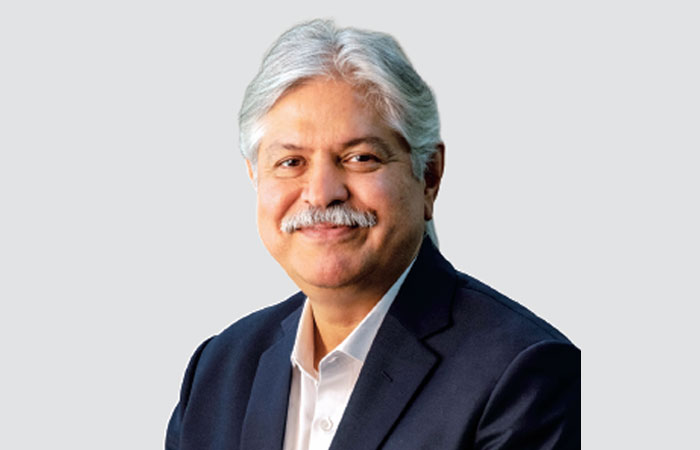
Ajay Kapur carries tremendous clarity of vision. As Global CEO of the $1.75 billion Suzlon Group, he recently outlined their future strategy to Infrastructure Today’s Manish Pant as part of Suzlon’s 2.0 vision. The Pune‑headquartered conglomerate seeks to evolve from a pure wind turbine manufacturer into a wind‑first, full‑stack renewable energy solutions partner, integrating wind, solar, battery storage, and energy management services. With targets of 70 GW assets under management and 40 per cent wind market share by FY2031, Suzlon is betting on scale, credibility and integration to get there. Or as Kapur likes to put it: “Anything less will not justify being who we are.” Edited excerpts.
As you define Suzlon 2.0 with wind at its core, how do you take this journey forward?
Suzlon pioneered wind in India in the mid‑1990s, building an entire ecosystem of wind technology. Over the years, we have developed products, acquired and sold companies, and learned globally. Our R&D spans Germany, the Netherlands and Pune, making us truly an
Indian global company. The context today is critical. Energy markets are changing; wars have centred around energy. The Ukraine-Russia conflict pushed up gas prices globally. Energy has become the most topical issue. Alongside energy, digitalisation and data are reshaping economies, and both need reliable power.
Suzlon is well‑placed as a wind player, but customers now want full renewable solutions. So Suzlon 2.0 means moving from pure wind to FDRE (firm and dispatchable renewable energy), adding solar and battery storage, while keeping wind at the centre. India has 1,100 GW of wind potential, with only 5 per cent tapped. Wind power can be produced at `2.5-4 per unit, making it one of the most cost‑effective long‑term assets.
How does your newly launched co-development arm, DevCo, address execution challenges?
Today, we see higher sales but lower installations. Turbines are erected but not commissioned because grid connectivity is missing. In EPC (engineering, procurement and construction) projects, we control the full scope, but in non‑EPC projects, evacuation is the customer’s responsibility. DevCo solves this. We acquire land, permits and evacuation approvals in advance. When customers join,
we transfer the sites, recover our investment, and recycle the capital. This cuts execution delays by almost 12 months, improves project costs and delivery, and helps harness India’s wind potential.
Our EPC share has risen to 28 per cent this year, with a target of 50 per cent within two years. DevCo is expected to contribute
60 per cent of sales by FY2031. That means 60 per cent of customers will buy turbines with land and permits ready, reducing commissioning time dramatically.
What gives you confidence to drive this next leap?
Over the last two years, Suzlon has delivered 55 per cent CAGR growth in topline, with EBITDA above Rs.30 billion and margins of 17.5-18 per cent. Our services business generates Rs.8.5 billion EBITDA at 40 per cent margin, supported by long‑term annuity contracts. We have launched the Blue Sky platform with 5 MW and 6.3 MW turbines for international markets. Our S144 3X [next-generation wind turbine] series has an order book of 9 GW. We already manage 18 GW of assets today and are targeting 70 GW under management by FY2031. Wind is the most complex renewable, and we already manage it. We aim to raise our wind market share in India from around 33 per cent today to 40 per cent. Extending into solar and battery is not a challenge. Suzlon enjoys tremendous credibility. We will certainly have to build our capability engines. But we are already working on the most difficult part. Extending that into other products is not a challenge, as anything less would not justify who we are.
What capex are you planning, and will you raise capital?
I am glad you asked that question. For DevCo, we are putting aside Rs.5 billion this year; Rs.3 billion for land inventory and Rs.2 billion for permits. Manufacturing turbines will take Rs.6 billion, BESS (battery energy storage system) Rs.1.5 billion. That’s Rs.7 billion capex annually, which we can handle through cash resources. We have Rs.24 billion cash and equivalents, and this will grow. We are not looking at any capital raise or debt. Strategy is purely the redeployment of generated cash. Solar is asset‑light, and DevCo churns capital as land is transferred to customers.
How do you strengthen supply chains amid the current global churn?
Suzlon remains India‑centric. By 2031, 10 GW of sales will come from India and 3 GW internationally. Over 80 per cent of sourcing is already domestic. SE Forge, our group company, handles forgings and castings and exports to others. Most turbines for international markets will still go from India. Blades and towers may be outsourced locally or imported, depending on the return on investment. We are integrators, aligned with the Ministry of New and Renewable Energy guidelines, and India remains our manufacturing hub.
How much do you spend on R&D, and what role does India play?
We spend $30-40 million annually on R&D. Most of our technical centre is in India, with 300 engineers in Pune and 80 abroad. The entire wind data of India sits here. We take pride in India being the hub.
What is your overseas expansion strategy?
We plan expansion across Southeast Asia, MENA, Europe, South America and Australia, with a 3 GW order intake by FY2031. Sales teams are already in place in Europe and Australia. Groundwork will intensify in 2027, with visible movement from FY2028-29.
Hiring is underway, including Paulo Fernando Soares as President for Europe. Many ex‑Suzlonians want to return. We have a good ecosystem of people and partners.
Wind once led India’s renewable story, but solar surged ahead. Do you see wind making a comeback?
As I mentioned earlier, wind has 1,100 GW potential, with only 5 per cent used. Solar has grown, but faces curtailment and grid tripping. Wind complements solar; evening wind balances morning solar. Add batteries, and you get the best levelised cost of energy. It’s not wind or solar. Customers want all three: wind, solar, and battery. That’s true renewable energy. Solar plus BESS costs `7 per unit. Wind‑solar‑battery is more reasonable and productive. FDRE is now mandated in tenders. That’s the story for the next
10-20 years.
How will partnerships be structured in your FDRE model?
Wind, we will do ourselves. Energy management services we will fund and integrate. DevCo, we will lead. BESS, we will partly outsource but also build 3 GW ourselves. Solar, we will do with partners. Partnerships must be win‑win; good products, good costs, customer stickiness. Execution will be our responsibility, followed by O&M and asset management. Each stage is both a service and a profit pool.
Suzlon has refreshed its brand as ‘Good energies that work’. What does this mean?
The new Suzlon is about putting good energies to work; not just wind, but all renewables. It’s also about the energies of partners, communities, employees, shareholders and government. Communities provide land, employees give their lives daily, shareholders invest with belief, government supports with policy. Good energy is scalable, round‑the‑clock, intelligent and relevant.
That’s the transformation we want to reflect.
– Manish Pant