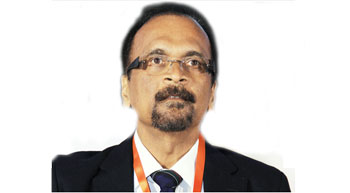
In an exclusive interview, <span style="font-weight: bold;">Mahendra Jain, Additional Chief Secretary, Urban Development Department, Government of Karnataka and Managing Director of Bangalore Metro Rail Corporation,</span> talks on the phase II progress and system integration. Edited excerpts: <br />
<br />
<span style="font-weight: bold;">How has the Bengaluru Metro network project been progressing?</span><br />
The project is progressing well. Currently, we are operating North-South and East-West that span over 42.8 km with a ridership of more than four lakh commuters every day. We are working on increasing our lines for different locations. We plan to connect places like Electronic City and Whitefield areas by the metro network. Meanwhile, we have planned for four lines which will decongest the outer ring road areas. <br />
<br />
<span style="font-weight: bold;">How is the progress on phase II? </span><br />
For phase II, we have received investment intention from many private players for quick implementation. We are also advancing our decision process on the airport connectivity line, which will now be part of phase II. In total, a 105-km network has been planned in phase II over the existing 42 km. We have commenced working on the detailed project report (DPR) for this phase. By 2025, we should have a metro network that is close to 250 km in Bengaluru. We want to complete phase II in 2021. This phase will cost us around Rs 265 billion. The work is going on in full swing and we are hoping to achieve the timelines.<br />
<br />
<span style="font-weight: bold;">How is Bangalore Metro aligning current infrastructure with other transportation modes for last mile connectivity?</span><br />
We have planned connectivity integration in a systematic manner. Under our multi-modal logistics integration plan, we have connected the metro network to inter-city railway stations, city and state transportation managed by Bangalore Metropolitan Transport Corporation and Karnataka State Road Transport Corporation, respectively. Here, we have provided walkways, subways, travellators and so on, so that commuters can move easily from one mode of transport to the other; it would be seamless mobility. So, that is on the physical integration.<br />
<br />
We are also working on fare integration between BMTC, BMRC and suburban railways. Here, a single fare card can be used to make payments for all modes of transport. <br />
We are also working on information integration that includes sharing of time tables and mapping the networks. Put together, every information regarding metro operation will be available on a single platform for commuters for better access. Through this, commuters can use various means of transport in an efficient manner. <br />
<br />
<span style="font-weight: bold;">What are the challenges you have faced so far in carrying out a project of this scale?<br />
</span>The project has faced many challenges. <br />
At present, we are operating 51 trains, carrying 4 lakh commuters every day. During the peak hours, the trains get overcrowded; hence, we have decided to increase the capacity from the current three-coach trains to six-coach trains. Since there is a demand from all parts of the city, we are planning to extend our network, which means, there are a lot of contract management issues, land acquisition problems, construction and time management challenges for us to face. Since we have a huge work force, we have human resource challenges too. Recently, some sections of metro employees threatened to go on strike. <br />
<br />
<span style="font-weight: bold;">- Rahul kamat</span><br />


By 2025, we will have 250 km of metro network in Karnataka
Leave a Reply
You must be logged in to post a comment.