

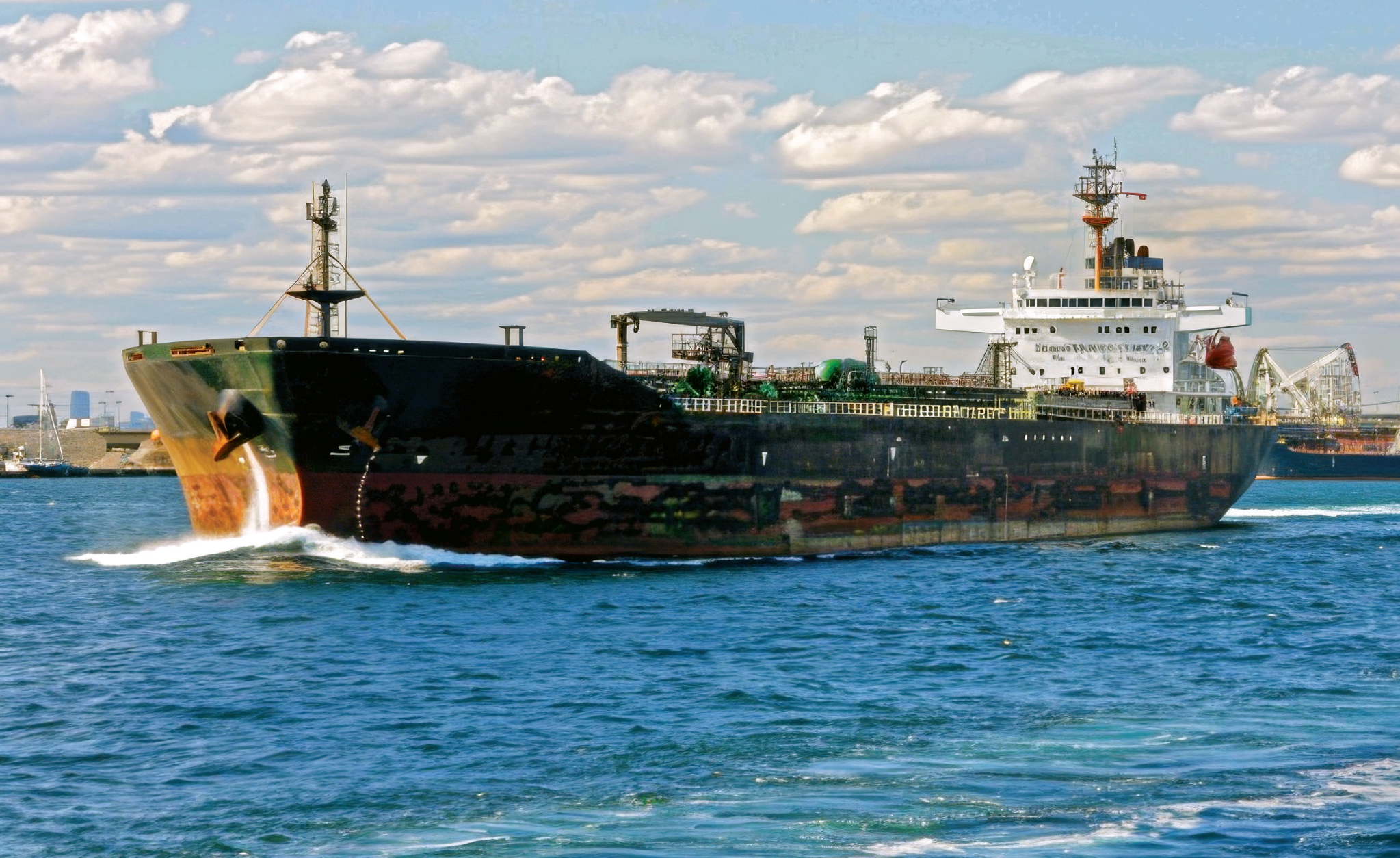
Recent supply chain disruptions have exposed the fragility of global trade, prompting businesses and governments to rethink resilience through diversification, nearshoring, and strategic stockpiling, writes Vikash Khatri.
In the present era, global trade is highly interdependent, wherein countries rely on each other for raw materials, intermediate goods, technology, and finished products. Such trade requires highly interconnected supply chains, wherein a single product might have crossed multiple borders from the raw material stage to final delivery in the hands of the consumer.
Such an interdependent ecosystem serves several purposes, like improved efficiency, specialisation based on comparative advantage and cost advantage. Global trade has become a tool for economic growth. For emerging economies, trade serves as a gateway to global value chains by expanding export potential, drawing in investment, and speeding up economic development. For advanced economies, it underpins innovation and competitiveness by providing access to a wide range of inputs and global markets.
Interdependence in global trade also brings the embedded disadvantage of supply chain vulnerability, which may have a long-term cascading impact on growth. Disruption in the supply chain leads to supply shortages, increased freight costs, inflationary pressures, production slowdowns and weak economic conditions. Such disruptions expose
the fragility of interconnected systems
and are prompting businesses and governments to rethink supply chain resilience through diversification, nearshoring, and strategic stockpiling.
In a normal situation, critical vulnerabilities in the supply chain are not visible, unless deep dived from a risk mitigation point of view. But in turbulent times, like a pandemic or natural disaster or a geopolitical disturbance, discussion around these vulnerabilities takes centre stage.
Trade as Weapon
Over a period of time, global powers have also realised the power of trade and economic weapons. Since 2024, tariff has become the buzzword in the list of these weapons. But the latest West Asia crisis has brought another weapon of trade route blockage, especially the maritime corridors. Several maritime chokepoints sit at the heart of global trade flows. Their geography makes them unavoidable for large volumes of cargo; any disruption creates ripples across the global economy. Because of the concentration of traffic, these routes have the potential to be a ‘strategic weapon’ through blockades, conflict, sanctions enforcement, or even indirect threats.
Critical chokepoints on these routes, such as canals, straits, and major ports, play an important role in maintaining global trade velocity. These chokepoints can be easily weaponised in multiple ways: through blockades or military control, via asymmetric tactics like mines or drone attacks, by using regulatory or political leverage, transit restrictions and indirect disruption. As a consequence, it increases shipping risks and drives up insurance and logistics costs. Some of the major global choke points include the Strait of Hormuz, Suez Canal, Strait of Malacca, Bab-el-Mandeb, Panama Canal and Turkish Straits.
In the past, similar blockades have been witnessed, like allied naval blockades which restricted Germany’s access to food and raw materials in World War-I, the temporary closure of the Suez Canal forcing ships to reroute via Africa in the 1960s and the recent blockade of the Red Sea and the Bab-el-Mandeb issue.
Energy at Risk
The recent West Asia crisis has created a severe problem for the global energy supply market. The conflict has directly impacted flows through the Strait of Hormuz, which carries nearly 20 per cent of global oil and gas. The direct impact of Hormuz closure is maximum on the Asian economies as almost 70 per cent of Korean oil imports, 70 per cent of Japanese oil imports and 50 per cent of Indian oil imports pass through this route. It is the largest energy supply shock in history, with ripple effects on multiple industries which are directly or indirectly dependent on petroleum sources. This crisis is going to be not only limited to energy, instead it will put severe inflationary pressure and risk of stagflation across the world.
Apart from the Strait of Hormuz, existing instability around the Red Sea, Gulf region, and Eastern Mediterranean has become a major stress point for global trade because it intersects with some of the world’s most critical shipping corridors. Approx 20-30 per cent of global container traffic passes through the Red Sea and the Suez Canal, which has not been blocked, but the risk for shipping companies has already increased multifold.
Beyond energy supply disruption, shipping transit times have risen sharply across regions. These risks are forcing shipping lines to reroute vessels via longer paths such as the Cape of Good Hope, adding 10-15 days or more to transit times. It has stretched delivery schedules and disrupted just-in-time supply chains. These delays are leading to inventory shortages, increased working capital requirements, and production slowdowns across industries like automotive, electronics, and retail, while also raising freight costs and creating uncertainty in global trade flows.
The crisis is also imposing significant macroeconomic pressure on the global economy by driving up energy and logistics costs. Shipping companies are incurring higher fuel expenses due to longer rerouted journeys, while war-risk insurance premiums have risen substantially amid threats of attacks and regional instability. On the domestic transportation front, port congestion has reduced truck availability due to longer waiting times at terminals, leading to capacity constraints and a rise in domestic transportation costs. This has driven up freight rates, raised the overall cost of transportation, and squeezed shipper margins, with the additional burden eventually passed on to consumers through higher prices.
Building Resilient Networks
In this time of crisis, when global trade is being weaponised, there is not a single fix or short-term solution. The biggest shift is required in the approach towards preventing and managing such risks in advance. Although some of the steps can be clearly marked for this move. Although it may not be fully possible on all global trade lanes, the development of new routes or alternate modes can reduce some risk. The East-West pipeline of Saudi Arabia serves as an example of an alternative option for oil flow in the current crisis. Similarly, a new route, like the India-Middle East-Europe Economic Corridor (IMEC), can bypass Bab al-Mandab and the Suez Canal.
Supply chains need to move from hyper-optimised, single-source to multi-country sourcing strategies. To reduce dependence on one source, distributed network and nearshoring have become a need of the hour. This was well understood at the time of the COVID-19 pandemic. However, that requires a concrete plan of action.
Diversified partnerships can help in navigating crises by reducing dependence on any single geography, supplier, or logistics channel. By building relationships with multiple vendors, multiple geographies, carriers, and regional partners, flexibility can be achieved to quickly shift sourcing, reroute shipments, or adjust operations when disruptions occur.
In essence, global supply chains must strike the right balance between cost efficiency and resilient continuity. Over time, decision-making will inevitably shift from a purely cost-optimised model to a more risk-adjusted approach.
About the author
Vikash Khatri, Founder, Aviral Consulting, has over two decades of experience in strategy, business transformation, and supply chain logistics, and is also known for authoring insightful industry reports.