

The West Asia conflict is reshaping India’s risk management and creating an opportunity to accelerate and complete its energy reform agenda, underline S&P Global and Crisil analysts.
The sustained nature of the West Asia war is changing Indian risk management from providing immediate buffers to reorienting medium- to long-term strategies. Even before the conflict, the Economic Survey 2026 highlighted risks of a “disorderly multipolar breakdown,” rupee depreciation, and foreign portfolio outflows. These risks are now likely to be exacerbated.
The HSBC India Purchasing Managers’ Index (PMI) data for March 2026 shows a slowdown in private sector activity. The HSBC India Composite PMI dropped to 57.0 in March from 58.9 in February, its weakest score since November 2022. While export strength and hiring provided buffers, growth in new orders was at its slowest in over two years, marked by volatile markets and inflation. Cost pressures intensified across the manufacturing and service sectors. The PMI data signals ongoing expansion, but with uncertainty baked in.
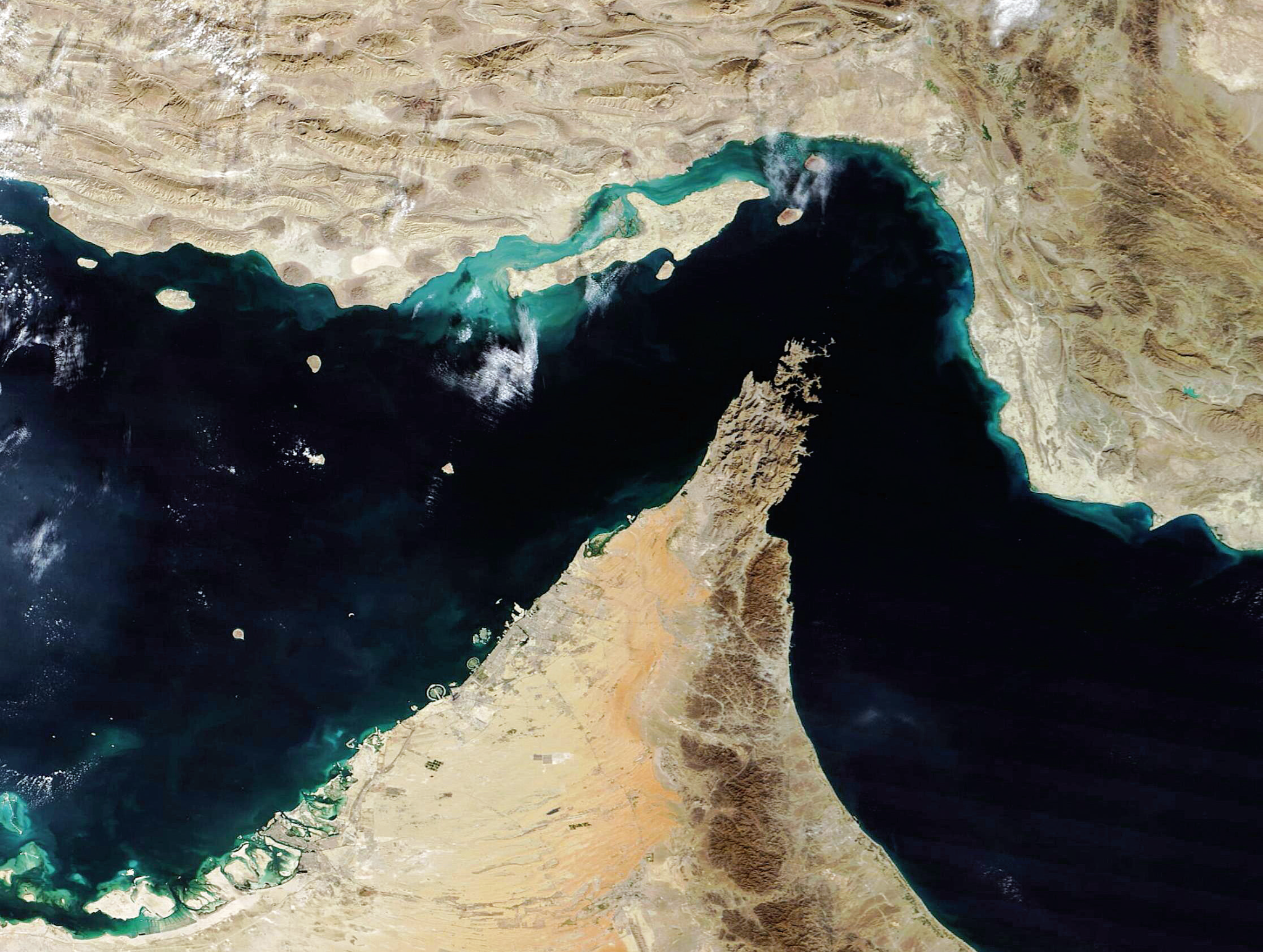
Since the conflict began, India’s geographical proximity to West Asia has demonstrated how quickly a tightly optimised, pragmatically positioned energy supply chain can be pushed into stress. India’s energy flows from West Asia are embedded in the country’s energy system and play a critical role in meeting its growing demand. In February 2026, before the crisis hit home, India was dependent on flows inside the Strait of Hormuz for approximately 60 per cent of its crude oil and liquefied natural gas (LNG) imports and approximately 85 per cent of its liquefied petroleum gas (LPG) imports.
The Indian government has rationalised cooking gas allocation, resumed Russian crude purchases, and announced additional fuel and fertiliser subsidies and large excise duty cuts on petrol and diesel. It has also unveiled an economic stabilisation fund designed to serve as a fiscal and financial buffer against future external shocks.
Spotlight: Geopolitics & Resilience
The West Asia war has sharpened focus on resilience within global cloud and data centre architecture, but its implications for investment geography require more careful interpretation. Hyperscalers such as Microsoft, Amazon Web Services and Google operate through leased data centre capacity, particularly in international and emerging markets, alongside owned infrastructure. As part of longstanding disaster recovery and business continuity protocols, these companies hedge operational risk by distributing workloads across multiple facilities, both within the country and across international geographies. This redundancy-driven operating model predates the current West Asia conflict.
Cloud providers have recently activated these preexisting contingency plans. In some cases, workloads—primarily noncritical enterprise and banking, financial services and insurance applications—were temporarily routed to alternate regions, including Mumbai. This reflects the execution and validation of existing disaster recovery frameworks, rather than a strategic relocation of primary data centre infrastructure.
While the diversion to India is temporary, it does draw attention to the country’s role in a wider disaster-recovery strategy, which the Indian government is likely to highlight as part of its strategic diversification narrative.
Data centre growth across the Gulf Cooperation Council (GCC) should remain structurally strong. But AI specific facilities, which are now larger in scale than traditional local data centres, are emerging as a major growth driver. India is being increasingly positioned as a complementary resilience and overflow geography within global cloud architectures. This is becoming more visible
at the margin, particularly for disaster
recovery, AI experimentation and selective cross-border backup workloads. Industry feedback indicates that Indian data centre developers are responding to this incremental demand by expediting project timelines, advancing fit outs, power arrangements and commissioning schedules to capture any near term leasing interest.
India’s Energy Response
India’s energy demand is forecast to double in the next 25 years, offering an opportunity to build cleaner, more efficient infrastructure. This can further improve energy security and affordability by reducing dependence on imports. However, geopolitics and energy will remain closely linked.
India was one of the first markets to face a physical supply challenge when the Strait of Hormuz was effectively closed. This scale of baseload supply disruption is always a challenge and requires an immediate pivot to alternative sources. India reacted quickly to the reduced supply of crude oil by procuring any available barrels, including floating Russian barrels intended for Indian markets but not taken up due to sanctions actions from late 2025. This provided immediate supply relief to refiners facing shortages. Flows from Saudi Arabia’s Red Sea port of Yanbu also provided partial relief.
The situation continues to evolve and is precarious for LPG, which fuels Indian kitchens. India chose to shore up domestic supplies from refineries while undertaking a massive demand-management exercise. Natural gas demand management is ongoing as policymakers prioritise gas availability for residential customers, leaving India’s key industrial corridors without fuel.
Supply diversification has long been a policy objective for India, but the war highlights an uncomfortable reality: proximity, infrastructure compatibility and contractual legacy continue to anchor India to West Asian molecules. Alternative sources can mitigate shock but rarely replace the economic and logistical efficiency of the Gulf in real time.
Building reserves for temporary shock absorption is critical to mitigating physical risk, as it gives the energy system more leeway to manoeuvre. India’s resilience will depend less on abandoning legacy trade routes than on improving flexibility in contracts, refining configurations, expanding shipping access and enhancing demand response.
The Road Ahead
India’s multi-alignment policy of strategic autonomy provides the platform to turn risks into leverage. The responses to the West Asia war stem from a broader acknowledgement that economic and energy resilience in 2026 depend on demonstrating geopolitical agility.
The West Asia war offers an unprecedented opportunity to accelerate and complete India’s energy reform agenda. There are five areas of immediate attention for the energy value chain and the full spectrum of policy, regulation and operations. Rapidly increase the supply of secure domestic energy sources, including oil and gas production, biofuels, biogas, renewables, geothermal and nuclear power. Secure access to oil and gas supplies less affected by supply routes and geopolitics. Indian national oil companies need their own version of Internationalisation 2.0.
Energy resilience will rely on improving flexibility in contracts, refining configurations, expanding shipping access and enhancing demand response. India’s “all-of-the-above” strategy must move further upstream, transitioning from a faith-in-supplier strategy to one that combines this with a stake-in-supplier strategy. Finally, supportive policies across electrons and molecules are needed to boost reliability, especially for bulk end-use sectors in power, transport and industry.
The Indian government’s reaffirmed emphasis on strategic autonomy and its likely evolving fiscal and trade posture elucidate
this understanding.
About the author
This article by S&P Global and Crisil analysts draws on studies published in the India Forward: Strategic Imperatives journal, May 2026.