

As India builds several kilometres of highways daily, road safety must move from the margins to the centre of national development to sustain the growth story, asserts Amit Thatte.
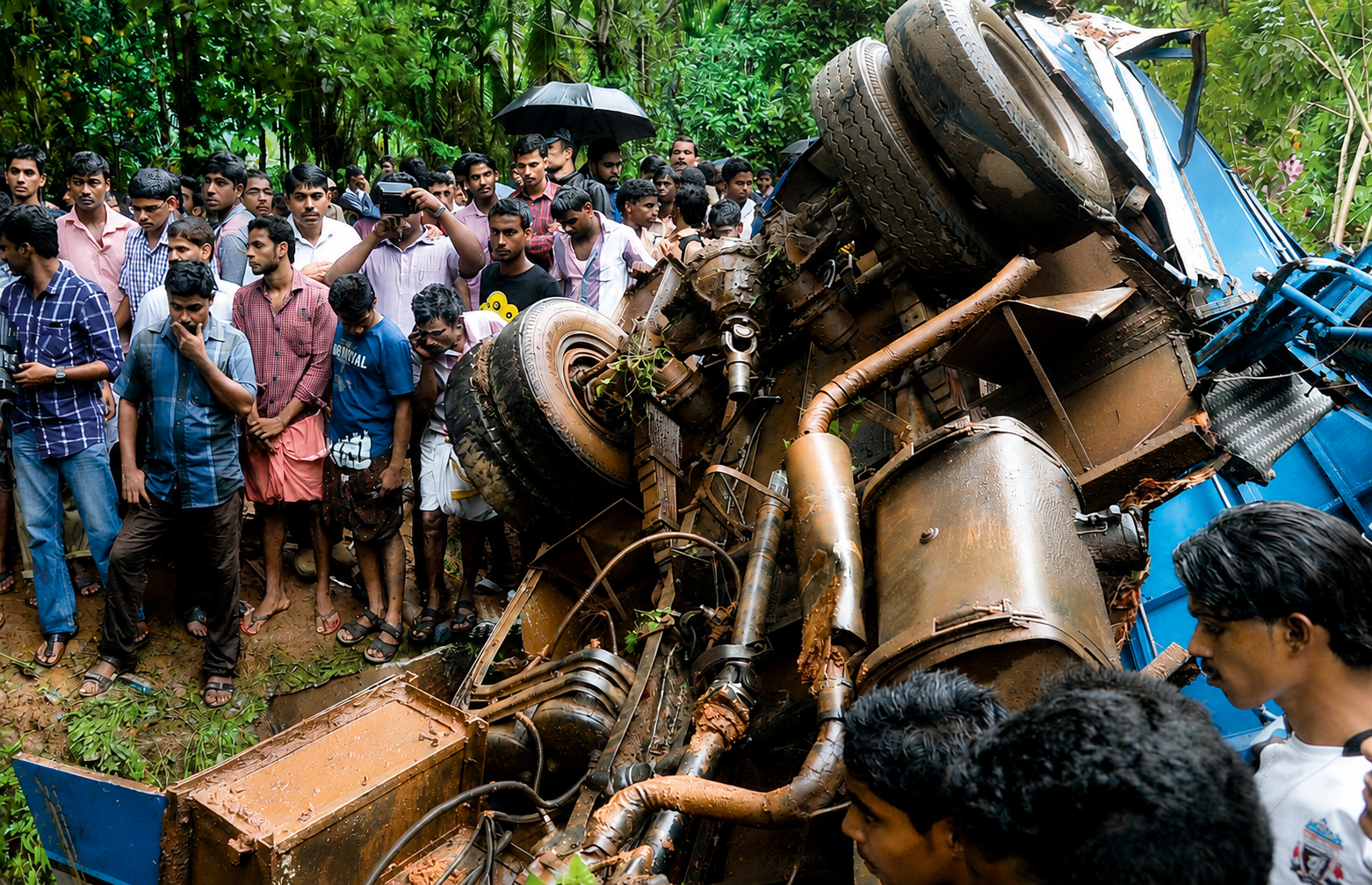
India’s growth story is moving fast, but there is a hard truth we need to acknowledge. Every year, road crashes cost the country nearly 3 per cent of its GDP and claim up to 178,000 lives, which translates to almost 20 deaths every hour. These are not just numbers in a report.
A large share of those losing their lives fall in the 18-45 age group, the very people driving India’s workforce, consumption, and long-term growth. When this segment is impacted, the consequences are not just social; they directly weaken the country’s economic momentum and long-term productivity.
Beyond the statistics, each fatality represents a disrupted household economy, often pushing families into long-term financial instability and affecting education, healthcare access, and intergenerational mobility.
What makes this even more concerning is that India has only about 1 per cent of the world’s vehicles, yet contributes to over
10 per cent of global road fatalities. At the same time, the country is building 30-35 km of highways every day, expanding connectivity at an unprecedented pace. While this reflects progress, the rising number of accidents shows that infrastructure expansion without a
parallel focus on safety creates a hidden economic cost that continues to grow
alongside development.
India records over 460,000 road accidents every year, and many of these are preventable. The economic impact is far-reaching.
It includes loss of productivity when working individuals are injured or lost, rising healthcare costs, insurance pressures, and disruptions in logistics and supply chains.
Businesses face delays, deliveries get affected, and overall efficiency drops. When these factors are combined, the losses run into billions of rupees annually, making road safety not just a mobility concern but a core economic issue that directly influences growth.
Shifting to Prevention
For a long time, the approach to road safety has been largely reactive, focusing on enforcement and penalties after accidents occur. The shift that is now needed is towards prevention, and data is beginning to play a critical role in this transition. Thousands of accident-prone zones, or black spots, have already been identified across highways.
These are locations where accidents repeatedly occur due to design gaps, poor visibility, or inconsistent road conditions.
Using this data effectively allows targeted interventions such as redesigning stretches, improving layouts, and enhancing safety measures before accidents happen. This also strengthens institutional accountability, as agencies can now assess whether interventions are truly working over time. It creates a continuous feedback loop where road
safety decisions are no longer static but dynamically evaluated and refined based on real-world outcomes.
At the same time, not all solutions need to be complex or expensive. Some of the most effective interventions are simple design improvements. Visibility, for instance, plays a critical role, especially at night. Faded lane markings, unclear road edges, and a lack of reflective signage reduce driver reaction time, increasing the chances of collisions. At high speeds, even a small delay in reacting can lead to serious consequences. Studies suggest that improving visibility alone can reduce nighttime accidents by up to 30 per cent, making it one of the most impactful and cost-effective safety measures available.
Yet, visibility is often treated as a finishing touch rather than a core component of infrastructure. Road markings, added at the end of projects, are not always maintained consistently. Over time, they fade or become unclear, creating confusion for drivers and increasing risk, particularly on high-speed expressway where decisions must be made quickly. Roads are not just physical surfaces; they are systems that guide behaviour, and when that guidance is unclear, the margin for error increases significantly.
Inclusive Road Design
The data also highlights key patterns that cannot be ignored. Over-speeding contributes to nearly 70-75 per cent of road accidents, while two-wheelers account for around 45 per cent of fatalities, making them one of the most vulnerable groups on Indian roads. Pedestrians and cyclists together make up over 20 per cent of deaths, pointing to the need for infrastructure that is safer and more inclusive for all users. These numbers reflect deeper gaps in how roads are designed and managed, and why safety needs to be built into the system rather than added later.
Globally, there has been a shift
towards designing systems that account for human error, where the focus is not on expecting perfect behaviour but on minimising the impact of mistakes. Countries that
have adopted such approaches have seen consistent reductions in fatalities, even as traffic volumes increased, proving that safer systems are both possible and effective.
From a systemic standpoint, India is also beginning to strengthen the way road safety data is captured and used. Every road accident is now recorded through first information reports (FIRs) filed with the police that are uploaded to a centralised road safety portal, enabling continuous tracking of incidents across the country. This allows authorities to analyse whether accidents at specific locations are increasing or decreasing after interventions. Pre- and post-intervention data is being monitored regularly, creating a structured national safety dataset.
In parallel, there is a growing shift towards advanced analytics and AI-driven systems, where large volumes of accident data are processed to identify high-risk patterns and hotspots more efficiently. This is reducing dependence on manual interpretation and enabling faster, more targeted decision-making. In several cases, this data-led approach has shown strong results, with some black spots reporting up to a 50 per cent reduction in accidents over the past year following targeted engineering and enforcement measures.
Alongside this data transformation, engineering-led solutions are also being deployed more systematically. One such intervention is the use of transverse bar rumble strip markings, made from specialised materials with thickness variations ranging from 5 mm to 25 mm. These are applied in a graduated sequence starting from lower thickness levels such as 5 mm sets, followed by 10 mm, 15 mm, and gradually increasing up to 20-25 mm in structured patterns. This creates a controlled tactile feedback system that naturally encourages drivers to reduce speed.
The objective is to bring vehicle speeds down from 100-120 kmph to around 30 kmph in high-risk zones, but in a way that does not cause sudden braking or driver fatigue.
Instead, the design focuses on gradual behavioural correction through road surface engineering. At this speed threshold, fatalities are drastically reduced, and in many cases, crashes result in minor injuries. This approach has also been validated by CSIR – Central Road Research Institute (CRRI), reinforcing its technical credibility.
Shaping Behaviour
Behavioural factors remain equally critical. A significant proportion of drivers today are first-generation car owners, meaning road discipline is still evolving. Human behaviour tends to adapt to system design, and when violations are possible, they often occur.
This is why road safety cannot rely solely on enforcement or infrastructure; it must also integrate early behavioural education. Road safety learning in schools covering basic traffic awareness and safe road-crossing behaviour can help build long-term discipline from childhood, rather than attempting correction after habits are formed.
Ultimately, India already has the data, technology, and capability to transform road safety outcomes. What is needed now is integration where infrastructure design, behavioural compliance, and data intelligence work together as one system. Roads are not just about connectivity; they are about safety, reliability, and human life. If India wants its growth story to remain strong, resilient, and sustainable, road safety must move decisively from the margins to the centre of national development thinking.
About the author
Amit Thatte, Managing Director, Kataline Ltd, brings over two decades of experience in research, innovation, and on‑ground execution, and has been instrumental in advancing road visibility and safety infrastructure across India.