

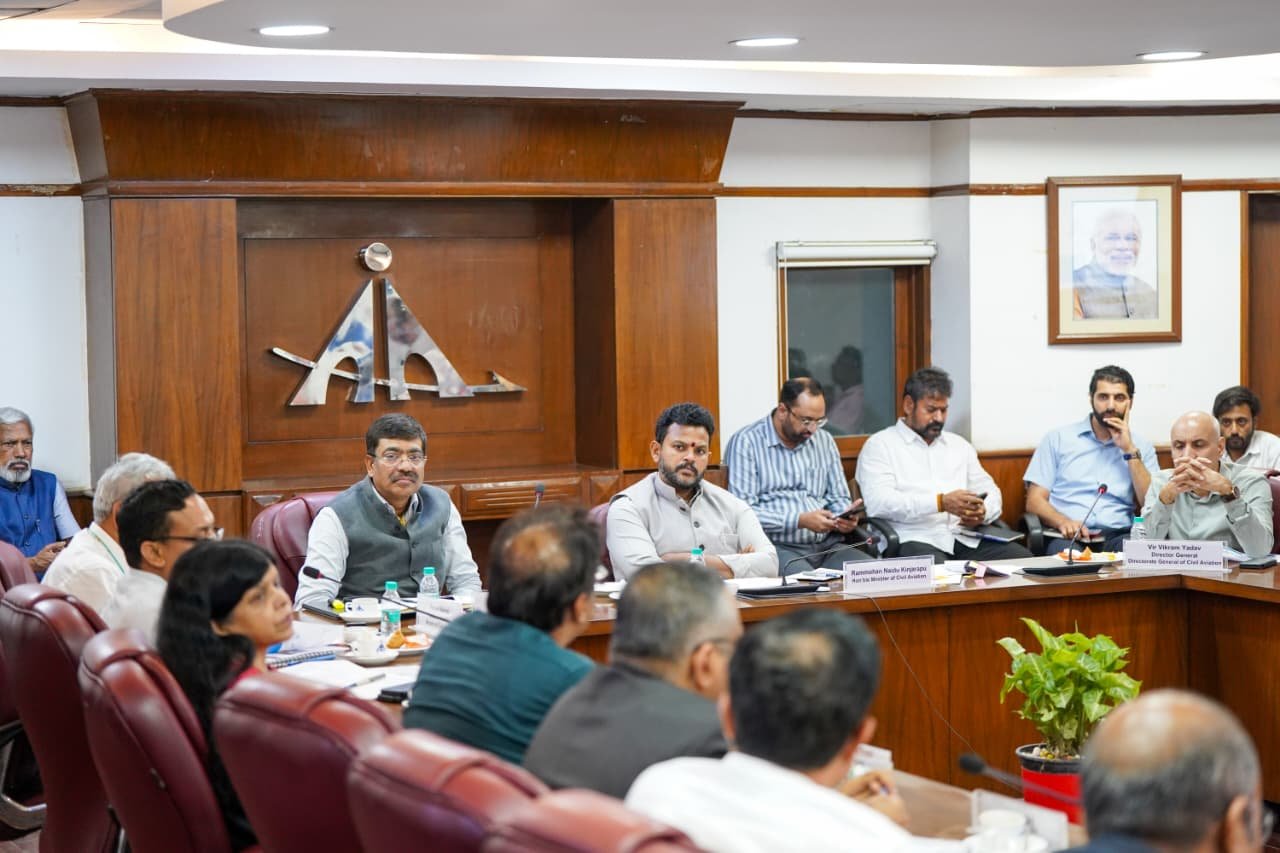
With the draft SAF policy in its final stages, the Ministry of Civil Aviation is conducting consultations across government and industry.
Union Civil Aviation Minister Kinjarapu Ram Mohan Naidu reiterated India’s commitment to a phased rollout of Sustainable Aviation Fuel (SAF) for international flights from January 2027, stressing that implementation must be cost‑effective for passengers and airlines.
“We have to ensure this process imposes the least possible burden on passengers and airlines. For that, we need to study all SAF pathways and identify the most cost‑effective mechanism right from production to drop‑in at the airport,” Naidu said at a high‑level stakeholder meeting in New Delhi on Wednesday.
Preparedness for SAF adoption and compliance with ICAO’s Carbon Offsetting and Reduction Scheme for International Aviation (CORSIA) were discussed, alongside the proposed blending mandate. Roles for oil marketing companies, airlines and airport operators were reviewed, as well as plans for a national SAF registry with end‑to‑end traceability.
“Our immediate priority is to achieve the 1 per cent CORSIA blending requirement in the most cost‑effective manner. As part of our long‑term strategy, the carbon‑credit offset mechanism must be developed through a whole‑of‑government approach,” he added.
With the draft SAF policy in its final stages, the Ministry of Civil Aviation is conducting consultations across government and industry. Naidu said the aviation sector is working on multiple fronts to cut emissions, with SAF as a critical component.
Naidu said, “We are approaching SAF not merely as a compliance requirement but as a strategic national opportunity. Multiple stakeholders, including farmers, stand to gain from the SAF value chain.”
Senior officials from the ministries of Civil Aviation, Petroleum & Natural Gas, Environment, Forest and Climate Change, along with oil companies, airlines and airport operators, attended the meeting.
India plans to blend 1 per cent SAF in aviation turbine fuel (ATF) by 2027, 2 per cent by 2028 and 5 per cent by 2030. Currently, neat SAF costs two to five times more than conventional ATF, and blending 1 per cent SAF adds about 1-4 per cent to an airline’s fuel bill.