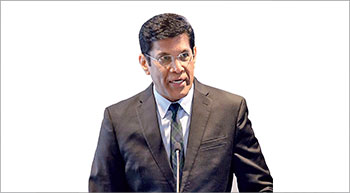
<span style="font-weight: bold;">Jagdish Salgaonkar, Senior Vice President, Civil & Infrastructure, Aecom</span> <br />
<br />
<span style="font-weight: bold;">How is big data likely to play an important role considering elements such as coordination during the development, construction, maintenance processes? </span><br />
The role of big data during project implementation is different from that of project operations. The implementation phase typically consists of planning, design and construction. In city building projects such as Dholera, at least seven different disciplines are being simultaneously planned, designed and constructed. They are water, wastewater, recycled water, storm water, power, ICT and transport (roads) systems. Elaborate software systems which use variations in big data analytics are available to optimise the design for each system. During the design phase, each element (asset) is given a unique identification number, which later becomes a part of the asset management programme. Designing in 3D with extensive use of Building Information Modelling (BIM) and other collaboration platforms is the key to making designs efficient.
<p></p>
<p> <span style="font-weight: bold;">What is your experience in this regard? How has the use of big data made a difference to infrastructure projects in terms of timeline, costing, etc.? </span><br />
Use of sophisticated software solutions does not necessarily reduce cost, but can save a lot of time when properly used and implemented. A significant amount of time can be saved by doing quality checks (most of which are automated) and the resulting design is of high calibre, which means lower changes in the field and overall lesser costs.</p>
<p> <span style="font-weight: bold;">That said, how can big data improve and help manage revenue stream, especially in smart cities? </span><br />
There are many examples of how big data can be used to monetise projects. An example of this is a security camera, which collects millions of images every day, can be programmed for face recognition or making decisions as to why some retail shops do better than others at a busy intersection. This type of information is worth a lot to businesses which can, for example, change their showrooms or frontage to attract more customers.</p>
<p> <span style="font-weight: bold;">What kind of (digital) infrastructure does a smart city require?</span><br />
A smart city will require sensors at the ground level to capture information from various assets, such as water, transport, waste and power. This data is then collected by a platform typically located in the city hall, such as the command control centre (CCC) or integrated operations centre (IOC), which would process that data and provide ‘information’ to the residents via various smart city applications enabling people make the right decisions. Some examples of decisions are identifying the time of day when utilities are least expensive or finding out the road and traffic conditions. The smart city will require networks to connect these sensors, Wi-Fi networks to provide information to all stakeholders, compute infrastructure to process all the data, ample storage to store all the required data, various applications to provide services to all stakeholders, information security devices to make sure the data is secure and does not fall into the wrong hands and different analytics tools to make sense out of all the data.</p>
<p> <span style="font-weight: bold;">What has changed in Dholera since its transformation to a smart city?</span><br />
Dholera is a greenfield city, which means it is being developed from scratch. Currently, the land is all agricultural, but they are highly saline, low-lying lands that are not so productive. Building a city from scratch and making the land more productive as a manufacturing hub will benefit the framers as well as the country in its goal of increasing the manufacturing GDP of the country. Even as the existing villages are being protected to maintain their character and culture, the people from these villages will have opportunities in the new city.</p>


Sophisticated Software Solutions Do not Necessarily Reduce Cost
Leave a Reply
You must be logged in to post a comment.