India is urbanising at, what a Union Minister has termed, a very 'dramatic' clip. It today has 50 cities with a population of over one million. As per the 2011 Census, the total number of cities and towns in the country had increased to 7,936 from 5,161 in 2001.


Tag: CPCB
Post

Post

Waste segregation at source is a major hindrance
The 2014 report of the Planning Commission Committee chaired by K Kasturirangan found that 62 million tonnes (MT) of municipal solid waste (MSW) was produced per year, which is based on an average of 0.45 kilo per capita, per day, for IndiaÆs urban population.
Post

Scaling the urban ladder
Rapid urbanisation has brought in a sling of progressive measures from the policy-makers. A transition has to set in to accommodate such exponential growth in the urban population.
Post

Connecting the dots
Conventional sewage treatment systems, favoured by engineers and bureaucrats, are incapable of doing the job. So the smart cities have been picked and the hunt is on to flesh out what the proclamations of the Ministry of Urban Development
Post
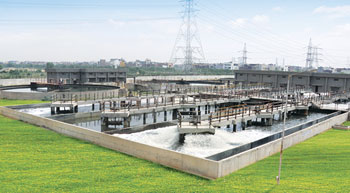
Blue Gold
Warring nations over water may sound apocalyptic, but there is no denying water is going to be a major restraint on urbanisation. Basic demand-supply rules apply here and explain to a large extent doomsday scenarios captured in Hollywood hits such as Water Wars
Post

The Government has started supporting PPP and introduced reforms
Discharge of untreated sewage is the biggest cause for water pollution. The large gap between the generation of waste-water and its treatment has led to large scale ground water contamination. Operation and maintenance of existing plants
Post
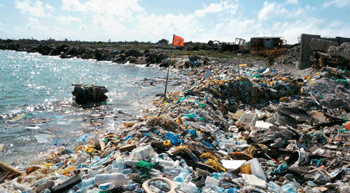
Automatic Water Quality Monitoring on Ganga
Under the World Bank aided project Automatic Water Quality Monitoring has been setup under the NGRBA Project for the river Ganga at an estimated cost of Rs 94.45 crore approximately.
Post
Why a nice cooperative system isn’t working
Over the last three decades the industrial sector in India has reportedly quadrupled in size, no doubt providing several benefits. With World Water Day on 22 March, Janaki Krishnamoorthi explores why government efforts at creating cooperative wastewater treatment plants have failed, and explains why industries’ contribution in conservation will augment business opportunities.