The Union Budget for FY2018 has maintained focus on meeting the Housing for All agenda by 2022. The allocation is marginally lower than the last fiscal.


Tag: Union Budget
Post

Post
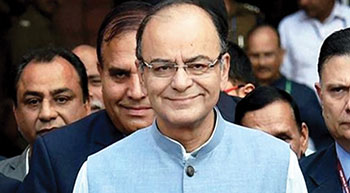
Rs. 6 trillion Master Stroke
This Union Budget came against the backdrop of a raft of reforms, economic slowdown and fiscal stress. While the Budget proposals will incrementally contribute to economic expansion with its de facto elements of stimulus, the pace of growth will largely be due to factors outside the Budget.
Post
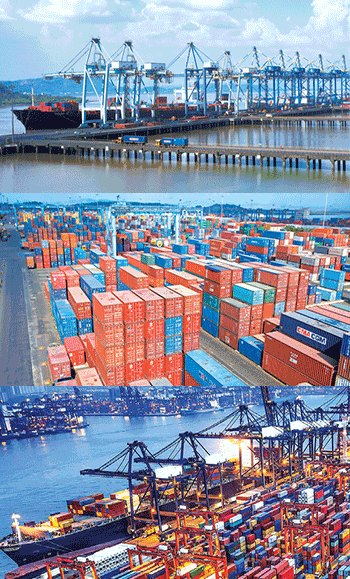
Port of Opportunities!
With an outlay of Rs 1,773 for the year 2017û18, the government has set the ball rolling for the port sector. To promote port-led development in India, Rs 600 crore has already been allocated for the Sagarmala Programme.
Post

Looking Beyond Airports
Aviation infrastructure is top priority for India, which is currently aiming to become the third largest aviation market in the world by 2020 and the largest by 2030. Hence there is a need to develop airports that are modern and efficient to facilitate easier movement of travellers.
Post

EscortsÂ’ profits grow by 54.4percent at Rs 101 crore
Escorts Limited has reported a profit of Rs 22.7 crore in the quarter ending December 31, 2016, up by 11.2 per cent as against a profit of Rs 20.4 crore in the corresponding quarter in the previous fiscal. The profit reported is after one time loss from discontinued operations in respect of its auto products business of Rs 30.8 crore.
Post

Talks of realty price correction are highly speculative
What´s come as significant positives for the real estate sector are the announcements on affordable homes. One is the government according it infrastructure status, which means projects in that segment will be able to raise finance at a much lower cost.
Post

Tushad Dubash, Director, Duville Estates
We look forward to the implementation of the Real Estate Regulatory Authority Bill (RERA) which will bring in more transparency and professionalism into the sector. It is a positive move for developers with an established corporate governance practice. RERA coupled with GST and demonetisation will create a strong framework within which this industry will function.
Post
Rs.2,41,000 cr for transport infra in Union Budget
The Union Budget has allocated Rs 2,41,000 crore for the transportation sector. ´For transportation sector as a whole, including rail, roads, shipping, I have provided Rs 241,387 crore in 2017-18,´ Finance Minister Arun Jaitley said while presenting the Union Budget 2017-18 in the Lok Sabha.
Post

The economy is slowing down
There has been little clarity on the subject. The rates of commercial realty are coming down as a direct consequence. However, while the direct buying/selling market has witnessed sharp corrections, the rental office space business has witnessed no change.
Post

Indian logistics saw better growth while globally there was muted demand
Big is definitely better for the warehousing services focusing on serving organised sectors. Economies of scale, cheaper land costs, more automation and higher labour utilisation are some of the key benefits.