

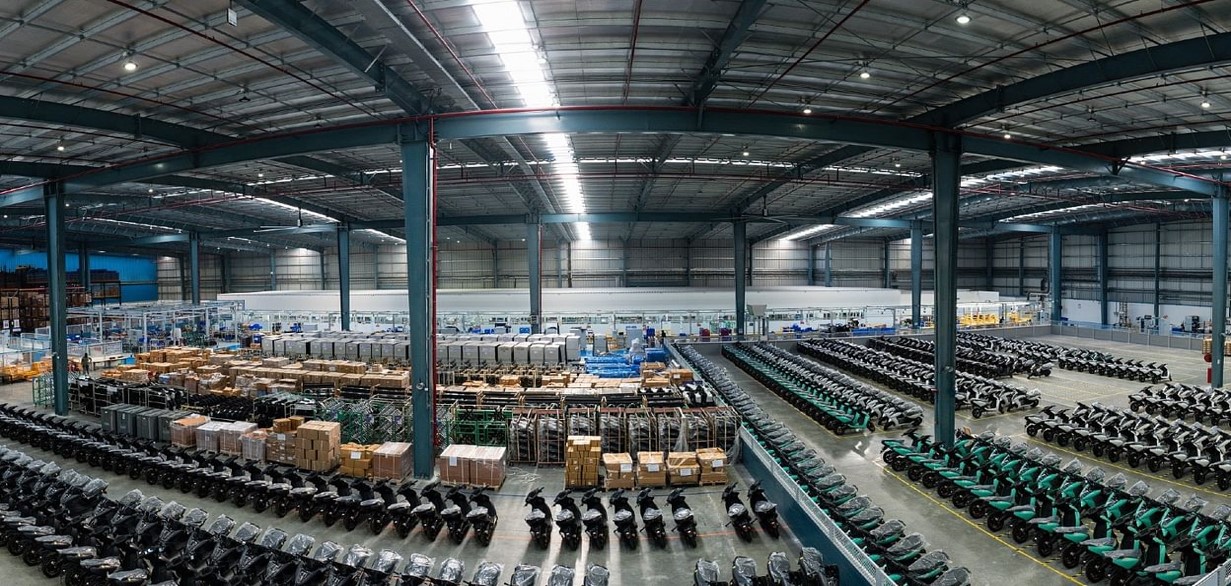
Policy initiatives such as PM Gati Shakti and the National Logistics Policy are positioning multiple cities as front‑runners for industrial and warehousing growth over the next few decades.
With India’s manufacturing sector expected to increase its contribution to GDP to around 25 per cent, from the current 17 per cent, the country’s industrial and warehousing market is emerging as a high‑growth frontier, global real estate advisor Colliers has said. Events such as policy push, infrastructure augmentation, evolving consumer behaviour, supply‑chain recalibration and rapid technology adoption are already supporting this development.
According to Colliers’ latest report, India’s Emerging Industrial & Warehousing Corridors: Mapping the Next Growth Frontier, multiple cities are likely to emerge as front‑runners for industrial and warehousing growth over the next few decades on the back of initiatives such as the PM Gati Shakti and National Logistics Policy. Moreover, impetus on domestic manufacturing and sector‑specific interventions such as the recent BioPharma SHAKTI Scheme and Semiconductor Mission 2.0 will catalyse real estate growth in relatively smaller industrial hubs.
“The recent budget has prioritised economic growth dispersion by emphasising the need for enhancement in domestic manufacturing capabilities. Additionally, the allocation of ₹50 billion per City Economic Regions (CER) and focused interventions across key sectors such as life sciences, electronics, semiconductors, chemicals, rare earth minerals, textiles, etc. can boost long‑term warehousing growth in the established markets and simultaneously open up investments in multiple emerging and nascent markets,” says Vijay Ganesh, Managing Director, Industrial & Logistics Services, Colliers India.
Colliers has identified multiple high‑potential cities based on industrial hubs identified by the government and an in‑house analytical framework built around five key parameters. The latter includes enhanced connectivity along strategic industrial and freight corridors, upcoming industrial smart cities, proposed multimodal logistics parks (MMLPs), expansion of sea and airport linkages and the development of large integrated textile hubs.
With the convergence of infrastructure development, demographic trends and consumption patterns, and policy support strengthening across regions, India’s industrial and warehousing market is set to grow exponentially in the next few decades. Moreover, the sector is likely to be characterised by greater efficiency, automation, supply chain integration, sustainability and technology adoption.
Growth Hub Clusters
Over 100 cities were assessed to determine their attractiveness for industrial and warehousing growth over the next five to six years. This was based on factors such as the maturity of the industrial ecosystem, presence of established manufacturing clusters, stage of infrastructure project completion, proximity to multimodal infrastructure, and availability of Grade A stock. These, along with other considerations such as MSME activity and e‑commerce penetration, were eventually shortlisted to 30 high‑potential cities under prime (8), emerging (12) and nascent (10) hubs, reflecting varying levels of ecosystem maturity and readiness for future growth.
The eight prime hubs—including Ahmedabad, Bengaluru, Chennai, Delhi NCR, Hyderabad, Kolkata, Mumbai and Pune—are already established demand centres expected to consolidate their lead and absorb new capacity quickly. Twelve emerging hubs, such as Jaipur, Lucknow, Coimbatore, Indore and Visakhapatnam, are poised to gain momentum as critical industrial corridors, logistics parks and multimodal hubs near completion. Ten nascent hubs, including Guwahati, Jammu, Kanpur, Nagpur and Vijayawada, are expected to gradually pick up pace, with growth contingent on infrastructure adequacy, policy support and investor readiness.
Together, these clusters provide a roadmap for balanced growth and long‑term expansion in the northern, southern, western, eastern, and central regions of the country’s industrial and warehousing market.