

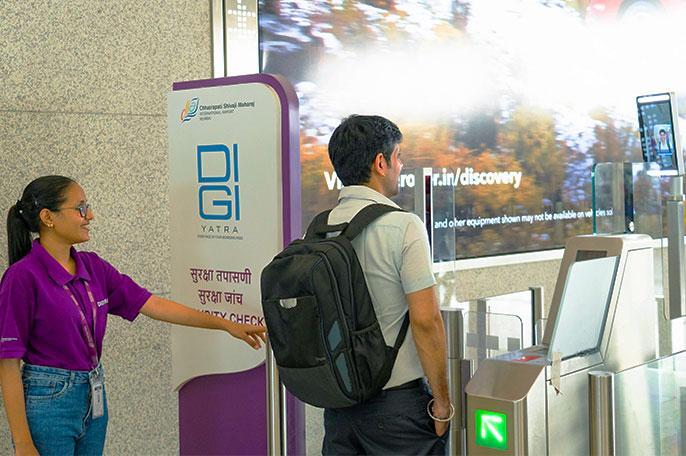
Commending the milestone, Civil Aviation Minister Kinjarapu Ram Mohan Naidu announced that Digi Yatra will be enabled at 27 more airports by 2027.
India’s flagship digital travel platform, Digi Yatra, has achieved a major milestone by enabling over 100 million seamless passenger journeys across 38 airports, supported by more than 24 million downloads on iOS and Android, the Ministry of Civil Aviation announced on Saturday.
Often described as one of the most successful digital innovations in global aviation, Digi Yatra reduces average airport entry processing times from 15 seconds to just 5 seconds per passenger by replacing manual document verification. This rapid throughput has optimised terminal infrastructure, eased congestion, and reduced manual overheads. By eliminating physical boarding passes, the initiative also supports environmental sustainability, saving thousands of sheets of paper daily across participating airports.
Reflecting on the milestone, Union Minister for Civil Aviation, Kinjarapu Ram Mohan Naidu, said the achievement reinforced growing passenger trust in seamless, paperless, and contactless travel. “Annual passenger traffic across Indian airports is projected to reach 500 million by 2030 and double to nearly 1 billion by 2040. To effectively manage this exponential growth, we are adopting multiple digital solutions like Digi Yatra, self‑baggage drop facilities, air traffic control automation, the AirSewa grievance redressal portal, and AI‑powered digital twins to optimise airport operations.”
Naidu noted that while many nations are still evaluating biometric passenger processing, India has successfully operationalised and scaled Digi Yatra within a remarkably short timeframe. “Right now, Digi Yatra is active at 38 airports, and by next year, 27 more airports will be enabled. Major greenfield airports opening this year—Navi Mumbai, Jewar, and Bhogapuram—will all be fully Digi Yatra‑enabled.”
The platform is also becoming more inclusive. Digi Yatra currently supports 11 languages, with 11 additional regional languages to be added by year‑end. Its architecture prioritises security and privacy through a privacy‑by‑design approach: passenger data remains encrypted and securely stored on the user’s device, shared only for immediate verification at the origin airport.