

The eight new structural reforms aim to enhance efficiency, drive innovation and strengthen the railway ecosystem.
Eight structural reforms spanning freight transportation, logistics, construction practices, project execution, wagon design, skilling, and ease of doing business have been announced for the Indian Railways.
Unveiling the initiatives under the Ministry of Railways’ target of undertaking ‘52 Reforms in 52 Weeks’ in New Delhi on Tuesday, Minister for Railways Ashwini Vaishnaw said they were integral to his ministry’s efforts at building a future‑ready rail network. “Part of our ‘Reform Express’, with these, the total number of reforms implemented by the Indian Railways has reached 17. They will serve to enhance efficiency, promote innovation and strengthen the railway ecosystem.”
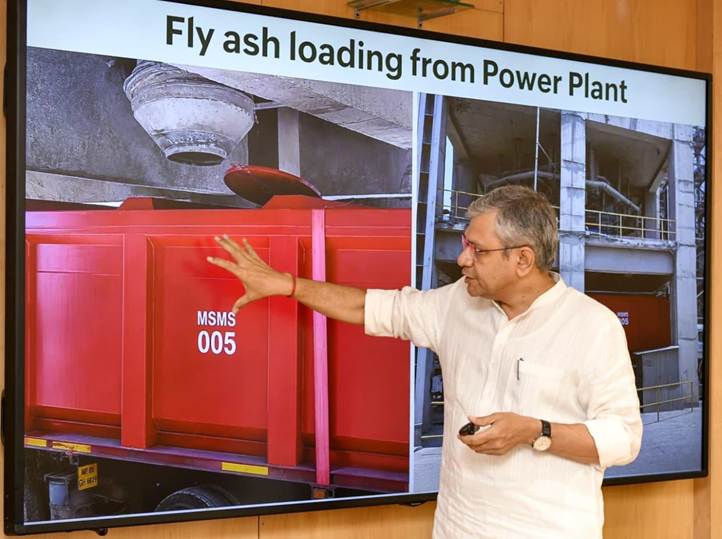
The new set of reforms begins with fly ash transportation, a critical environmental challenge. India generates nearly 340 million tonnes (MT) of fly ash annually, with the cement industry consuming about 96 MT. Indian Railways carried 13 MT in FY2025‑26, but most of it was moved in open wagons, causing dust pollution. To address this, a containerised system has been introduced using ISO‑standard containers that allow dust‑free loading and unloading. These containers can be handled seamlessly by reach stackers, ensuring safe storage at cement plants and converting a waste challenge into a productive resource.
In the container sector, the licensing framework has been overhauled. Earlier, Container train operator licences were divided into four categories with high fees and route restrictions. This has now been replaced by a single pan‑India licence with a uniform fee of ₹250 million, valid for 20 years and extendable without renewal charges. “The simplified licensing framework is expected to improve ease of doing business and encourage greater private participation,” stated Vaishnaw.
Fertiliser transportation has also been rationalised. Indian Railways currently handles 85 per cent of the country’s fertiliser movement, but the earlier freight system had nearly 50 slabs. A simplified ‘per tonne, per kilometre’ tariff has now been introduced, along with permission for containerised movement. This will allow phased unloading, protect fertilisers from weather damage, and improve wagon turnaround.
A new policy for skilling artisans has been launched to ensure quality manpower in railway projects. Workers in trades such as welding, fitting and masonry will undergo structured assessments, with successful candidates receiving QR‑enabled certificates linked to a live database. The initiative will begin with complex projects like bridges and tunnels and expand nationwide within two years, ensuring only certified artisans are deployed.
Construction reforms have also been strengthened. Contractors must now provide 10 per cent performance security upfront, while those with litigation exceeding 50 per cent of their net worth will be barred from tenders. Contractor’s All Risk Insurance and Professional Indemnity Insurance have been introduced, alongside a sequential land handover mechanism. The Rail Bhoomi platform will further streamline land acquisition through digital integration and real‑time monitoring.
Wagon Design Reform
To promote innovation, a new policy for approving wagon designs has been unveiled. “The new framework will facilitate development of specialised wagons for sectors such as steel, petroleum, chemicals, milk, plastics and other industries requiring customised transportation solutions,” affirmed Vaishnaw. After prototype testing and safety certification by the Railways’ Research Designs and Standards Organisation (RDSO), approved wagons will be inducted.
Petroleum product transportation has been liberalised by allowing oil companies to procure or lease specialised tank wagons directly, reducing costs and risks associated with road transport.
Similarly, foodgrains, flour and pulses can now be moved in containers under a simplified tariff system, ensuring flexible storage, phased distribution and reduced contamination risks.
“The gradual containerisation of diverse commodities will shift more freight from road to rail, cut logistics costs, and deliver substantial environmental benefits, with rail transport generating nearly 90 per cent lower carbon emissions than road,” emphasised Vaishnaw.
The latest reforms mark a significant expansion of the Ministry of Railways’ modernisation agenda, which had earlier witnessed the introduction of nine structural changes.