Escorts Limited has reported a profit of Rs 22.7 crore in the quarter ending December 31, 2016, up by 11.2 per cent as against a profit of Rs 20.4 crore in the corresponding quarter in the previous fiscal. The profit reported is after one time loss from discontinued operations in respect of its auto products business of Rs 30.8 crore.


Category: ECONOMY & POLICY
Post

Post
Jayashree Kurup, Head of Content and Advisory, Magicbricks.com
Affordable housing being given infrastructure status is a welcome move and will help in the ´Housing for all´ by 2022 Mission - it is a big and positive move for developers, banks and housing finance companies.
Post

Shishir Baijal, Chairman and Managing Director, Knight Frank India
The Union Budget 2017-18 is a much awaited one, considering that it comes against the backdrop of a challenging year for the real estate industry. There needs to be a balance between the demand and supply sides to ensure a surge in sentiment and investment opportunities.
Post

Tushad Dubash, Director, Duville Estates
We look forward to the implementation of the Real Estate Regulatory Authority Bill (RERA) which will bring in more transparency and professionalism into the sector. It is a positive move for developers with an established corporate governance practice. RERA coupled with GST and demonetisation will create a strong framework within which this industry will function.
Post
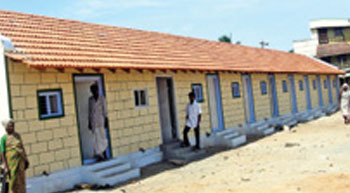
Cabinet approves a new scheme for promotion of rural housing
The Union Cabinet has approved a new scheme for promotion of rural housing in the country. The Centre will provide interest subsidy under the scheme.
Post
Haryana formulates infra transport scheme
Haryana has formulated an Industrial Infrastructure Development Scheme aimed at promoting uniform regional and sustainable growth across the state, including in backward areas.
Post
Centre calls for affordable housing targets
The Ministry of Housing & Urban Poverty Alleviation has asked all states and Union Territories to submit proposals for construction of affordable houses for the urban poor at the earliest so that the ´Housing for All´ target in urban areas could be met by 2022 as envisaged.
Post

Telecom subscribers in India up 1.91percent in Nov 2016
The number of telephone subscribers in India increased from 1,102.94 million at the end of October 16 to 1,123.96 million at the end of November 16, showing a monthly growth rate of 1.91 percent.
Post
Telecom panel seeks clarity from TRAI
The Telecom Commission has directed the Department of Telecom to seek clarity from the Telecom Regulatory Authority of India (TRAI) on whether the regulator can impose penalty on the operators for violation for interconnect norms
Post
PMAY approvals cross 15 lakh with investment of Rs 82,708 cr
The Ministry of Housing & Urban Poverty Alleviation has asked all states and Union Territories to submit proposals for construction of affordable houses for the urban poor at the earliest so that the ‘Housing for All’ target in urban areas could be met by 2022 as envisaged.