In India, for every 10 per cent of the population using basic services such as voice and SMS, the national GDP increases by 0.5 per cent; a similar expansion of Internet and other non-voice communication or data adds 1 per cent to GDP, according to government figures available with the country´s Department of Telecommunications (DoT).


Tag: GDP
Post

Post
Infrastructure | A Travesty of Partnerships
We need to improve our infrastructure, and if someone asked, by when, the obvious answer will be yesterday! According to a study by S&P Global Ratings, the country´s poor infrastructure is the biggest hurdle to the government´s ´Make in India´ programme, and they went on to add that the infrastructure deficit is costing the nation up to 5 per cent of our GDP.
Post

Logging Grwoth
The Indian logistics market is expected to grow at a CAGR of 12.17 per cent by 2020, driven by the growth in the manufacturing, retail, FMCG and e-commerce sectors.
India is expected to register a steady uptick in logistics growth, on the back of the improvement in the country´s infrastructural environment.
Post

Addressing Infrastructure Financing Needs
After liberalisation, the government´s primary focus was on reducing the fiscal deficit to restore macroeconomic stability, reforming trade and exchange rate policies and liberalising foreign investment policy. Infrastructure was never a growth constraint in the short term, considering the low utilisation of the existing infrastructure then.
Post
Ports, Ahoy!
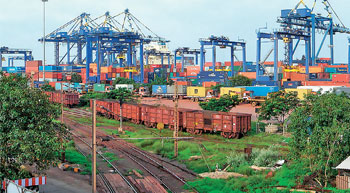
India, due to its long coastline, is richly endowed with natural maritime advantages. The countrys 7,500 km coastline covers 13 states and Union Territories. A number of ports along the long coastline lie along key international trade routes. There is huge potential even for inland water transport.
Post
The NET of all Nets
Was it Napoleon, who said that an army marches on its stomach? Or was it Frederick the Great? Historians do not seem to agree on that contentious question. Irrespective of who made that statement, you would think their armies moved on horses and carriages.
Post
New mineral policy to bring in private investment | Tomar
The Centre will soon introduce a national mineral exploration policy which will promote private investment in the sector other than boosting exploration, Union Minister of Mines Narendra Singh Tomar said.
Post
How safe are our roads?
We travel in order to reach our destinations; we do not travel to die. Yet, that is exactly what 1.3 million road travelers do every year - die! It is unbelievable, but true - that globally, road traffic injuries claim more than 1.3 million lives each year and have a huge impact on health and development.
Post
200 SEZs likely to be exempt from 18.5percentage MAT
Enterprises operating from over 200 Special Economic Zones (SEZs) in the country are likely to be exempted from the minimum alternative tax (MAT) of 18.5 per cent on their book profits.
Post

DRIVERS OF GROWTH
The existence of public sector companies over more than six decades can be divided into three distinct phases; namely, post Independence, post liberalisation and the present