

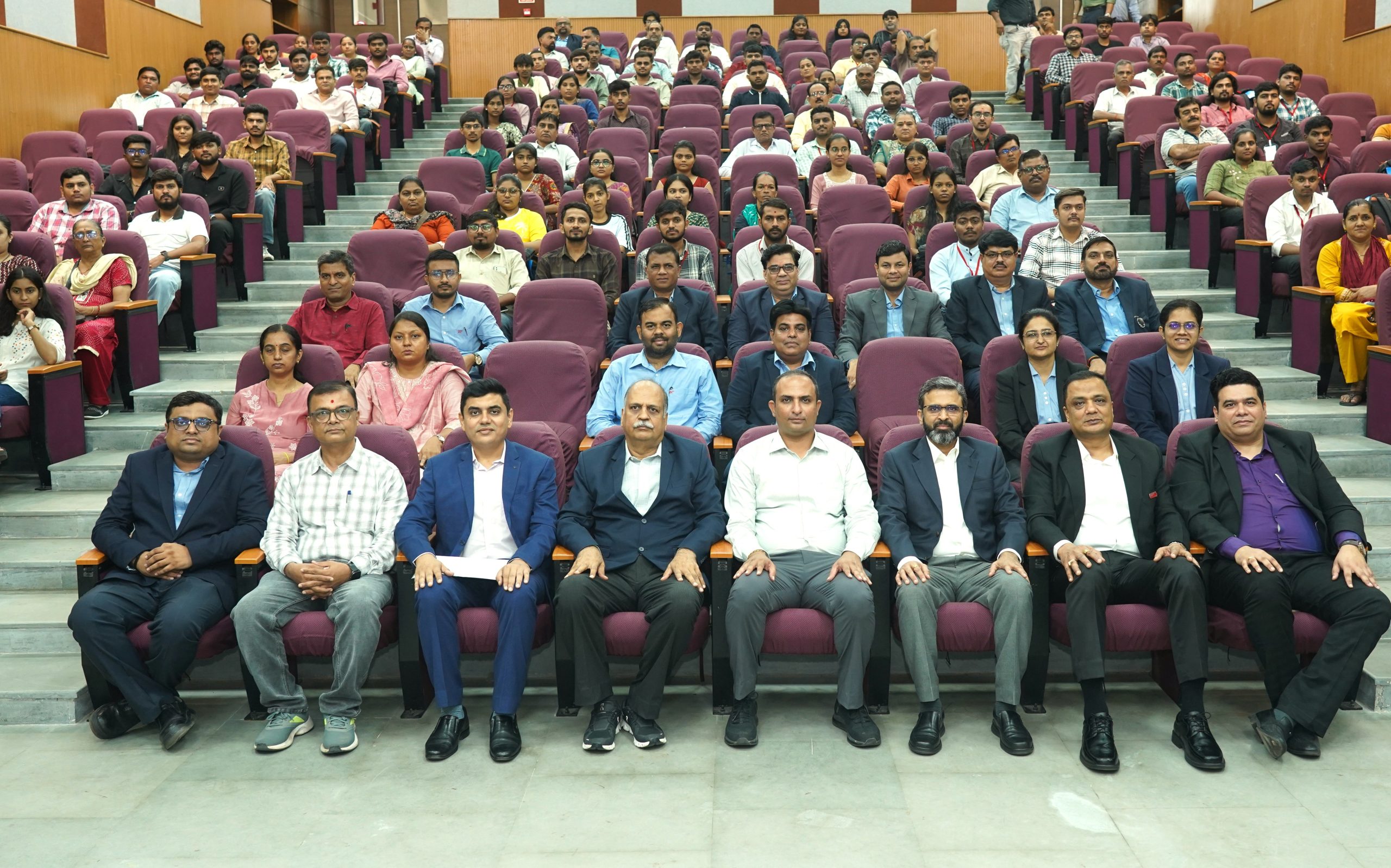
The one‑year certification course aims to bridge the gap between academic learning and industry needs for young engineering talent from Surat and nearby regions.
ArcelorMittal Nippon Steel (AM/NS) India, a joint venture between global steelmakers Arcelor Mittal and Nippon Steel, has launched the Employability Enhancement Programme (EEP) in partnership with the Sardar Vallabhbhai National Institute of Technology (SVNIT), Surat.
The one‑year certification course aims to bridge the gap between academic learning and industry requirements for young engineering talent from Surat and the surrounding areas.
Earlier this week, AM/NS India was selected as the Anchor Industry Partner for the Surat Industrial Training Institute (ITI) Cluster under the Centre’s Pradhan Mantri Skilling and Employability Transformation through Upgraded ITIs (PM‑SETU) initiative.
Tejas Parmar, Collector & District Magistrate, Surat, said, “Surat’s growth story must be powered by skilled local talent. This initiative by AM/NS India and SVNIT creates meaningful opportunities for our youth and contributes to the larger vision of a skilled and developed India.”
Ashutosh Telang, Director & Vice President, HR & Administration, AM/NS India, stated, “Through this programme, we aim to enhance employability, create opportunities for local youth, and build a stronger talent pipeline for the manufacturing sector.”
Anupam Shukla, Director, SVNIT Surat, added, “By combining academic excellence with real‑world industrial exposure, we are preparing participants to meet the evolving needs of industry and contribute meaningfully to the nation’s growth.”
The first batch of 80 participants—40 engineering graduates and 40 diploma holders—will undergo training jointly delivered by SVNIT Surat and AM/NS India. The programme covers practical industry knowledge, technical competencies, industrial safety, quality management, and professional skills required in modern manufacturing environments.
By 2030, India must create 115 million jobs, with 63 per cent of the workforce needing to upgrade their skills to meet industry and technology demands. EEP has, therefore, been designed as a practical, future‑ready response to this challenge through collaboration between government, academia, and industry.