ABAAS, the Odisha Urban Housing Mission that envisages providing all residents of urban areas access to a range of housing options in the state, has been launched.


Category: ECONOMY & POLICY
Post

Post

Our specialists have developed a deep understanding of the challenges and requirements in each sector
The total lubricant market in India is around 2.2 billion litres. It is a strong market with rising opportunities and ranks third after the United States and China. As per recent reports by Kline, the overall Lubricants industry in India is expected to grow at a CAGR of 2.5 per cent.
Post
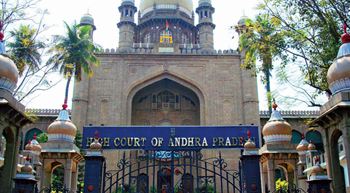
EPC contractual issues
One of the major costs in an infrastructure project is the tax cost that a project has to bear on account of various indirect taxes, viz., the value added tax, works contract tax, service tax and many other similar taxes. Typically, in most of the infrastructure projects, the owner awards a turnkey contract to one party known as the engineering, procurement and construction (EPC) contractor.
Post
Delay in procurement policy revision hits submarine project
Despite being cleared a year ago, the project to indigenously construct six conventional submarines for the Navy has failed to make any headway as the Defence Procurement Policy (DPP) has not yet been finalised.
Post
Centre to discuss policy support by states for affordable housing
The Ministry of Housing and Urban Poverty Alleviation will discuss with the states the policy measures being taken by them to promote affordable housing projects for the benefit of economically weaker sections (EWS) and low income groups (LIG).
Post
GoI makes changes in indirect tax rates
The Government of India has made changes in indirect tax rates. In view of the continued fall in international prices of wheat and the anticipated adverse impact of increased imports during the first half of this financial year, basic customs duty on wheat has been increased from 10 per cent to 25 per cent for a period up to 31.03.2016.
Post
Rail Min tweaks approval process
To hasten project implementation, the Railway Ministry has directed all its zonal headquarters to call tenders for an item of work even before the in-principle approval from the NITI Aayog.
Post
Digital India: The next steps
The noble vision of having paperless governance needs to overtake a mindset and working style of decades. It needs the transition of people more than infrastructure at any juncture.
Post

MSME: Integral to Make in India
Like roti, kapda aur makaan, the industry needs finance, power and water. Plugging some of these gaps can boost the sector, thereby giving a fillip to the overall campaign. The focus of Make in India is on creating jobs and skill enhancement in 25 sectors.
Post

India is among the top five in terms of investment in RE
Anil Sardana, Managing Director & CEO, Tata Power, throws light on the remarkable growth of the renewable energy sector and the factors that have contributed to it.