

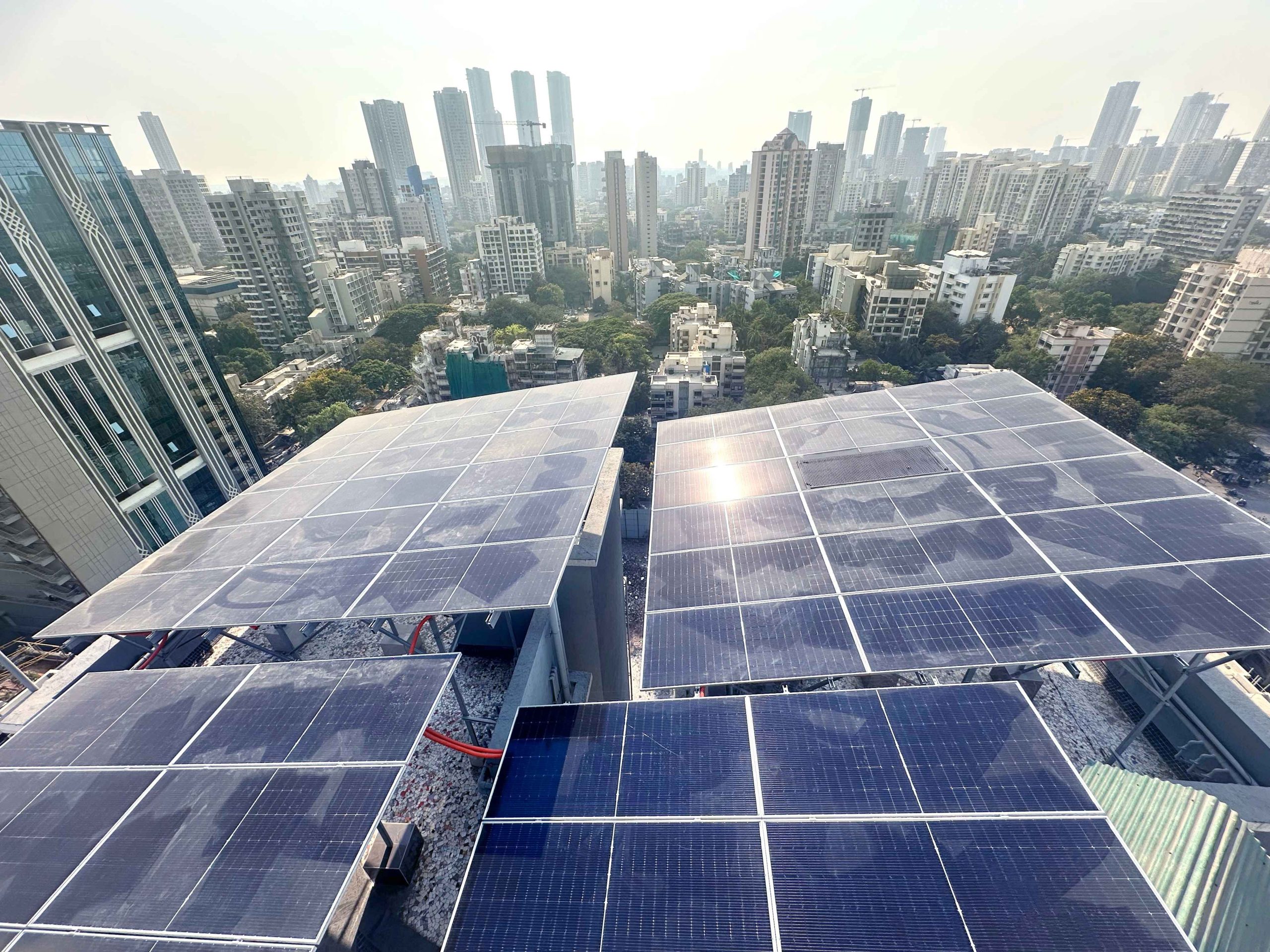
Rooftop solar adoption in Mumbai is gaining rapid momentum, powered by the PM Surya Ghar Muft Bijli Yojana, one of the world’s largest government-backed programmes encouraging households to generate their own electricity.
At a time when the world is reeling under energy shocks and heatwaves triggered by the El Niño phenomenon, India’s commercial capital offers a bright spot. A recent study by Tata Power Mumbai Distribution reveals that 83 per cent of its rooftop solar consumers are saving more than 50 per cent on monthly electricity bills, with nearly half reporting savings above 80 per cent.
Rooftop solar adoption is accelerating in Mumbai, driven by the PM Surya Ghar: Muft Bijli Yojana (PMSGMBY), one of the largest government-backed schemes globally to encourage households to generate their own electricity.
“These outcomes highlight the growing appeal of rooftop solar as a reliable and cost-effective solution for urban households,” Tata Power said in a statement.
To sustain momentum, Tata Power Mumbai Distribution has enabled the addition of 3.27 MW of rooftop solar capacity, unlocking ₹48.4 million in central subsidies for participating consumers. This forms part of its broader footprint of 33.91 MW across 873 net-metered consumers, reflecting sustained adoption across its licensed area.
Tata Power attributed strong consumer response to “seamless, end-to-end facilitation, including support for net metering installation, portal registration, and coordination for subsidy disbursement.” It has actively engaged with housing societies, residential consumers, and small establishments to accelerate adoption.
Credible Alternative
Mumbai is among India’s highest electricity-consuming cities, accounting for nearly 5 per cent of the country’s total electricity consumption in FY2024-25, according to the National Power Portal. It currently also has the most expensive electricity in India, with average residential tariffs around ₹9.8 per unit and high-slab rates reaching ₹12.4 per unit, which is costlier compared to other Tier-1 metro cities. This is another principal reason behind the shift towards rooftop solar.
Launched in February 2024, the PM Surya Ghar: Muft Bijli Yojana provides heavily subsidised rooftop solar connections to households. Excess electricity generated can be fed back into the grid, turning households into prosumers. The scheme also offers a far more reliable alternative to the tokenism of “free electricity” promised by several state governments in India.
As of May 2026, 3.5 million rooftop solar systems had been installed, benefitting 4.5 million households nationwide, according to Union Minister for New & Renewable Energy, Pralhad Venkatesh Joshi.
– Manish Pant