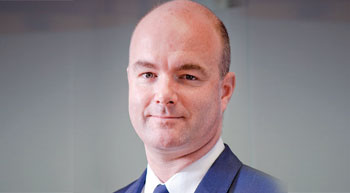
Benjamin Sporton, Chief Executive of the powerful London-based World Coal Association (WCA), urges India to move over to high-efficiency, low-emission coal-fired power plants, and predicts that there is enough room for all sources of energy in the country's rapidly expanding economy.


Tag: Manish Pant
Post
Post

We are constrained by our limited dredging capacity
The Inland Waterways Authority of India (IWAI) was set up in 1986. Since then till 2008, only five waterways could be declared as National Waterways. Work could be started on only three of them: National Waterway or NW-1 that is the Ganga National Waterway, NW-2 that is the Brahmaputra Waterway and NW-3 comprising the backwaters of Kerala.
Post

All Work, Before Play
When in August this year, India sent its largest ever delegation to the Summer Olympic Games held in Rio de Janeiro, Brazil, most expected the country to further improve on its performance over the London edition of the games which had been held four years earlier.
Post

Hitting the High Notes
The government´s move to demonetise old Rs.500 and Rs.1,000 banknotes has been widely hailed by the country´s infrastructure sector as a positive development. Industry representatives would also like the government and its agencies to simultaneously roll out adequate measures to counter any likely bumps on the road ahead.
Post

Mood coloured by near-term uncertainty
Hemant Maganlal Joshi, Technology, Media and Telecom Leader, Deloitte Haskins & Sells, feels that despite the near-term sluggish outlook for the telecom industry, innovation will help it come out of the woods.
Post

Spectrum acquisition is good for the next couple of years
Rajan S Mathews, Director General, Cellular Operators Association of India (COAI), talks about how the scope for further consolidation is going to continue to stress the industry for some time, the October airwaves sale, and the controversy around Reliance Jio´s entry.
Post
There´s a need to encourage local enterprise
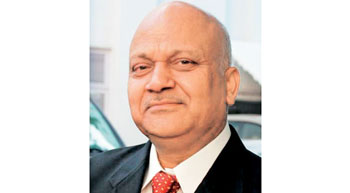
Prof NK Goyal, Chairman Emeritus, Telecom Equipment Manufacturers Association (TEMA) believes that more than anything else, Indian industry needs to be provided with proper market access in order to make the country a manufacturing hub for telecom equipment.
Post
Most complex tax regime by far
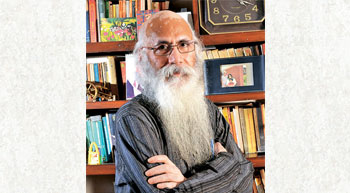
The macroeconomic aspects of GST haven´t been taken into account. If the government says that it will collect more revenue, then that means that prices will have to rise because it´s an indirect tax. If prices rise, then industrial output would tend to stagnate or decline.
Post

Awareness creation is the biggest challenge
Currently, the demand is much less than the supply. We all have an installed capacity, but are not able to sort of utilise that fully because the demand still has to pick up locally.
Post
Risk allocation wholly skewed against private sector
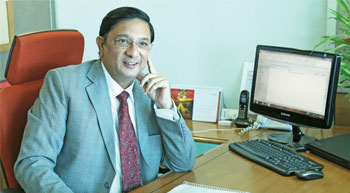
Vinayak Chatterjee, Chairman, Feedback Infra feels that the country has failed miserably on regulation, renegotiation, risk allocation and resourcing. He says that a comprehensive policy framework, including independent regulation, is required to make the PPP concept a success.