

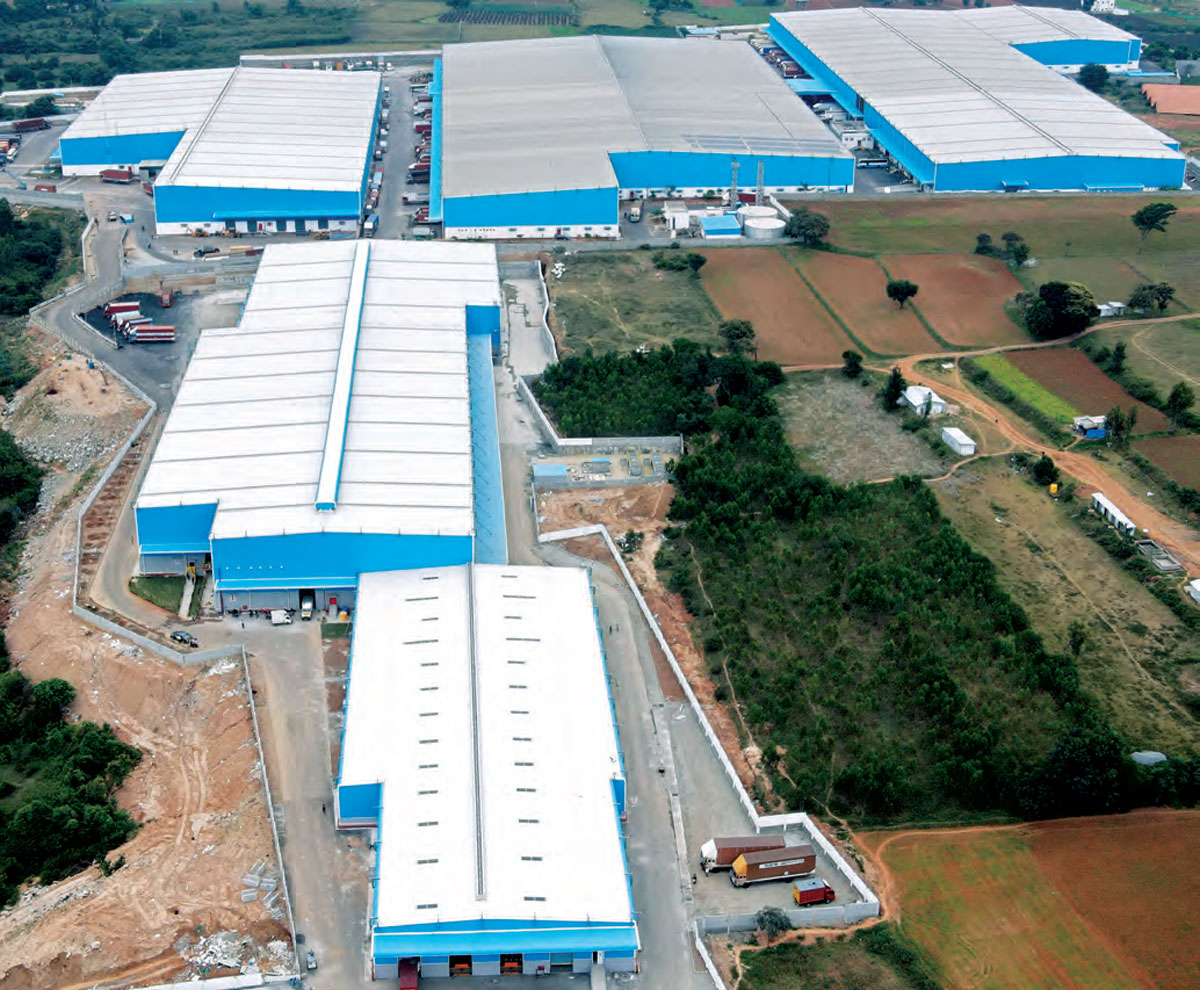
A new generation of infrastructure providers is reshaping India’s warehousing into a strategic driver of manufacturing and economic growth, notes Aditi Kumar.
India is undergoing one of the most transformative shifts in its industrial sector in recent history. The way companies manufacture products, manage logistics, distribution, and supply chains, and connect to global markets has evolved dramatically in under a decade, redefining systems that once took generations to build. Warehousing, once seen merely as storage for third-party logistics, has now become the backbone of manufacturing, trade, and economic development. This transformation is driven by a new generation of integrated infrastructure solution providers, who are reshaping how industries operate and scale.
These players offer more than just space; they design comprehensive industrial ecosystems where logistics, utilities, technology, and sustainability function in harmony. This covers the complete lifecycle of industrial infrastructure, from land acquisition and master planning to the design and development of core utilities, internal roads, and Grade A industrial and logistics facilities.
Their approach has shifted the role of infrastructure from a passive space to a strategic service, one that actively contributes to business growth. This integrated model is emerging as a critical enabler of India’s industrial expansion and a key pillar of its
global competitiveness.
IIPs driving growth
According to numerous industry reports, India’s modern warehouse market demand has been increasing exponentially. It is anticipated that by 2027, the country’s total storage capacity will exceed 1.2 billion sq. ft. This also indicates an ongoing strong interest from global businesses to set up their base in India and an increasing emphasis on organised industrial infrastructure as key components of national economic development.
With a rising footprint of manufacturing and heightened levels of consumption, there is a growing need for Grade-A warehouses. This surge in demand is being met by integrated industrial parks (IIPs), which blend high-quality industrial buildings with advanced infrastructure, including GPS-guided routing, shared utilities, security systems, and essential worker amenities. Positioned at strategic locations with direct access to highways, ports, airports, and rail networks, IIPs offer seamless first- and last-mile connectivity for manufacturing and distribution.
Crucially, these parks eliminate barriers to entry for new businesses. Instead of navigating fragmented approval processes and starting from scratch, companies can plug into ready-to-operate environments. This significantly reduces operational risk and accelerates go-to-market timelines for manufacturers and logistics providers alike.
Closing MSME gaps
Micro, small, and medium enterprises (MSMEs) play a critical role in India’s manufacturing and export ecosystem, yet many operate outside integrated industrial networks. Limited access to organised infrastructure, digital systems, and coordinated supply chains often restricts their ability to scale or meet evolving market expectations. Proximity-led industrial development addresses these gaps by embedding
MSMEs within structured ecosystems that connect manufacturing, warehousing, and transport infrastructure.
By operating within such environments, MSMEs gain better alignment with suppliers, logistics partners, and customers. This integration improves planning reliability, enhances compliance readiness, and enables participation in the same organised value chains as larger manufacturers, strengthening their long-term competitiveness.
At an operational level, proximity-based manufacturing hubs directly support production continuity and delivery performance. Manufacturing units located close to key industrial clusters and customer markets are better positioned to manage demand fluctuations, adjust production schedules quickly, and ensure consistent fulfilment.
For smaller manufacturers, this translates into smoother production cycles and stronger customer confidence. Faster coordination with suppliers and logistics partners reduces uncertainty in execution, allowing businesses to focus on quality, responsiveness, and service reliability rather than operational disruptions.
Sustainable tech shift
Technology and environmental sustainability are now central to the evolution of industrial infrastructure. As businesses prioritise responsible operations, integrated infrastructure providers are embedding green features at the design stage itself. These include solar power systems, rainwater harvesting, energy-efficient materials, structured waste management frameworks, and increased use of renewable energy.
Alongside Indian Green Building Council (IGBC) and Leadership in Energy and Environmental Design (LEED) certifications, the Excellence in Design for Greater Efficiencies (EDGE) certification is becoming important due to its data-driven approach to measuring energy, water, and material efficiency.
EDGE-certified facilities appeal strongly to global/domestic occupiers seeking quantifiable sustainability outcomes aligned with environmental, social and governance (ESG) benchmarks. The majority of newly developed Grade A warehouses have been green-certified or are in the process of certification, reflecting a clear shift toward environmentally responsible industrial development.
Simultaneously, technology is transforming warehousing into intelligent, responsive ecosystems. Integrated parks now feature IoT-enabled monitoring, AI-driven inventory systems, automated storage, and advanced security networks. These tools enhance accuracy, reduce manual intervention, improve worker safety, and enable real-time, data-oriented decision-making.
As India’s warehouse automation sector gains momentum, the fusion of sustainability and smart technology is shaping a new generation of future-ready and resilient industrial clusters.
Policy push
India’s recent economic reforms are reshaping the industrial landscape by accelerating the development of industrial and logistics clusters across the country. Flagship initiatives such as Make in India, PM Gati Shakti, the National Logistics Policy, and the National Infrastructure Pipeline are strengthening multimodal connectivity and enabling industrial development in regions that previously lacked a strong manufacturing base.
One of the most visible outcomes of this shift is the expansion of industrial activity beyond traditional metro centres into Tier 2 and Tier 3 cities. Rising consumption, supportive policy frameworks, improved infrastructure, and access to affordable land with faster clearances are drawing businesses to emerging hubs such as Cuttack, Hosur, Chakan, Siliguri, Visakhapatnam, and Indore. The development of industrial parks in these locations is creating new growth corridors, easing pressure on congested metros, and bringing manufacturing and logistics closer to high-potential consumption markets.
Equally important is the role these
clusters play in skill development. As global firms and advanced technologies establish operations in emerging hubs, local talent is being upskilled across functions such as automated warehousing, inventory management, supply chain optimisation,
and logistics coordination. These capabilities are building a workforce grounded in technology and operational excellence, strengthening the long-term competitiveness of regional industrial ecosystems.
Future path
To sustain long-term industrial growth, India must accelerate improvements in industrial infrastructure. This includes strengthening multimodal transport
networks, streamlining and digitising manufacturing approvals, facilitating easier financing for MSMEs, enhancing digital infrastructure within industrial facilities, and promoting the adoption of renewable energy and green building certifications. Equally
vital is investing in workforce development, particularly in automation and supply chain management skills.
These reforms are critical to building consistency and scale across India’s industrial landscape. By improving the quality, availability, and governance of industrial infrastructure, they enable manufacturers and logistics players to plan capacity with greater confidence, expand into new regions, and operate within more predictable operating environments. Over time, this creates a more balanced industrial ecosystem that supports both large enterprises and MSMEs, strengthens regional manufacturing hubs, and anchors sustainable, long-term growth.
The development of high-tech, environmentally sustainable industrial parks will be key to shaping this future, unlocking capacity for existing businesses, attracting new investments, generating employment, and reinforcing India’s stature as a manufacturing and distribution hub.
Realising this vision demands unified action. Policymakers must sustain reform momentum, industry players must embrace innovation and sustainability, and development partners must design ecosystems that are scalable, adaptive, and built for long-term growth. Through cohesive planning and shared commitment, India can accelerate its industrial transformation and secure long-term leadership in the global economy.
About the author:
Aditi Kumar, Joint Managing Director, TVS ILP.
Warehousing as Growth Engine
• Warehousing shifts from passive storage to strategic backbone of industry
• Integrated parks blend logistics, utilities, and technology for scale
• Seamless multimodal links connect hubs to ports, highways, and airports
• Ready-to-operate facilities cut entry barriers for new businesses
• Industrial ecosystems boost competitiveness and global market access
MSMEs in the New Network
• Proximity hubs embed smaller firms into organised value chains
• Shared infrastructure reduces risk and accelerates production cycles
• Digital systems improve compliance and planning reliability
• Faster supplier coordination strengthens delivery performance
• Customer confidence grows through smoother, more predictable operations
Sustainability & Smart Tech Shift
• Green design integrates solar, water, and waste systems from inception
• Certifications like IGBC, LEED, and EDGE anchor ESG credibility
• IoT sensors and AI inventory systems enable real-time visibility
• Automation reduces manual intervention and enhances worker safety
• Smart, sustainable clusters create resilient, future-ready ecosystems