

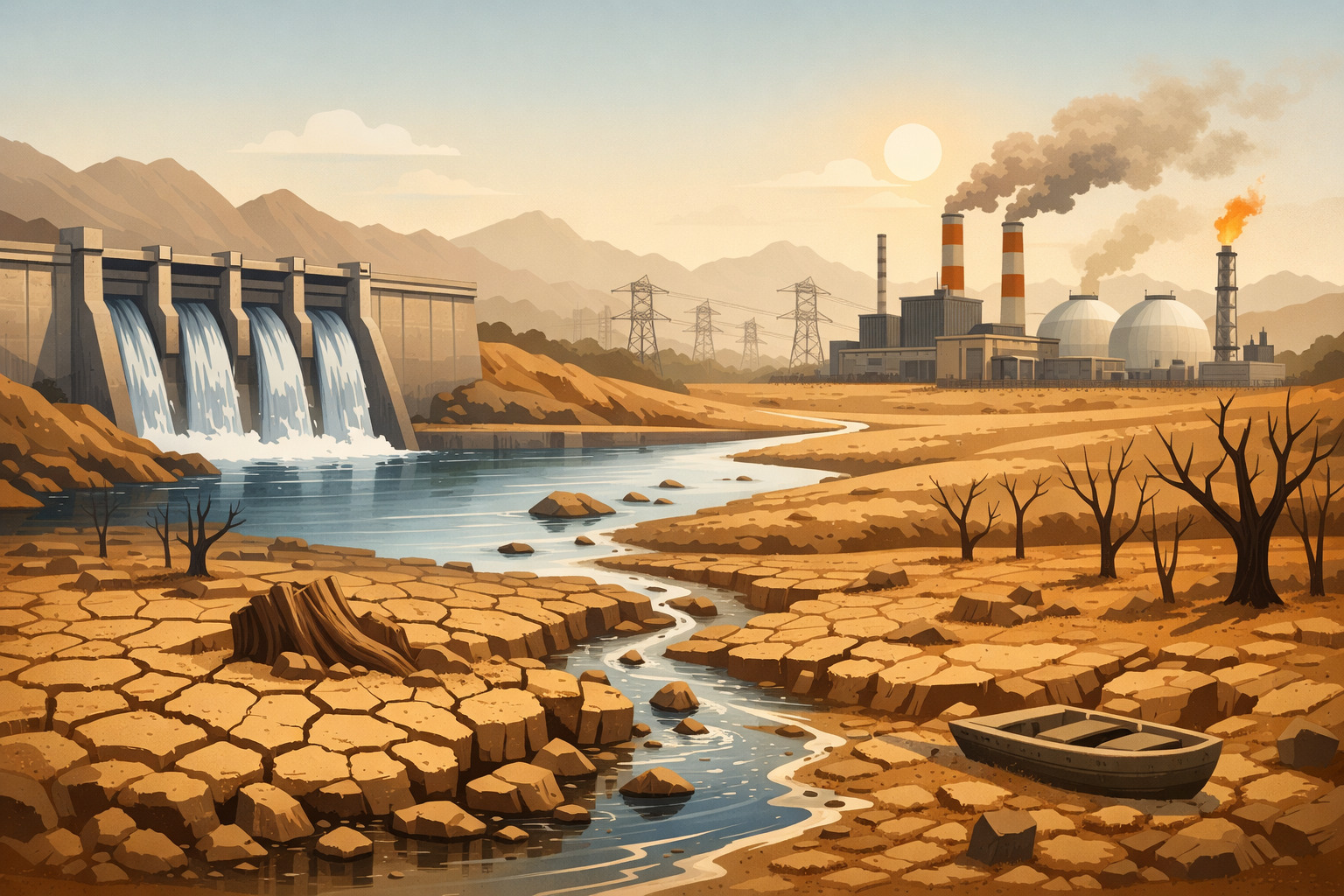
India and Vietnam drove over 80 per cent of Asia’s hydropower decline, triggering sharp thermal generation increases in both markets.
Hydropower generation across key Asian markets declined sharply in June 2026, with combined output in Japan, South Korea, India, Bangladesh, Vietnam, the Philippines and Malaysia falling by about 13 adjusted gigawatts (aGW) year‑over‑year, consultancy S&P Global Energy has reported. India and Vietnam accounted for the majority of the decline, with hydropower generation falling by 6.3 aGW and 4.6 aGW, respectively. Together, the two markets represent more than 80 per cent of the regional reduction.
The decline was widespread, reflecting the impact of El Niño weather conditions rather than isolated local factors.
Andre Lambine, Lead APAC Short‑Term Power and Renewables Research, CERA, S&P Global, said, “Widespread drought conditions in June 2026 force Asian nations to burn more coal and gas as flexible hydropower vanishes. This will be a critical test for Asia’s energy transition ambitions as nations try to balance climate commitments against immediate grid reliability needs.”
In India, a 24.3 aGW year‑over‑year increase in power demand, combined with a 6.3 aGW decline in hydropower and a 0.8 aGW reduction in gas‑fired output, was primarily balanced by a 20.7 aGW increase in coal‑fired generation, while solar and wind rose by a combined 9.4 aGW.
In Vietnam, a 6.1 aGW increase in demand and a 4.6 aGW decline in hydropower were largely offset by fuel switching toward coal. Coal‑fired output increased by 7.1 aGW, while higher gas, solar and wind generation provided additional support.
Hydropower’s decline is significant because it is one of the most flexible sources of generation, able to rapidly respond to demand changes and renewable fluctuations, helping maintain grid balance during peak periods.
Rising LNG Reliance
Lower hydropower availability is already increasing thermal generation requirements across the region, potentially supporting additional LNG demand.
Lambine observed, “Hydropower generation could remain below normal if El Niño conditions persist through the summer months. Under this scenario, we could see a broader seasonal trend, extending the need for additional thermal generation and increasing reliance on flexible fuel sources, such as LNG, to maintain supply security.”
The June decline is consistent with El Niño’s expected impact on rainfall and reservoir inflows. Current outlooks adjusted for El Niño continue to show lower hydropower utilisation rates than the non‑event case across several markets during Q3 2026, particularly in India, Bangladesh, Vietnam and the Philippines.