

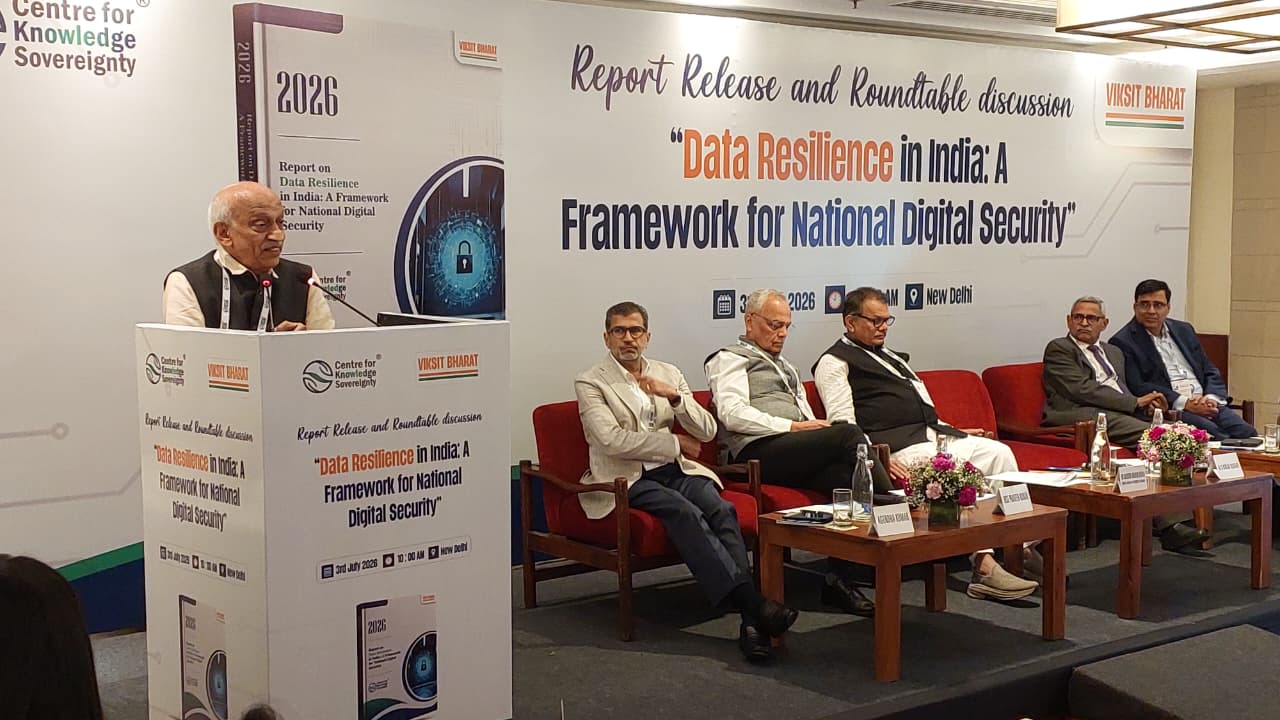
The veteran scientist has emphasised that data sovereignty and resilience require a multidimensional approach to ensure lasting solutions.
India must identify the multiple ways in which citizen data is being collected by external agencies as part of its efforts to strengthen data sovereignty and data resilience, space scientist and former Chairman of the Indian Space Research Organisation (ISRO), AS Kiran Kumar, has urged.
“Many times, those who are transacting that data do not even know the implications of whatever that transacted data is,” Kumar said during his keynote address at a seminar in New Delhi on Friday.
The seminar, ‘Data Resilience in India: A Framework for National Digital Security’, was organised by the New Delhi‑based think tank Centre for Knowledge Security (CKS).
Kumar noted that the proliferation of smartphones has made data collection and processing seamless, often without users being aware. This, he said, makes safeguards essential. “It is said that the device we carry is capable of detecting hormonal changes in a human being even before the individual experiences them. In that way, you are not only made a victim but also have your thought processes modified or manipulated without even being aware of it.”
Drawing parallels with history, Kumar said India had suffered during European colonisation when raw materials were extracted to support industrialisation abroad, only to return as finished goods sold domestically.
“What happened during the first industrialisation period is happening today at a far more sophisticated level, where we remain unaware of what is unfolding. The physical raw material of that era has now been replaced by intellectual capability, both of those who stayed in the country and those who went abroad.”
He stressed that data sovereignty and resilience must be examined in all dimensions, warning that India risks focusing narrowly on one component while ignoring others.
“Only when we become aware of the problems can solutions be found. In that context, what happened in our country during COVID and with the digital stack is a clear indication. If enough people in our country understand the nature of the problems, they are capable of finding solutions.”
Kumar said these solutions are essential to protecting India’s independence in the years ahead.
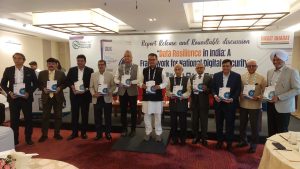
A deep‑dive report on data resilience, based on recent brainstorming sessions under the auspices of CKS, was also presented at the event. Rabindra Narayan Behera, Member of Parliament and Member of the Parliamentary Standing Committee on Communication and Information Technology, unveiled the document in the presence of thought leaders from diverse fields.
Data sovereignty and resilience have become a pressing topic in India following the spread of internet‑enabled smart devices, the expansion of digital public infrastructure, the construction of new data centres, and the country’s rise as a global military power. In 2023, Parliament passed the landmark Digital Personal Data Protection (DPDP) Act, giving citizens greater control over their personal information while regulating the collection, processing, and storage of digital data by organisations. Looking ahead, further initiatives are expected to strengthen India’s digital security framework, including the proposed Digital India Act and the National Cybersecurity Strategy.
– Manish Pant